A corporate uniform programme is judged differently from a sports kit. Nobody wears it to win anything. They wear it in front of clients, at a reception desk, on a forecourt and in a meeting room, often for years, and they judge it on how it looks on month eighteen rather than on delivery day. That is a harder brief than a performance garment, and it is why corporate uniform supply is really a specification exercise rather than a design one.
This page sets out what a corporate uniform range actually contains, how the specification decisions get made, and what to settle before an order is quoted. Yinshan Garment has been manufacturing custom uniforms and teamwear in Ningbo, China since 1986, across 5 factories and 25 production lines, and corporate uniform work runs through the same line as the rest of our workwear and uniform range.
Most buyers arrive asking for "company shirts". The programme underneath that request is usually wider, and the parts that get forgotten are the ones that make a uniform look coherent.
| Group | Typical garments | What the buyer is really buying |
|---|---|---|
| Core office | Corporate shirts, blouses, long and short sleeve, in woven or easy-care fabric | A garment that survives a weekly wash and still presses up |
| Everyday polos | Pique and performance polos, short and long sleeve | The default branded garment for staff who are not in a formal shirt |
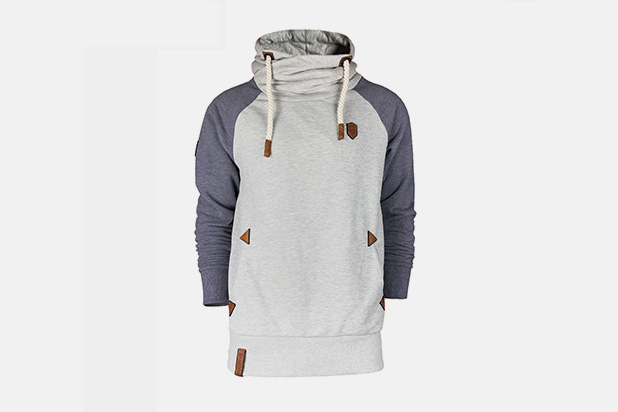
| Soft layers | Corporate hoodies, sweatshirts, knitwear, softshells | Identity in air-conditioned or cold environments |
| Outerwear | Corporate jackets and work jackets | The only garment visible outdoors for half the year |
| Trousers and bottoms | Corporate work pants, tailoring | Fit consistency across a mixed size range |
| Site and facility | Work shirts, work tees, then the hi-vis layers | Durability and, where required, visibility |
| Presentation and events | Special-event garments, anniversary and ceremony shirts | Garments that read as occasion-wear rather than everyday |
The pattern is that a corporate programme is a system, not a garment. A shirt that is ordered alone will be fine; a shirt and a polo and a jacket ordered as one programme arrive in one shade standard, one size grading and one label style, and that coherence is what reads as a company rather than as assorted merchandise.
Almost every corporate enquiry falls into one of three shapes, and each one optimises for something different.
Office, front-of-house and client-facing. The priority is appearance and consistency. Shirts and polos here are seen in daylight and in photographs, in front of customers, and they are worn by people who did not choose them. Fit, shade and collar structure matter more than fabric technology. This is where a custom woven corporate shirt or an easy-care patterned shirt earns its place.
Site, facility and operational teams. The priority is durability and laundry reality. These garments are worn outdoors, washed hard and replaced by attrition. They need to hold colour, resist pilling and tolerate an industrial wash. The logic here is closer to our workwear manufacturing programme, and where the team works near vehicles or machinery it moves into hi-vis workwear territory that carries visibility.
Retail, hospitality and events. The priority is quantity, comfort over a long shift and reorderability. Staff turnover is high, so the uniform must be repeatable in ones and twos without a new approval round. Standardisation beats distinctiveness on this programme.
A supplier who treats all three the same will over-engineer the office shirt and under-engineer the site shirt. Separating them at brief stage is the single cheapest improvement most corporate programmes can make.
Shirts and polos carry most of a corporate uniform's visible surface area, so the specification decisions there are worth getting right.
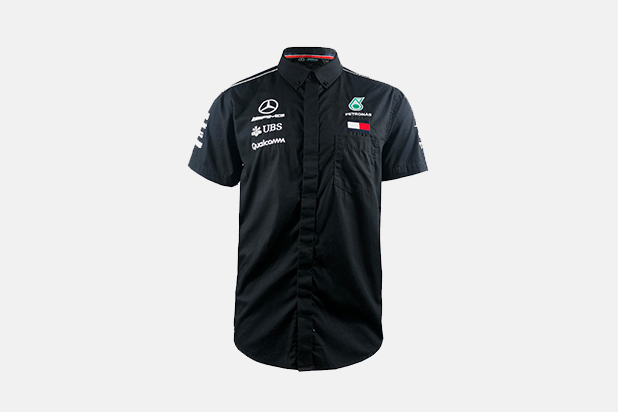
Woven shirts. Corporate and staff shirts in woven fabric, long and short sleeve, in poplin or easy-care constructions. The decision that matters is whether the shirt is worn under a jacket or as the outermost layer, because that determines collar structure and weight.
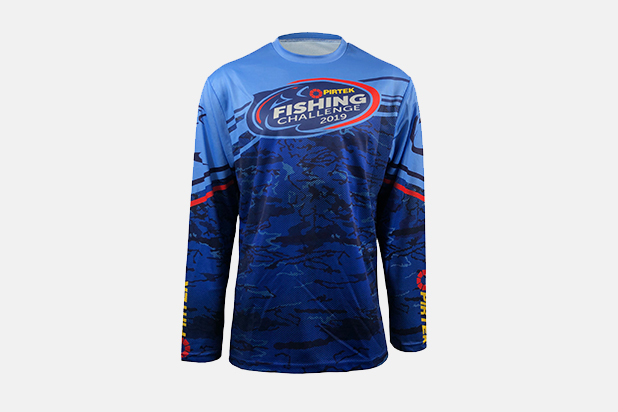
Printed and sublimated shirts. Full-colour patterns and printed branding applied to a corporate shirt, used where identity has to carry a pattern rather than a single-colour logo. See our comparison of sublimation, screen printing and heat transfer for which method suits which garment.
Pique and performance polos. The workhorse of the range. A pique polo reads as corporate; a performance polo reads as active. Both take embroidery well, and both are specified in the mid-weight band, which is why a polyester corporate workwear shirt can be worn in an office in the morning and outdoors in the afternoon.
Lapel and collar styles. Collar shape is the detail buyers notice without being able to name it. A lapel polo or a collar that holds its shape after ten washes is what stops a uniform looking like promotional merchandise. Compare a lapel corporate polo with a standard pique collar to see how much of the formality of a uniform sits in that detail.
Long-sleeve and layered options. Long-sleeve polos and corporate tees extend the range into shoulder seasons. A long-sleeve corporate polo is often the garment that carries a programme through three seasons in one order.
Corporate uniforms are bought once and worn daily, so the fabric decision is really a decision about how the garment will look in a year.
| Fabric route | Character | Suits |
|---|---|---|
| Cotton and cotton-rich pique | Breathable, traditional polo hand feel, prints well | Office and front-of-house polos |
| Polyester pique | Holds colour and shape, dries fast, resists pilling | Site, retail and high-turnover programmes |
| Cotton–polyester blends | Compromise on comfort, colour retention and pressing | Volume programmes where appearance must hold |
| Woven poplin and easy-care | Crisp, presses up, takes embroidery cleanly | Formal corporate shirts |
| Performance knits | Wicking, light, colour-stable | Operational teams and active roles |
Two decisions sit inside that table and are usually deferred too long: colour retention (a programme in three shades will fade at three different rates) and shrinkage. We test fabric before it enters production — weight tolerance within ±5%, and shrinkage beyond 1% fails our own check — so a garment sized at approval is still the size it claims to be after its first washes.
The decoration method decides how the uniform ages as much as how it looks on day one.
| Method | Best for | What to watch |
|---|---|---|
| Embroidery | Chest logos on polos, shirts and outerwear; the default corporate choice | Stitch count and backing on lightweight fabric; dense artwork pulls on fine knits |
| Screen printing | Bold single or few-colour logos, high volume | Needs a flat panel and clean edges; less forgiving on textured pique |
| Sublimation | Full-colour patterns, all-over designs, performance fabrics | Polyester only; not suitable for cotton-rich programmes |
| Heat transfer | Detailed multicolour marks, small runs, names and numbers | Durability depends on the film; test on the actual fabric |
| Woven labels and trims | Neck labels, side tabs, taping | Carries identity without printing on the face garment |
| Custom trims | Zips, buttons, drawcords, packaging | Procurement lead time; confirm with the sample |
Three placements cover most corporate programmes: left chest (the standard), right chest (paired with a name or role), and back yoke or back centre. Sleeve, cuff, collar-stand and hem placements are also used, and the choice has a practical consequence: embroidery on a sleeve or a cuff is more exposed to wear than embroidery on a chest panel.
The most common decoration mistake in corporate work is approving a digital logo on screen instead of a stitched or printed sample on the actual fabric. A logo that looks strong as a flat file can lose edge definition the moment it is embroidered on a fine knit or printed on a textured pique. Approve the physical proof, on the real substrate.
Corporate identity is usually written down as a colour, and a colour is where a uniform programme most often drifts.
One order, one dye lot. Garments produced within a single order can be matched because they come from the same dye lot. A reorder placed months later is a new dye lot, which is why we keep the approved colour standard on file as the reference for every repeat. Where a programme mixes a shirt, a polo and a jacket, all three should be produced against the same standard.
Neutral palettes are more forgiving. Navy, black, charcoal, white and stone hide small variance better than brights. If the corporate colour is a strong brand shade, keeping it as the accent — collar, trim, embroidery thread — gives a more repeatable programme than making it the whole garment.
Trim colour is part of the specification. Buttons, zips, thread and label colour are as visible as the fabric in a uniform. Confirm them with the sample, not afterwards.
For the wider palette questions — colour under different lighting, contrast on site garments, and how a programme can be built around a brand colour without specifying the whole garment in it — see our notes on the corporate workwear range.
Corporate uniform sizing is where a programme lives or dies, because the wearers did not choose the garment.
Fit consistency across the range. A shirt, a polo and a jacket from one supplier should agree on what a medium is. Mixed sourcing is the usual cause of "the polo is a size small" complaints inside one programme.
Real size splits, not placeholders. A flat size curve is fine for a factory and wrong for a uniform. Give the split you expect, including the sizes on the ends, and the programme will pack sensibly.
The extremes matter more than the middle. A uniform has to fit staff at the small and large ends of the range, and those are the sizes that arrive late and get substituted. Confirm them at sample stage.
Female and male cuts, where the garment needs them. Not every garment needs a separate cut, but polos and shirts usually benefit from one. Decide it at brief stage.
We size to a customer spec or to our own graded chart, and we hold a size chart with the approved sample so that a reorder two years later is still the same garment. For the full picture, see the workwear and uniform range.
A corporate uniform is rarely a single delivery. It is a rollout followed by years of top-ups, and the programme has to be built for that.
Phase the first order. A head-office rollout and a regional rollout are usually different dates and sometimes different garments. Producing to a phase plan rather than one drop keeps storage costs down and makes the first delivery a test of the specification before the volume arrives.
Keep the reference. The approved sample, the colour standard, the size chart, the logo proof and the trim specification are the reference set for every reorder. This is what makes a new-starter order of four garments as straightforward as the original.
Design for reorderability. Where sizes are unpredictable, a slightly looser fit and a standardised trim reduce the number of variants that have to be held. This is also the logic behind a staff uniform custom pattern shirt as a single reference garment rather than a set of one-offs.
Step-up and step-down garments. Many programmes include a formal shirt for client-facing staff and a polo for everyone else. Both should be specified in the same order so that the two tiers arrive in one shade standard.
How a uniform arrives is part of how it is received, especially when it is distributed to staff rather than to a warehouse.
Polybag or individual presentation. Staff uniforms are often handed out at an induction. Individual presentation — sized, labelled and ready to issue — removes a back-of-house step.
Size labelling. Clear size marks on the outside of the pack make distribution possible without opening every bag.
Organised packing. Where a programme ships to multiple sites, carton-level organisation by size or by department reduces handling on arrival. See our trims and packaging options for what can be specified, including garment labels and carton markings.
Retail-ready options. Where the garment is sold rather than issued, retail-ready presentation — folding, hangtags and a barcode-ready label — is a different specification from staff distribution, and it should be raised at brief stage.
Send that and the quotation is against the programme you actually intend to run. Our page on custom uniform and workwear manufacturing covers how these programmes sit alongside hi-vis, hospitality and industrial work, and our MOQ and sampling page explains how the sample round locks the specification before bulk.
What is the minimum order for a corporate uniform?
It is quoted per garment and per decoration rather than as one number, because a shirt, a softshell and a pair of work pants do not carry the same minimum. Most corporate styles start at a small quantity and complex or heavily decorated garments are quoted higher. See our MOQ and sampling guide for how that is calculated.
Can you hold our colours so a reorder matches?
Yes. The approved colour standard from the original order is kept on file and every repeat is produced against it. Garments made within one order are matched from a single dye lot; a later reorder is a new dye lot matched to the same standard.
Do you supply a formal shirt as well as a polo?
Yes — woven corporate and staff shirts, including easy-care and silk-look options, are produced on the same line as the polos, which means one programme can cover both the client-facing and the everyday tiers.
Can we order different garments for different teams?
That is the normal shape of a corporate programme. A specification is best set per group — office, front-of-house, site, events — rather than per company, so each team gets the garment that suits its work.
Can new starters be added without re-sampling?
Once the approved sample and colour standard are documented, new-starter quantities are produced against that standard without a new sample round. This is the main reason to keep the reference set.
Do you handle hi-vis as part of a corporate uniform?
Yes, and where a corporate programme includes site staff it usually should. Those garments are specified under our hi-vis and safety workwear programme, but they can be produced in the same order as the corporate shirts so that colours and sizing stay consistent.
How do we approve the logo before production?
On a physical proof applied to the actual fabric, not on a screen. Embroidery on a fine knit and printing on a textured polo both behave differently from a flat digital file, and the sample round is the moment to see it.
Do you supply the garments packed for individual staff?
Yes. Individual presentation, size labelling and carton organisation by size or department can all be specified, which matters when a uniform is issued to staff rather than stored in a warehouse.
 English
 Español
 Português
 Français
 Pусский
 Deutsch
 العربية