Motorcycle racing teamwear is a specialist category. It has to look fast, survive a paddock, carry sponsors legibly at broadcast distance, and be replaceable mid-season when a mechanic joins or a logo changes. That combination of demands is why teams and merchandise brands look for a manufacturer who already works in the category rather than a general sportswear supplier.
This guide is written for motorcycle racing teams, merchandise and replica brands, distributors and private-label labels sourcing racing apparel. It covers the garment mix, the specification decisions that matter, and how OEM production of a racing teamwear range actually runs.
Quick answer: MotoGP-style teamwear OEM production covers pit crew polos, team shirts, jackets, hoodies, caps and supporter merchandise, manufactured to a buyer's specification and branding. The critical decisions are the fabric and weight per garment, the decoration method for each logo position, the colour references, and whether the design is sublimated or assembled from panels. Teams usually order small quantities with a short reorder cycle, while merchandise and replica brands order larger runs built around a size curve.
If you are assembling a full programme, our custom teamwear range covers the branded pieces and specialist categories cover outerwear and accessories. Send the whole brief as a custom requirement.
On team and sponsor marks. Manufacturer and team names, logos and sponsor marks are protected. We produce garments to the specification and colourway a buyer supplies; obtaining the right to use any third-party mark is the buyer's responsibility. Teams ordering their own kit hold those rights already, and brands producing replica ranges should hold a licence before production begins.
Motorcycle racing teams order a recognisable set of pieces. The table below shows the mix and what each piece is expected to deliver.
| Garment | Who wears it | What it must deliver |
|---|---|---|
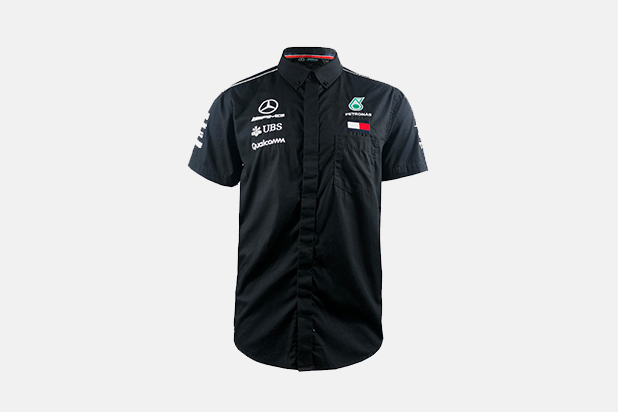
| Pit crew polo | Mechanics and garage staff | Smart appearance with breathability for hot garages; embroidered team mark. |
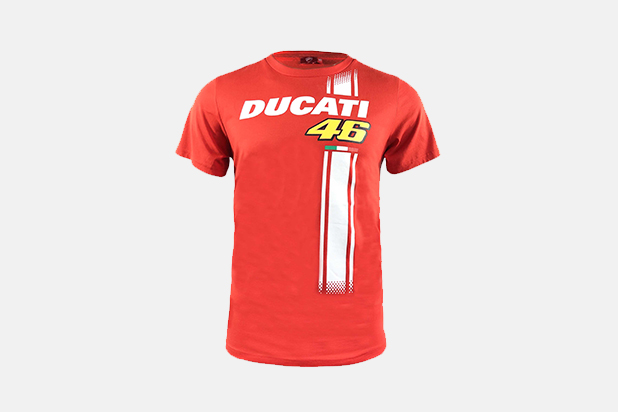
| Team shirt (short and long sleeve) | Team, guests, support staff | Large sponsor layout, legible at distance, colour-fast through a season. |
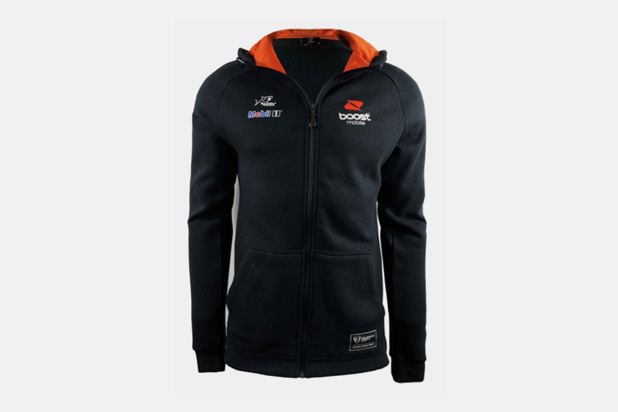
| Softshell or padded jacket | Team, engineers, management | Wind and light-rain protection for pit lane and paddock use. |
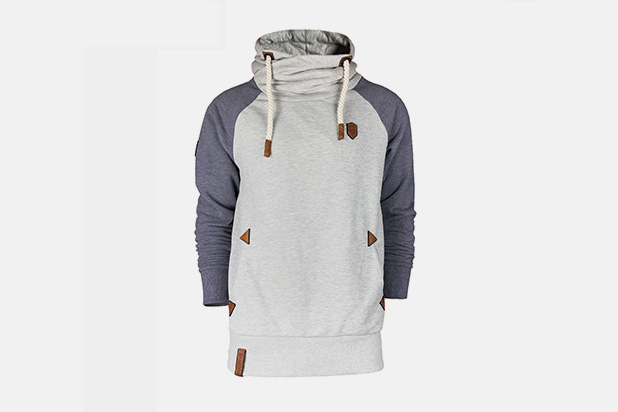
| Hoodie or sweat | Team and supporters | Comfort and identity away from the circuit; the highest-volume retail piece. |
| Cap and beanie | Everyone | Sponsor visibility, sun protection and the cheapest merchandise item to produce. |
| Protective rider kit | Riders | Specified separately: leather or textile suits, protectors, gloves and boots. |
| Supporters' range | Fans and fan clubs | Retail-quality finish in a wide size range, with simpler specifications than team kit. |

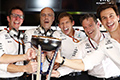
Pit crew polos are the most reordered garment in a motorcycle racing programme: small quantities, high visibility and a fast replacement cycle.
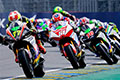
Racing teamwear is judged from a distance and in photographs, which changes the priorities compared with ordinary team clothing.
| Decision | What to specify | Why it matters in motorcycle racing |
|---|---|---|
| Fabric and weight | Composition and grams per square metre for each garment type | Garages are hot and paddocks are variable; a polo that is too heavy stops being worn by mid-season. |
| Decoration method | Sublimation, print, transfer or embroidery, chosen per logo position | Large graphics read better sublimated; crests and small marks should be embroidered for durability. |
| Colour references | Defined colour codes, checked on each fabric used | Racing colourways are brand-critical and drift badly when specified verbally. |
| Panel layout | A flat drawing showing colour blocking and seam placement | Panels are what make a teamwear design look constructed rather than printed. |
| Size curve | Individual sizes for team kit, a distribution curve for retail | Teams mix riders, mechanics, engineers and guests in one order. |
| Repeatability | Patterns, artwork and specifications retained by the supplier | Sponsors and staff change mid-season; reorders must match the original exactly. |
Motorcycle racing design has a recognisable language, and buyers usually want it reproduced without simply copying another team's identity.
Bold, saturated colourways. Racing reds, deep blues, black and high-contrast accents dominate, because they read clearly at speed and in television coverage.
Angular panel blocking. Diagonal and wedge-shaped panels suggest motion. They are also practical, because they let one base pattern carry several colourways.
Large-format sponsor space. Design the garment around the logo positions rather than adding logos to a finished design; the layout should look deliberate at both chest and back.
Technical trims. Contrast zip pulls, binding and reflective detailing signal a performance garment at low cost.
Consistent identity across garments. A polo, a jacket and a cap from the same programme should be recognisable as a set from ten metres away.

A team jacket carries larger sponsor graphics than a polo and is the piece most often specified in racing red or livery colours.
The process is straightforward when the specification is complete before sampling starts.
| Stage | What we need from you | What you get back |
|---|---|---|
| Brief and quotation | Garment list, quantities, colourway, decoration plan, delivery country | Fabric options, pricing per garment, minimums and lead times. |
| Artwork and layout | Vector artwork, stitch-ready logo files, a logo position diagram | A layout confirmation and any artwork notes before sampling. |
| Sampling | Approval of the design and specification | A physical garment with decoration applied, in at least two sizes. |
| Bulk production | Written approval of the sample; no outstanding changes | Cutting, decoration, assembly and finishing against the approved specification. |
| Quality control | Your checkpoints and inspection requirements | Inspection of measurements, decoration placement and finish before packing. |
| Packing and shipping | Packing instructions — by size, by role, individually bagged | Garments prepared for your channel: team kit or retail merchandise. |
Garment list with quantities per size. Split team kit, staff kit and supporter kit.
Colourway with references. Body, panel and trim colours, including any colour that must match an existing garment.
Logo position diagram. Every mark, its size, method and position.
Fabric specifications. Composition and weight per garment, plus any performance or recycled requirement.
Labels and packaging. Own-label branding, care and size labels, hangtags and bags.
Sampling plan. Which garments are sampled, and who approves them.
Schedule. Required delivery date worked back from the first race of the season.

Team and supporter ranges share one design system, which is why motorcycle racing programmes usually specify both in a single order.
Yes. Own-label production covers your branding on the garment, your labels, packaging and size grading. It is the normal arrangement for merchandise brands and for teams selling directly to supporters.
It varies by garment and decoration method. Sublimated polyester shirts and hoodies are the most flexible because there is no per-colour setup cost, so small runs are economic. Embroidered and structured garments need higher quantities. Ask for minimums per garment type rather than one overall figure.
Faster than a first order, provided the specification, artwork and size chart were kept on file. The main variable is fabric availability, so it is worth asking at the outset which fabrics are held in stock and which have to be ordered in.
We produce apparel to specification across the range, including protective constructions where the materials and components are agreed in the brief. Protective garments should be specified with their protection requirements stated explicitly, and test documentation discussed before production.
Racing teamwear is a specification product wearing a design product's clothes. Decide the garment mix, lock the fabrics and colour references, agree the logo positions, approve a physical sample — then keep the specification on file so every reorder looks like the first order.
Send Yinshan Sportswear your garment list, artwork, sizes, quantity and delivery country to request a custom quote.
 English
 Español
 Português
 Français
 Pусский
 Deutsch
 العربية