Sportswear left the gym a long time ago. It is now what most people wear for a large part of an ordinary week — commuting, travelling, working from home, shopping, picking children up, and every hour that sits between a training session and the rest of the day.
That shift is usually discussed as a fashion trend. This page treats it as a garment engineering question instead: eight practical reasons why sportswear works as everyday clothing, and what to look for when buying or specifying it.
Quick answer: Sportswear suits everyday wear because it was designed for movement, moisture and temperature in the first place. It stretches where a woven fabric does not, it moves sweat away rather than holding it, it washes and dries quickly, it is cut with more ease than formal clothing, and it holds colour and shape through repeated washing. The result is a garment that is comfortable from morning to night and costs less per wearing than almost anything else in a wardrobe.
The defining property of a knit is stretch. A knitted fabric extends and recovers, so a garment follows a shoulder, a knee or a waistband instead of fighting it. Over a long day the difference is not dramatic in any single moment, and it is obvious in aggregate by the evening.
Performance knits are built to transport moisture to the surface where it can evaporate. In everyday use that means a garment worn on a warm train or through a brisk walk stays comfortable rather than becoming cold and heavy. This is the property most often lost when a low-cost garment substitutes a heavier, cheap knit for a functional one.
Comfort is mostly about adjusting to conditions, and sportswear gives more options than most wardrobes: a base layer, a mid layer and an outer piece can be combined differently on the same day. That flexibility is the reason a layering system works better than one heavy garment, whether it is being used for a match or for a commute.

The garments worn most are the ones that work outside training as well as inside it.
Sportswear is designed for a wash cycle and a drying cycle far more frequent than most clothing is expected to tolerate, which matters as soon as a garment is worn several times a week.
Colour is expected to hold across many washes rather than a season.
Shape recovery is designed in, so collars and cuffs keep their form.
Sublimated and well-applied prints do not crack, because the colour is inside the fibre.
Drying is fast, which is what makes a small wardrobe practical.
The care instructions that preserve those properties are covered in taking care of sportswear.
A sportswear range is built on a size block that repeats across garments, so a person who knows their size in one piece can order another with confidence. That consistency is what makes buying a hoodie and a training top from the same label a simple decision rather than a guessing game.
It is also the property most easily broken. One supplier per category produces size drift, and a customer whose usual size is inconsistent between two garments in the same range stops trusting the label. The specification question is set out in how to select sportswear.
A polo in a good pique, a plain mid layer in a solid colour and a clean training jacket in a dark shade are all acceptable in situations that used to require a woven shirt. The difference between sportswear that looks casual and sportswear that looks considered is mostly a matter of fit, colour and the absence of large graphics.
| Garment | Where it works | What makes it work |
|---|---|---|
| Polo in a pique knit | Club, office, travel, weekend | Good collar stand, solid colour, small logos |
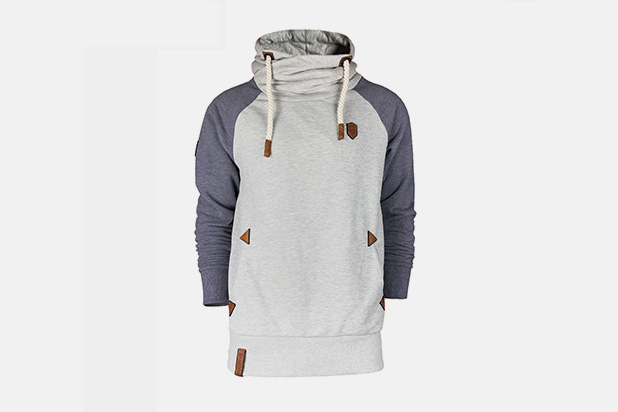
| Plain mid layer or hoodie | Travel, home, casual work | Fit at the shoulder, uncluttered front |
| Training jacket | Commuting, outdoor errands | Clean lines, restrained branding |
| Legging or jogger | Everyday, layered under other pieces | Opaque knit, sufficient weight |
The styling side is a separate subject, and the choices that read well in everyday settings are discussed in wearing sportswear well.
A price tag says very little on its own. What matters is the price divided by the number of times the garment is worn and the number of seasons it lasts. A garment worn three times a week for two years is used roughly three hundred times; clothing worn twice a season is used perhaps ten. On that basis a well-specified training top is often the cheapest clothing a person owns.
This is also the strongest argument for buying on specification rather than on price. A cheaper garment that loses shape, pills or fades after a dozen washes is not cheap; it is expensive and replaced.
Sportswear is the only clothing category where a person can signal belonging casually and every day. A club mid layer, a team tee or a brand hoodie says something without requiring an occasion.
For clubs and brands that is the commercial point: the garment is seen outside the venue, in a way that a competition shirt is not. The reasoning behind that is covered in why custom teamwear matters for clubs.

Comfort in a garment is a specification outcome, not an accident of fashion.
The reasons above only hold for garments that are specified for them. Five checks separate everyday-capable sportswear from clothing sold on appearance.
Fabric weight appropriate to the season, not the lightest available.
A knit that recovers, tested by stretching the cuff and the neckline.
An opaque fabric on any fitted piece, checked in daylight rather than in a changing room.
Decoration that suits the fabric, so it does not crack where the garment stretches.
A stated care instruction that matches how the garment will actually be washed.
The everyday end of the range uses a different fabric logic from the performance end, and the choice is set out in choosing fabrics for casual wear and the importance of selecting the right sportswear.

A polo is the piece that moves most easily between the club, the office and the weekend.
Because it is knitted rather than woven, so it stretches and recovers with the body, and because it is designed to move moisture and manage temperature. Those properties come from the fabric structure and the construction, not from the style.
Yes, particularly polos, plain mid layers and clean training jackets. What separates considered from casual is usually fit, solid colour and restrained branding rather than the garment type itself.
Per wearing, often yes. A garment worn several times a week for two seasons is used hundreds of times, while occasional clothing may be worn a handful of times. That makes durability and wash performance more important than the price on the label.
Fabric weight for the season, whether the knit recovers after stretching, opacity on fitted pieces, whether the decoration suits the fabric, and a care instruction that fits how the garment will actually be washed.
Send the garments you want for everyday wear and how they will be washed, and we will recommend fabrics and constructions that hold their shape and colour through repeated use, with samples before the run.
 English
 Español
 Português
 Français
 Pусский
 Deutsch
 العربية