Promotional apparel is judged on a simple test: does the person who receives it wear it again. A printed tee worn once at a launch disappears into a drawer. A polo or a jacket that fits and suits the wearer turns every wearer into a moving advert for months, which is why the cost per impression, not the cost per unit, is the number that matters.
This page covers why custom promo apparel works commercially in 2026, how to choose the garment for the job, and what to get right at the artwork and ordering stage so the campaign does not stall.
Quick answer: Custom promo apparel works because it converts a marketing budget into an object with repeated exposure and no per-view cost. Three things decide whether it performs: choosing a garment the audience will actually wear (polo and outerwear beat novelty items), keeping the branding wearable (a small chest logo outperforms a full-front print for retention), and ordering a size curve that matches the real population rather than an assumed one. Get those right and a single order keeps working for a year.
Most promotional products have a short useful life and a single exposure: a mug in a cupboard, a bag used twice, a USB stick made redundant by the cloud. Apparel is different because it sits in a rotation. A polo worn twice a month for a year is roughly twenty-four exposures from one unit, before counting anyone who sees it.
That arithmetic is why apparel programmes justify a higher unit cost. It is not that the shirt is cheap; it is that the same spend is divided across far more impressions. The comparison only breaks down when the garment is chosen badly or branded so heavily that the wearer will not put it on.
Staff uniform — highest wear rate, strongest brand reinforcement, clearest size data available.
Customer and client gifts — quality expectation higher, quantity smaller, garment must suit the recipient's context.
Event and campaign drops — date-driven, artwork-led, usually a print rather than an embroidery.
Community and club sponsorship — team wear doubles as merch and generates repeat orders.
Start from where the garment will be worn. An office audience takes a polo or a quarter-zip. A site or field audience takes a work-appropriate tee or a jacket. A sports club takes training wear, where the club's own identity matters more than yours.
Decoration method follows the garment and the message. Embroidery suits a permanent logo and reads as considered; print carries larger artwork, gradients and campaign language. On a knit, the two behave differently enough that the choice should be made before artwork is finalised, as set out in embroidery in sportswear manufacturing and custom sportswear printing.

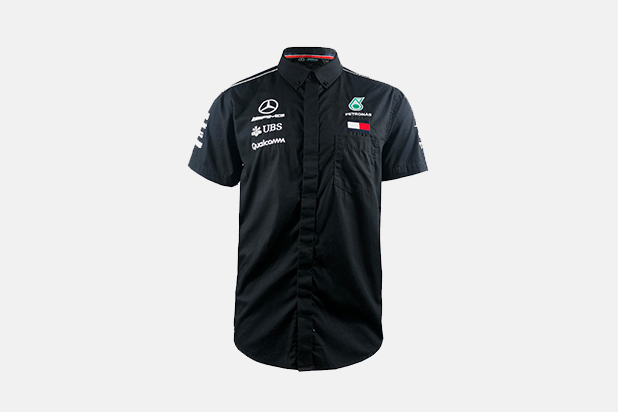
A polo survives the office, the event and the weekend, which is why it outlives most promotional items in the wardrobe.
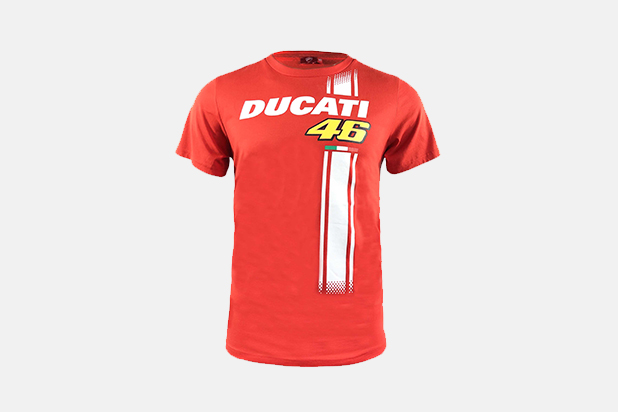
The single biggest predictor of whether branded apparel gets worn is how much branding it carries. A small embroidered logo on the chest is accepted by most wearers; a full-width print across the front, a slogan down the sleeve and a sponsor block on the back is not, unless the audience is a team with its own identity.
| Branding level | Typical use | Retention |
|---|---|---|
| Small chest logo, one position | Staff and client apparel | High — reads as clothing first, brand second |
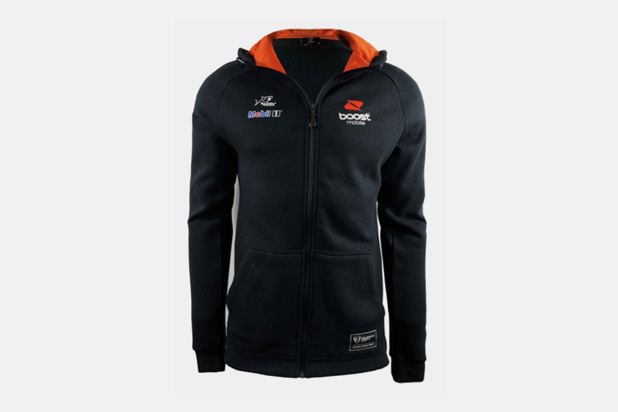
| Chest logo plus sleeve mark | Event and field staff | Medium — still wearable off duty |
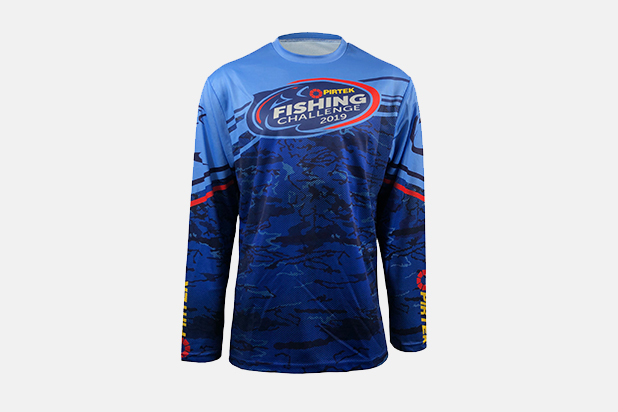
| Full-front print | Campaigns and launches | Low as everyday wear, high for the event itself |
| Full-front and back print | Teams, leagues, sponsor-led kit | High only where the wearer opted in |
Two practical rules follow. Keep the logo inside a wearable size range unless the garment is a team kit, and place the main logo where it will not be covered by a bag strap or a lanyard. The same principles apply to employee gifting, which we cover in customised gifts for employees.
Promo orders routinely misfire on the size curve. Buyers who order an even split find themselves short on the two middle sizes and holding unusual sizes at the end. If you have any data from a previous order, use it. If not, weight the curve towards the middle and avoid ordering the extremes heavily on a first run.
Colour is the second common mistake. Brand colours that work on a website can look flat on a knit, particularly large areas of dark blue or black on a low-contrast logo. Ask for a physical sample before approving, not a digital proof. Fabric and colour behaviour is covered in selecting sportswear fabrics.

Print carries large artwork cheaply, which suits a campaign with a date or a message rather than a permanent logo.
Promo apparel is nearly always deadline-driven, which is where the schedule breaks. A campaign anchored to a date needs the sampling round completed six to eight weeks before that date, not two, because decoration and freight both have fixed minimum times.
Lock artwork before sampling, not during it.
Approve the sample in writing and keep the reference piece.
Confirm the packing spec, because staff orders are often handed out individually.
Build in transit time for the destination, not just the factory lead time.
If the deadline is genuinely short, it is usually better to reduce the number of decoration positions than to compress the sample stage — a simple order made correctly beats a complex one rushed. Timings and handover are detailed in shipping and delivery for sportswear orders.

A garment worn repeatedly on site returns its cost far faster than one worn once at an event.
For wear rate, a polo or a light jacket beats a printed tee, because both fit into more contexts. For reach on a fixed budget, a printed tee wins because the unit cost is lower. Choose based on whether you are optimising for impressions per unit or total impressions.
A small chest logo is the safest and the most worn. Add a second small mark only if the audience is staff or event personnel. Full-front and back printing is best reserved for campaigns and team kit where the wearer opted in.
Yes. Stock garments with a single embroidery position carry the lowest minimum, which makes a small staff order practical. Multi-position printing or a custom fabric raises the minimum well before the garment quantity does.
Allow six to eight weeks from artwork approval to delivery, split roughly into sampling, production and transit. Deadline-driven orders should fix artwork before the sample round begins.
Send the audience, the campaign date and the quantity and we will recommend the garment and the decoration method that fits the schedule, with a sample before the main run.
 English
 Español
 Português
 Français
 Pусский
 Deutsch
 العربية