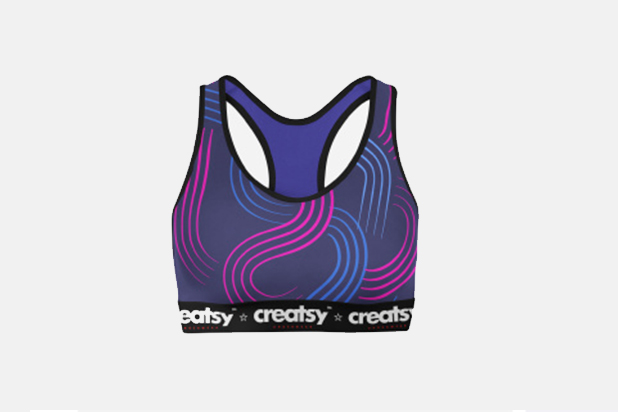
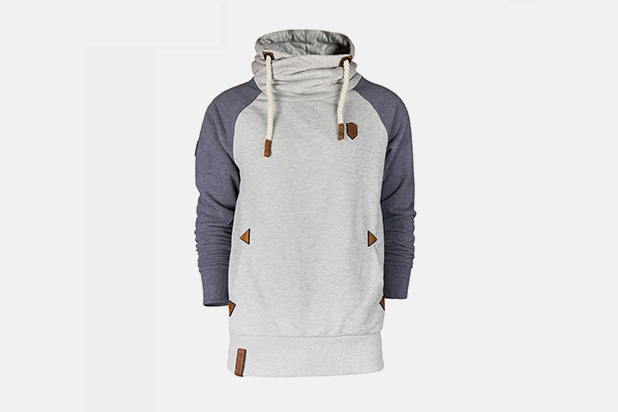
Sportswear design is constrained in a way that fashion design is not. The garment has a job, the fabric has limits, and the decoration has to survive washing. Within those constraints there is more room than most buyers use, because the decisions that make a garment stand out are structural rather than graphical.
This page covers the design levers that actually change how a custom sports garment reads: colour division, panels, typography, trim and detail — with what each one costs and where each one fails.
Quick answer: The levers that make sportswear stand out are, in order of return: how colour is divided across the garment, how the panels are laid out, how type is used, and how the small details are finished. None of these requires a larger budget — with sublimation, colour count and pattern carry no extra printing cost at all. What does cost money is extra panels, additional print positions and bespoke trims, so the design work should concentrate on the free levers first.
The fastest design improvement available is to stop treating the garment as a single-colour surface with a logo on it. Dividing the surface into two or three zones creates structure, and structure is what makes a garment look considered.
Vertical division — side panels or a centre stripe, which lengthens the body and reads at a distance.
Horizontal division — a chest or shoulder block, which visually broadens the upper body.
Diagonal division — faster and more dynamic, but harder to align across seams.
Ratio — an uneven split usually reads better than a 50/50 one, because it creates a hierarchy.
Where colour division is used, the alignment across seams is what separates a designed garment from a printed one. A stripe that breaks at the placket or the side seam looks like a mistake, and it is the most common fault in a first sublimation order. It is worth checking on a flat layout rather than on a garment mock-up.
Panels do two jobs at once: they carry the colour division, and they place ventilation and stretch where the body needs them. Treating them as decoration alone wastes the second function.
Mesh panels where heat accumulates, not where the design has space.
Stretch panels through the shoulder and back, where movement is greatest.
Panel count kept low, because each seam is a construction cost and a potential alignment problem.
Panel layout recorded in the specification, so a repeat order matches.
This is the same logic that has driven elite kit design, described in fabric and design direction in tournament kit. For a club order, the practical version is one or two functional panels plus a colour division, rather than a panel for every colour.

Colour blocking is the cheapest way to make a garment look designed, because it costs nothing beyond the panel layout.
Typography is where amateur sportswear design is most visible. A large wordmark across the chest reads as merchandise; a small, well-spaced mark reads as a brand. Both are legitimate, but they are different products and should be specified deliberately.
One type element only — a wordmark or a number, not both at the same scale.
Letter spacing slightly open rather than tight, which holds up on a knit surface.
Type size tested at the size it will be seen, not on a screen at 100 per cent.
Fine type avoided on light backgrounds, where it disappears in daylight.
A useful test is to view the design at the size of a thumbnail, which is closer to how it is seen at a distance in sport. Detail that disappears in that view is decoration for the wearer rather than for the observer.
The perceived quality of a sports garment is decided in the small areas: collar, placket, cuff, hem and the collar-to-placket junction. These are also the areas that show wear first.
Contrast trim on collar, placket or cuff, which costs little and reads immediately.
Tonal detail — a slightly different shade or a change of surface — which is subtler and harder to do well.
Considered placement of the logo relative to the placket and any pocket.
Consistent mark size across the range, so the polo, tee and jacket look like one set.
| Design lever | Cost impact | Risk |
|---|---|---|
| Colour division | None with sublimation; a print position with screen print | Alignment across seams |
| Panel layout | Adds construction cost per panel | Specification drift between orders |
| Typography | None in itself | Legibility at distance and on light backgrounds |
| Trim and detail | Small but real | Inconsistency across different garments in a range |
Read as a table, the design problem becomes a cost problem with an obvious order of operations: exhaust the free levers before paying for the others.
Three failure patterns recur. The first is decoration that fights the garment's function — a large print across a stretch panel, or a dense mark on the ventilated area. The second is a design that cannot be repeated, because a colour was chosen from a screen or a panel layout was never written down. The third is a design that works in a mock-up and fails at distance, which is where sportswear is actually seen.
Sublimation makes pattern affordable, which shifts the design problem from budget to legibility.
The remedy for all three is the same: design against the garment's specification rather than against a picture of it. The method for turning a design into a repeatable specification is covered in designing custom sportswear.
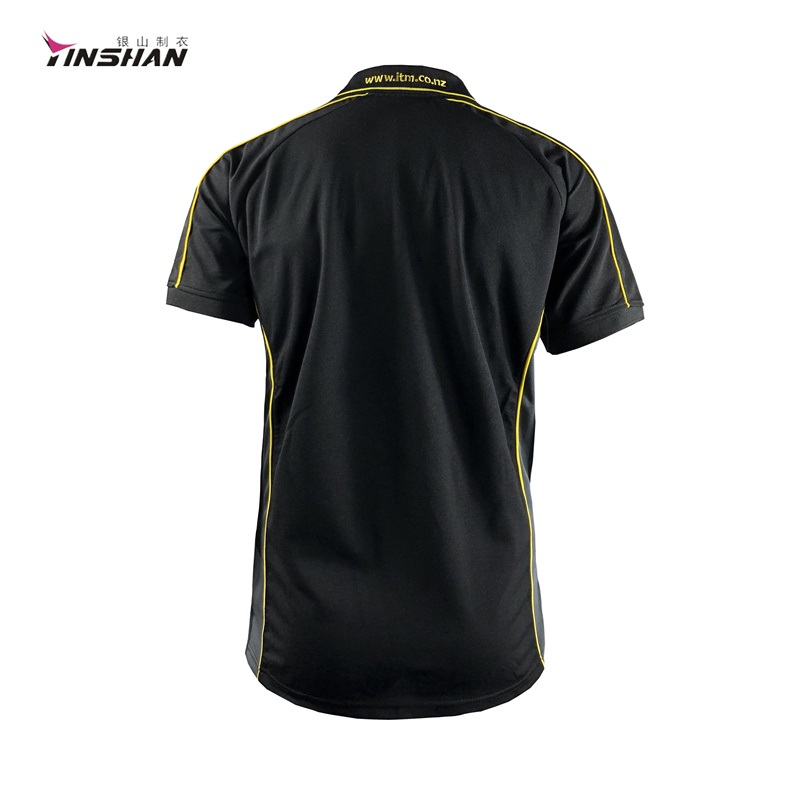
Small details — collar, placket, cuff — carry more perceived quality than a large graphic.
Choose the fabric and the function first, because they constrain everything else.
Divide the colour into two zones with an uneven ratio.
Add one functional panel, placed where the body needs it.
Use one type element, spaced and sized for distance.
Finish the collar, placket and cuffs so the small areas look deliberate.
Approve on a physical sample, in daylight, at a distance.
Divide the garment's surface into colour zones with an uneven ratio, add one functional panel, and use only one type element. Most of the visual improvement comes from the panel and colour layout rather than from the graphic, and with sublimation it costs no more to print.
With sublimation, no — the fabric is printed, so colour count does not change the printing cost. Costs rise with additional panels, extra print positions and separate setups for different designs, not with the number of colours in one design.
Usually because a stripe or panel was not aligned across a seam, or because colour was approved from a screen rather than from printed fabric. Saturated colours in particular shift when bonded into polyester, so approval should be on a physical sample.
A consistent mark size and placement across the polo, tee and jacket, and a shared colour palette. Consistency across the range matters more than any individual design, because the garments are seen together rather than separately.
Send the garments in your range and the direction you want, and we will lay out the colour division and panels on a flat panel for approval, with the design costed before anything is printed.
 English
 Español
 Português
 Français
 Pусский
 Deutsch
 العربية