Choosing a fabric for performance sportswear is a technical exercise: wicking rate, stretch recovery, UV performance, abrasion resistance. Choosing a fabric for casual wear is a different exercise, and specifying it with the performance checklist produces garments that are technically correct and unpleasant to wear.
This page sets out how to choose sportswear fabrics for casual wearing: what actually matters in a garment worn without a session attached, the fibre and knit options, and the checks that catch the common failures.
Quick answer: For casual wear the priorities change order. Hand-feel, drape, opacity and colour retention come before moisture management and stretch. Cotton and cotton-rich jersey give the best feel; French terry gives weight and warmth with a smooth face; pique gives structure and a collar that stands; brushed fleece gives warmth for a hoodie. Weight is chosen by season rather than by performance, and the checks that matter are shrinkage, opacity, pilling and how the colour holds after washing.
Three properties matter far less in casual wear, and three matter far more.
| Property | In performance wear | In casual wear |
|---|---|---|
| Moisture transport | Central requirement | Nice to have; comfort comes first |
| Stretch recovery | Critical for fitted pieces | Useful, but not worth a harsh hand-feel |
| Abrasion resistance | Important for contact sports | Adequate is enough |
| Hand-feel | Tolerated | The deciding factor |
| Drape and opacity | Secondary | Decisive, especially on light colours |
| Colour retention after washing | Expected | Expected, and more visible when worn often |
The practical consequence is that a casual range should not be built from the performance fabric platform by default. It often uses softer, heavier knits, and it is judged by how it feels in the hand rather than by a test report.
Four fibre choices cover most of the casual range, and each has a clear character.
Cotton. The best hand-feel and the most predictable to dye. Slow to dry and can shrink, so it needs a pre-shrunk or compacted finish.
Cotton and polyester blends. Better shape retention and drying, slightly less soft. The ratio decides the balance.
Cotton-feel polyester. The look and hand of cotton with quick drying, and it takes print well.
Viscose or modal blends. Excellent drape and a cool hand, at the cost of strength and care requirements.
Cotton still dominates the everyday end of the market for a reason, and the case for it is set out in cotton as a sportswear fabric. The fibre-level comparison across the whole range is in selecting sportswear fabrics.

A casual fabric is judged on drape, opacity and hand-feel rather than on technical performance.
In casual wear the structure often matters more than the fibre, because it decides how the garment hangs and how it feels.
| Structure | Best for | Character |
|---|---|---|
| Single jersey | Tees | Light, soft, good drape; can be thin in light colours |
| Pique | Polos | Textured, structured, holds a collar shape |
| French terry | Sweatshirts, joggers | Smooth face, looped back, a good weight without bulk |
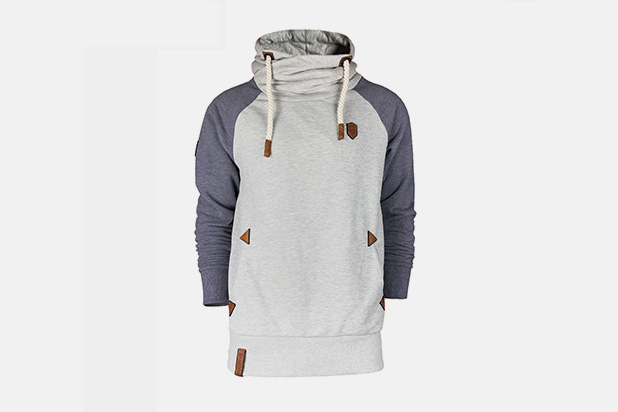
| Brushed fleece | Hoodies, winter casual | Warm and soft; can pill if the quality is low |
| Interlock | Heavier tees | Smooth both sides, more opaque, better shape retention |
The most common specification error is choosing single jersey where interlock is needed. A light single jersey in white or a pale colour looks acceptable on a roll and transparent in daylight.
Fabric weight is quoted in grams per square metre, and it is a practical signal once it is tied to a season and a garment type. The useful way to specify it is by intended use.
Light tee for warm weather and layering: the lightest knit that is still opaque.
Standard tee: the middle of the range, which is what most orders should use.
Heavyweight tee: for a garment meant to be worn alone and to hold its shape.
Sweatshirt and hoodie: a weight that gives warmth without stiffness in the shoulder.
A heavier fabric is not automatically better. Past a point, weight stops adding comfort and starts restricting movement, which defeats the purpose of a casual piece worn all day.
Five tests on a sample catch almost everything that goes wrong with a casual knit range.
Wash and measure the sample, since shrinkage is the most common complaint in cotton-rich casual wear.
Hold light colours against a window or in daylight to assess opacity.
Rub the fabric and check for pilling, particularly on brushed surfaces.
Stretch the neckline and the cuff and see whether it recovers.
Wash a decorated sample and check the print or embroidery at the edges.
These are inexpensive and they answer questions that a specification sheet cannot. The material standard behind them is discussed in custom design and manufacture.

The inner surface of a casual piece decides whether it feels warm or merely thick.
Casual wear is usually decorated more lightly than performance kit, which changes the best method.
Embroidery suits cotton-rich knits and gives a permanent, premium mark.
Print suits larger or multi-colour artwork, and works best on a smooth surface.
Heat-applied transfers suit small, multi-colour marks on a cotton-feel polyester.
Sublimation is not suitable on cotton, so a cotton casual range uses other methods.
The comfort properties of a casual knit can be lost if the decoration is heavy. A large print on a light jersey makes the front of the garment stiff, which is noticeable on a piece worn all day. The finishes that keep a knit comfortable in warm conditions are covered in cool fabrics for polos and tees, and polyester options in artwork printing on polyester elastane.

Knit structure changes how a garment hangs, and it is chosen before the colour.
Fibre and blend stated as a percentage, with the shrinkage finish named.
Fabric weight in grams per square metre, chosen for a season rather than for maximum value.
Knit structure named, so opacity and drape are not left to interpretation.
Colour standard approved physically, with the tolerance for lot variation agreed.
Care instruction tested on a finished, decorated sample.
Sample retained for the reorder, because casual ranges are reordered rather than replaced.
For a buyer choosing between two fabrics that look similar on a price list, the deciding question is usually which one will still look right after twenty washes. Further guidance on buying decisions is in how to select sportswear.
Cotton and cotton-rich jerseys for feel, French terry for weight and warmth with a smooth face, pique for structured pieces such as polos, and brushed fleece for hoodies. Blends with polyester improve shape retention and drying at some cost to softness.
The priorities change order. Casual wear is judged on hand-feel, drape, opacity and colour retention, while moisture transport, stretch recovery and abrasion resistance matter less. That is why a casual range should not be built from the performance platform by default.
Choose by season and by whether the garment is worn alone or layered. The mid point of the range suits most orders; the lighter end suits warm weather and layering, and the heavier end suits garments that need to hold their shape worn alone.
Wash and measure for shrinkage, check opacity of light colours in daylight, rub for pilling, stretch the neckline and cuff for recovery, and wash a decorated sample to check the print or embroidery edges.
Send the casual garments you want to range, the season they are for and how they will be washed, and we will propose fibres, knit structures and weights with a shrinkage-tested sample before the order.
 English
 Español
 Português
 Français
 Pусский
 Deutsch
 العربية