Formula 1 team wear is one of the most closely specified clothing categories in sport. A team range has to work in a garage, a hospitality unit, a broadcast interview and a merchandise stand — often in the same afternoon — and it has to carry a logo hierarchy that was agreed contractually months earlier.
This guide looks at that category from the supplier's side: what a complete team wear range contains, how the jackets, shirts and polos are specified, and how to place a production order that reproduces the same garments accurately across a season.
Quick answer: A Formula 1-style team wear range usually consists of outerwear, team shirts and polos, plus caps and accessories. Production is driven by three specifications — fabric and weight per garment, the panel layout that carries the colour blocking, and a logo position diagram that fixes where each sponsor mark is printed or embroidered. For teams, retailers and merchandise brands, the practical requirements are consistent colour reproduction, a locked specification for repeat orders, and an approval sample that everyone signs off before bulk production.
It is written for race teams, licensed merchandise producers, motorsport retailers, distributors and private-label brands. Our custom teamwear range covers the wider kit around a team range, and specialist categories cover outerwear and accessories. Brief the full range as a single custom requirement.
A note on marks and licensing. Team names, team logos and sponsor marks are protected. As a manufacturer we produce garments to a specification and a colourway supplied by the buyer; obtaining the rights to use any third-party brand or team mark is the buyer's responsibility. Many of our motorsport customers order unbranded designs in a racing style, or hold their own licence before production begins.
Orders rarely arrive as a single garment. A team range normally settles into the structure below, which is worth planning as one project rather than several.
| Layer | Garments | What it has to deliver |
|---|---|---|
| Outerwear | Softshell or padded jacket, gilet, rain shell | Weather protection for garage and pit lane; the piece that appears most often in photographs. |
| Mid layer | Quarter-zip sweat, hoodie, fleece | Warmth under outerwear; carries larger sponsor graphics than outerwear usually allows. |
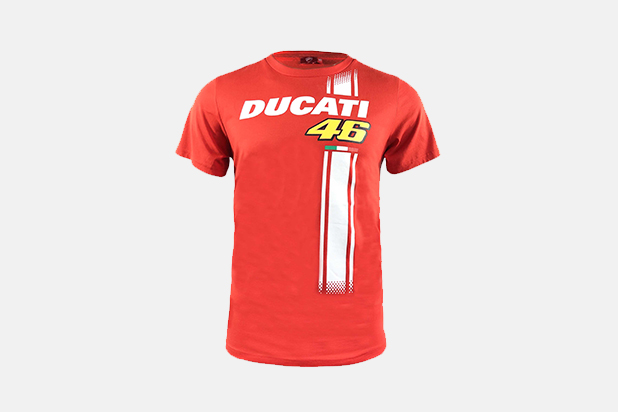
| Team shirts | Short and long sleeve T-shirts, sublimated polo | Highest volume, most logo positions, widest size range. |
| Polos | Mesh pique or cotton pique, embroidered | Hospitality, sponsor meetings and garage staff; the smartest garment in the range. |
| Headwear and accessories | Caps, beanies, bags, umbrellas | Merchandise volume and sponsor exposure away from the circuit. |
| Staff and role kit | High-visibility outerwear, mechanics' kit | Role identification and safety compliance for people working near the car. |

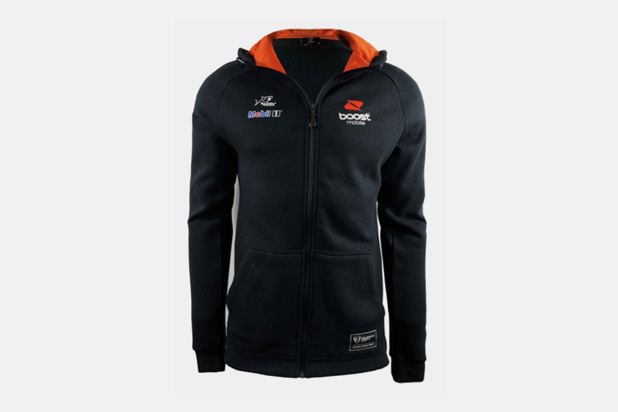
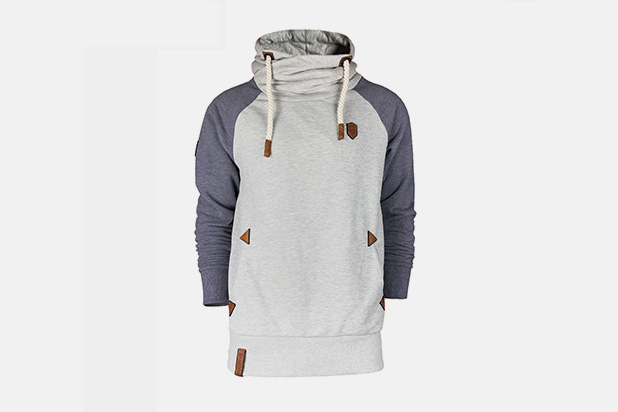
A team jacket is the most photographed piece in an F1-style team range, so its panel layout and logo positions are agreed before the fabric is cut.
The jacket is the piece that defines how a team range looks, and it is also the most complex to produce. The table below covers the decisions worth locking down.
| Element | Options | What to confirm |
|---|---|---|
| Shell fabric | Bonded softshell, padded nylon, three-layer performance shell | Weight, water repellency and wind resistance — and how the fabric reads in photographs. |
| Panel layout | Two-tone or three-tone blocking, contrast sleeves, side panels | Panels are where the colourway lives; agree the layout on a flat drawing before sampling. |
| Hardware | Zip type, pullers, drawcords, toggles, cuff adjusters | Hardware is a visible quality signal and the most common failure point. |
| Lining | Mesh, taffeta or fleece backer | Warmth versus packability, and whether the jacket will be worn over a mid layer. |
| Lining print | Printed inner lining, custom tape, woven labels | Small details that separate merchandise from team kit, at modest cost. |
| Logo positions | Chest, sleeve, back, collar, zip pull | A position diagram with dimensions, agreed before production. |
Shirts carry more logos than any other garment, and they are ordered in the largest quantities, so small specification errors multiply quickly.
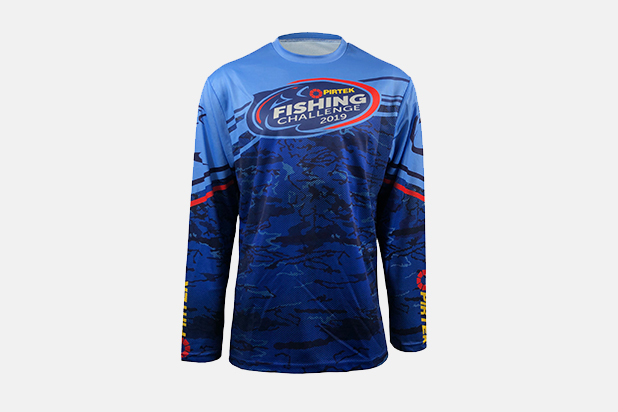
Fabric and weight. Sublimated polyester knit for team shirts and warmer-weather staff kit; cotton-rich or pique constructions for hospitality and sponsor-facing roles. Specify weight in grams per square metre.
Fit. Decide between a standard fit and a more athletic cut, and confirm it on a sample rather than in a description. Women's fits should be specified separately rather than assumed from a unisex pattern.
Decoration by position. Sublimation for large graphics and full-colour artwork, embroidery for crests and small marks, transfers for sponsor logos that may change mid-season.
Collar and placket on polos. The single biggest driver of perceived quality; a well-structured collar and a tidy placket change how the whole range reads.
Size curve. Build it from the actual wearer list — garage staff, hospitality, guests and merchandise buyers have different size distributions.
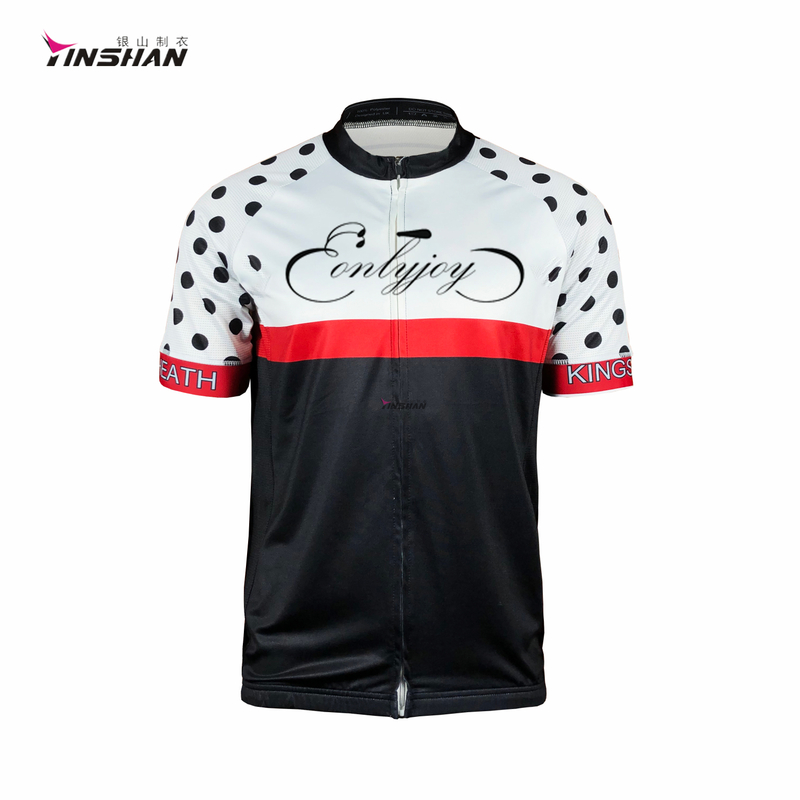
Team shirts carry the widest range of logo sizes in a range, which is why a position diagram matters more than a description.
The hardest part of a team wear programme is not the first order; it is the second, placed three months later when a sponsor has changed and the season is already underway.
| Requirement | How to secure it | Why it fails otherwise |
|---|---|---|
| Colour consistency | Record colour references and keep physical fabric swatches on file | Colour described verbally drifts between production runs and between fabric types. |
| Construction consistency | Lock fabric weight, panel layout and hardware in a written specification | Silent substitutions change fit and appearance without changing the price. |
| Logo accuracy | Keep approved artwork files and a position diagram for every garment | Re-drawing a logo introduces small errors that are obvious on broadcast footage. |
| Fit consistency | Keep the approved size chart and grading rules | A reorder in the same nominal size can arrive noticeably different. |
| Repeatability between seasons | Retain patterns, screens, artwork and specifications on file | Rebuilding a range from scratch every year costs sampling time and risks a visible change. |
A complete brief removes most of the friction from a team wear project. Send the following together.
Garment list with quantities. Per garment type, per size, per role group.
Colourway. Body, panel and trim colours with references, plus any colour that must match an existing garment.
Logo position diagram. Every mark, its size, its position and its decoration method.
Artwork files. Vector for print and sublimation, stitch-ready for embroidery.
Fabric specifications. Composition and weight per garment, including any performance or recycled requirement.
Labels and packaging. Own-label branding, care and size labels, hangtags and bags.
Sampling plan. Which garments are sampled, and who signs off.
Schedule. Required delivery date, worked back through sampling, production and shipping.

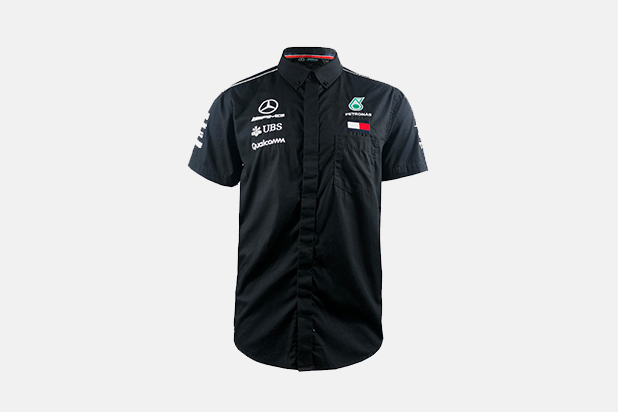
Polos are the hospitality and garage piece: smart enough for a sponsor meeting, hard-wearing enough for a full day in the paddock.
Yes. We produce racing-style team wear to your specification — the panel layout, colourway, fabric and logo positions you approve. Where a design reproduces a real team's identity, the buyer is responsible for holding the appropriate licence or permission before production.
It depends on the number of garments, the complexity of the panel layouts and whether any fabrics or trims need to be sourced. Sampling and bulk production are separate stages, so ask for both dates and plan backwards from the first event of the season.
Sublimation for large graphics on synthetic shirts, especially where artwork is full colour. Embroidery for crests, small marks and structured garments such as polos and jackets. Transfers where logos may change during the season and the garment itself will not.
Yes, if the original specification and artwork are retained. Adding a printed or transferred logo to an existing design is straightforward; changing a sublimated design is also possible but requires a reprint of that panel. Confirm the process with your supplier before the season starts.
Team wear is a specification-driven product. Decide the garment list, lock the fabric and panel layout, agree a logo position diagram and confirm the colour references — then approve a physical sample before bulk production. That is what allows a second order to look exactly like the first, three months into the season.
Send Yinshan Sportswear your garment list, artwork, sizes, quantity and delivery country to request a custom quote.
 English
 Español
 Português
 Français
 Pусский
 Deutsch
 العربية