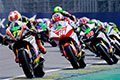
Race flags are the oldest communication system in motorsport, and they are still the one that matters most. Every colour carries an instruction that a driver has to read at speed, and every marshal on the circuit has to know the meaning without hesitation.
For buyers of race teamwear and event clothing, flags are also useful design material. They supply a colour language that is understood instantly in any market, and they define the safety clothing that events are required to provide. This guide explains what the flags mean and how that knowledge feeds into the clothing an event or a team orders.
Quick answer: Motor racing flags are a fixed signalling system — green means the track is clear, yellow means caution, red means the session is stopped, blue means a faster car is approaching, white indicates a slow vehicle, black directs a specific car to pit, and the chequered flag ends the race. For teamwear and event clothing, flag colours are a practical starting point for colour systems, and the circuit's safety roles — marshals, officials, medical and pit crew — determine which garments must be high-visibility.
It is written for race teams, event organisers, motorsport merchandising brands and distributors ordering race clothing in quantity. For the wider kit that surrounds a race weekend, see our custom teamwear range and promotion and events clothing, or brief the whole order as a custom requirement.
The table below is the reference most tracks still work from. The details vary slightly between sanctioning bodies and between two-wheel and four-wheel competition, but the common set is stable and well understood by competitors and spectators alike.
| Flag | Meaning | What the driver is expected to do |
|---|---|---|
| Green | The track is clear; the session or sector is running normally | Resume racing conditions. Shown at the start and after a hazard has cleared. |
| Yellow, single | Hazard beside or on the track in that sector | Slow down, do not overtake, be prepared to stop. No overtaking is the operative instruction. |
| Yellow, double | Hazard blocking the track or marshals working nearby | Slow significantly and be prepared to change direction or stop entirely. |
| Yellow with red stripes | The surface is affected — oil, water, debris | Treat as a hazard flag and adjust grip expectations accordingly. |
| Red | The session is stopped | Reduce speed and proceed to the pits or a safe position as directed. The session restarts only by official decision. |
| Blue | A faster car is approaching to lap or overlap | Hold your line and allow the faster car past. Ignoring it usually ends in a penalty. |
| White | A slow-moving vehicle is on that part of the track | Expect a much slower car — a recovery vehicle, a service vehicle or a competitor with a problem. |
| Black | The flag is directed at a specific car, which must pit | Stop at your pit box. A black flag is usually accompanied by a mechanical or disciplinary instruction. |
| Black with an orange circle | The car has a mechanical problem that must be repaired | Pit for inspection. Used for safety-critical defects such as loose bodywork. |
| Black and white, diagonally split | A warning about unsporting behaviour | Treat as a final notice; a second showing usually becomes a penalty. |
| Chequered | The session or race has ended | Complete the lap, slow down and exit the track. The most photographed flag in sport. |
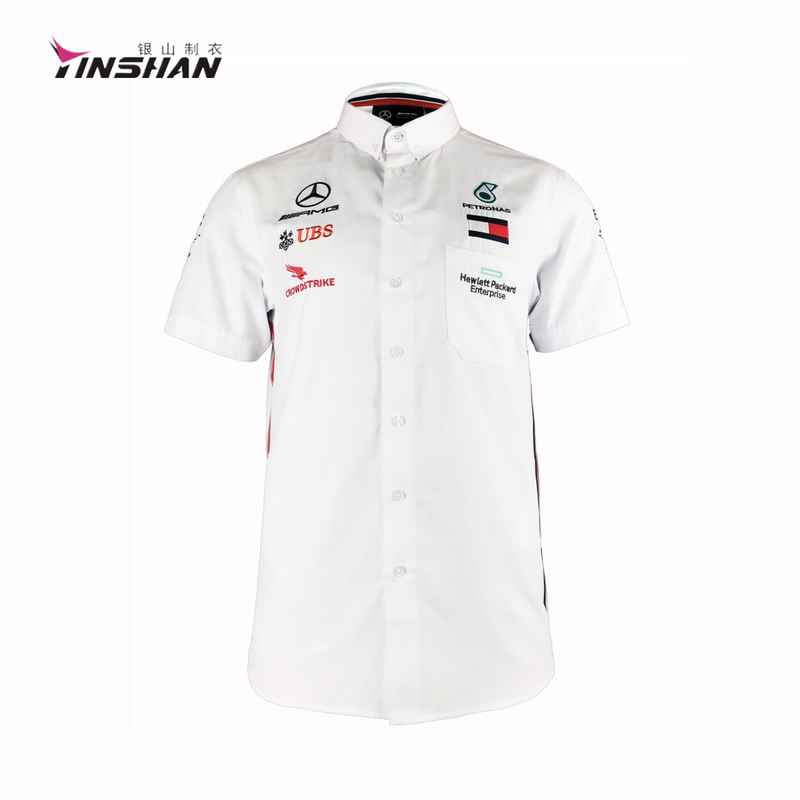
Flag colours are a ready-made design language for race teamwear: green for the start, red for a stopped session, and the chequered flag for the finish.
Flag colours work well in teamwear because they arrive with meaning attached. A buyer can build a colour system that spectators already understand, and use it consistently across shirts, jackets and staff kit.
| Flag reference | Design use | Practical note |
|---|---|---|
| Chequered pattern | Finish-line motifs, trims, collar and cuff detail, merchandise graphics | Reads best at small scale as a trim; at large scale it competes with sponsor logos. |
| Green | Training and pit kit, "go" graphics, sustainability-led ranges | A strong green photographs well but must be matched precisely across garments. |
| Yellow and high-visibility tones | Marshal, official and safety roles | Reserved by convention for safety clothing — avoid using it as a decorative team colour on staff kit. |
| Red | Team hero colour, sponsor accents, race-day kit | Red shifts visibly between fabric types; approve it on every substrate in the range. |
| Blue and white | Traditional racing livery, colour blocking, panel design | The most flexible combination for a range that has to look current over several seasons. |
One rule keeps these designs usable: pick one flag reference as the hero and use the others as supporting detail. A garment that quotes four flags at once reads as a souvenir rather than a team kit.
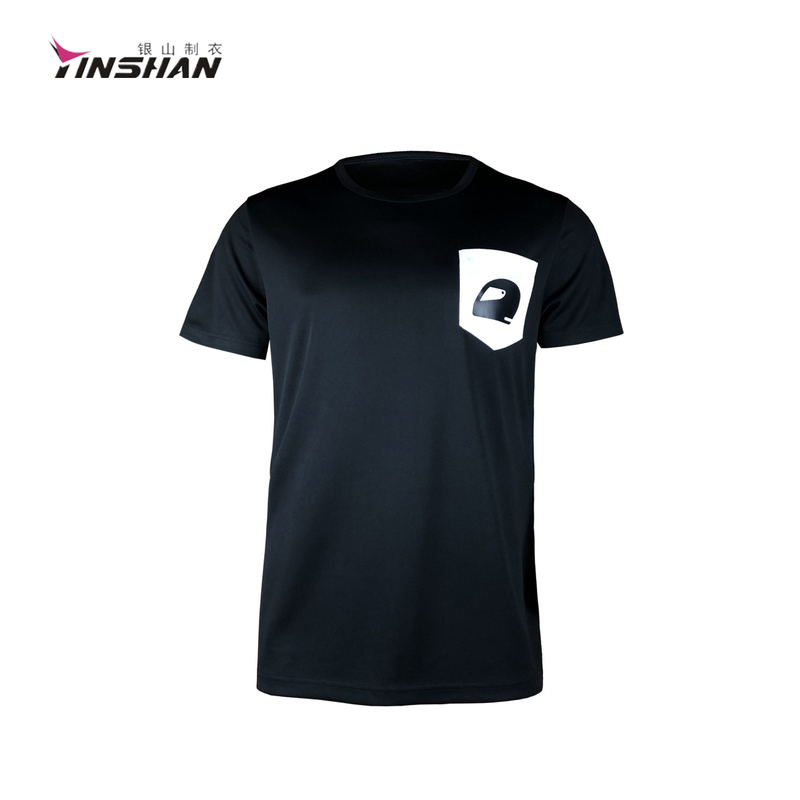
Team and organiser kit is often specified in high-visibility colours so officials and marshals can be identified instantly.
Flags are only part of the signalling system. The clothing worn by the people on the ground is the other part, and it is bought by different budgets and different buyers.
Marshals. High-visibility outer layers with clear role identification. Ordered in bulk, in a size curve, and replaced regularly because they are worn in all weathers.
Officials and stewards. Structured, smart clothing that photographs well and identifies authority — typically polos, jackets and caps, often in a single event colourway.
Medical and recovery crews. Garments that prioritise visibility and durability, with easy identification of role across the team.
Pit crew. Team-coloured kit plus any mandatory protective items — helmets, gloves, fire-resistant layers — which are specified separately from teamwear.
Hospitality and sponsor staff. Brand-led clothing where appearance and comfort matter more than technical protection.
Teams and riders. Identity-led kit that carries colour and sponsor branding.
Event organisers usually need all six groups supplied in one order, with one colour system and one size curve. That is largely a coordination problem, and it is best solved by giving a single supplier the full role list rather than ordering each group separately.
Race teamwear orders run on deadlines that cannot move, so the specification has to be right the first time. Settle these points before sampling begins.
Role list. Which garments for which group — riders, team, officials, marshals, hospitality, fans.
Colour system. Hero colour, supporting neutrals and any safety colours that are reserved for particular roles.
Decoration plan. Sublimated bodies, printed graphics, embroidered logos, and where each method applies.
Sizes and quantities. A size curve per role group, with individual sizes for anyone customer-facing.
Fabric by function. Lightweight knits for warm events, softshell and outerwear for weather-exposed roles.
Timeline. Working backwards from the event date, including the approval step.
Documentation. Care labelling, own-label requirements and any compliance wording your market needs.
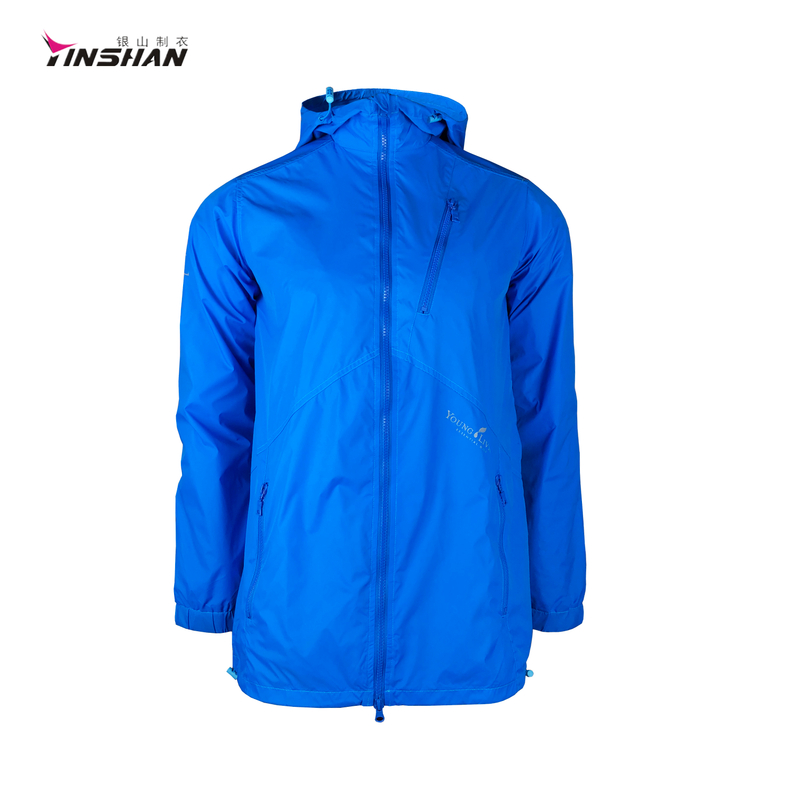
Marshal and official clothing is bought by event organisers, not by teams, which is why it usually follows a separate colour and safety brief.
Caution. A single yellow indicates a hazard in that sector of the track, and a double yellow indicates a hazard blocking the track or marshals working close to it. In both cases the instruction is to slow down, not to overtake and to be ready to take avoiding action.
The chequered flag, also the most recognisable image in motorsport and the most widely used motif in racing merchandise. It signals that the session or race has finished and that competitors should complete their lap and leave the circuit.
Because competitors and staff are trained to read yellow as a warning. Using high-visibility yellow or orange for decorative staff kit creates genuine confusion about which roles are safety roles. Most organisers keep those colours for marshals, medical and recovery crews.
Yes. A single order can cover team kit, official and marshal clothing, hospitality uniforms and fan merchandise, all built on one colour system. Send the role list, quantities and deadline together so the production schedule can be planned around the event date.
Race clothing has a fixed deadline and a visible audience. Understanding what the flags mean is the first step; deciding the role list, the colour system and the decoration plan is what turns it into an order that arrives on time and looks deliberate on camera.
Send Yinshan Sportswear your garment list, artwork, sizes, quantity and delivery country to request a custom quote.
 English
 Español
 Português
 Français
 Pусский
 Deutsch
 العربية