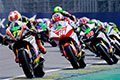
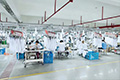
A major games event does three things to sportswear demand at once. It creates a visible market for performance kit, it creates a short and intense market for merchandise, and it sets a design direction that club and school orders follow for the next two seasons. Understanding which of those three you are selling into determines everything about how you order.
This page looks at what a major games event means for apparel brands and clubs — the three demand types, the calendar constraint, and the sourcing lessons that carry over to ordinary orders.
Quick answer: There are three distinct markets around a games event: performance kit for athletes (specification-led, ordered early), team and delegation apparel (identity-led, ordered mid-cycle), and fan merchandise (volume-led, ordered late with a fixed date). All three have one thing in common — the date cannot move. That makes the event cycle a test of lead-time discipline rather than of design, and it is why buyers who plan a season ahead do well and buyers who react do not.
Treating event-driven demand as one market is the most common planning error, because the three parts differ in buyer, specification and timing.
| Market | Who buys | What decides the order |
|---|---|---|
| Performance kit | Teams, national bodies, professional clubs | Specification and testing, decided well before the event |
| Delegation and staff apparel | Event organisations, teams, sponsors | Identity and consistency across many sizes |
| Fan merchandise | Retail and event channels | Volume, speed and a fixed on-sale date |
| Club and school follow-on | Buyers inspired by what they see | Design direction, ordered in the following season |
The fourth row is the one buyers underestimate. The commercial effect of a games event on ordinary club orders arrives after the event, not during it, and it takes the form of design preferences rather than new demand.
Everything about an event order is fixed by a date that was set years earlier. Working backwards from that date is the whole discipline.
Fabric and trim selection — needs to be settled before sampling starts, especially for a custom knit.
Sampling — one round at minimum, more where a custom fabric or panel layout is involved.
Production — sized to the volume, and competing with every other buyer for the same capacity.
Packing — specified at sampling, since event packing is usually individual or per-person.
Freight — booked early, because capacity tightens as an event approaches.
The tightest bottleneck is rarely production. It is usually the combination of a late artwork decision and a booked freight slot, which is why the design work has to finish early even when the event feels distant. The stage-by-stage view is in producing custom sportswear.
Event-level performance kit is specification-led. The garment is worn once, on camera, in conditions that are known in advance, and it carries a national or team identity that has to be reproduced exactly.
Fabric chosen for the expected conditions, not for general use.
Fit sampled on athletes rather than on a size chart alone.
Colour matching verified against an official reference, since an event identity is fixed.
Decoration approved on fabric, because screen proofs mislead on saturated colours.
A documented specification, so the range can be extended after the event.
Very little of this transfers to a club order, and that is the point: a club buying on an event aesthetic should not attempt to buy on an event specification. What transfers is the design direction, which is discussed in designing sportswear that stands out.

Event-driven demand is decided months before the event, which is why the production calendar matters as much as the design.
Merchandise is a volume business with a short window. It is bought by people who are not athletes, in sizes that follow a general population rather than a squad, and it is judged on whether it arrives in time to sell.
Size curve follows the general population, weighted heavily to the middle sizes.
Decoration is printed rather than embroidered, for speed and unit cost.
Packing has to support retail or hand-out, not team issue.
Order quantities are decided against a forecast, so a restock route matters as much as the first order.
The most useful preparation for merchandise is a documented specification, so a restock can be placed quickly and match the first run. The same principle as any stocked merchandise programme, covered in planning a merchandise order.
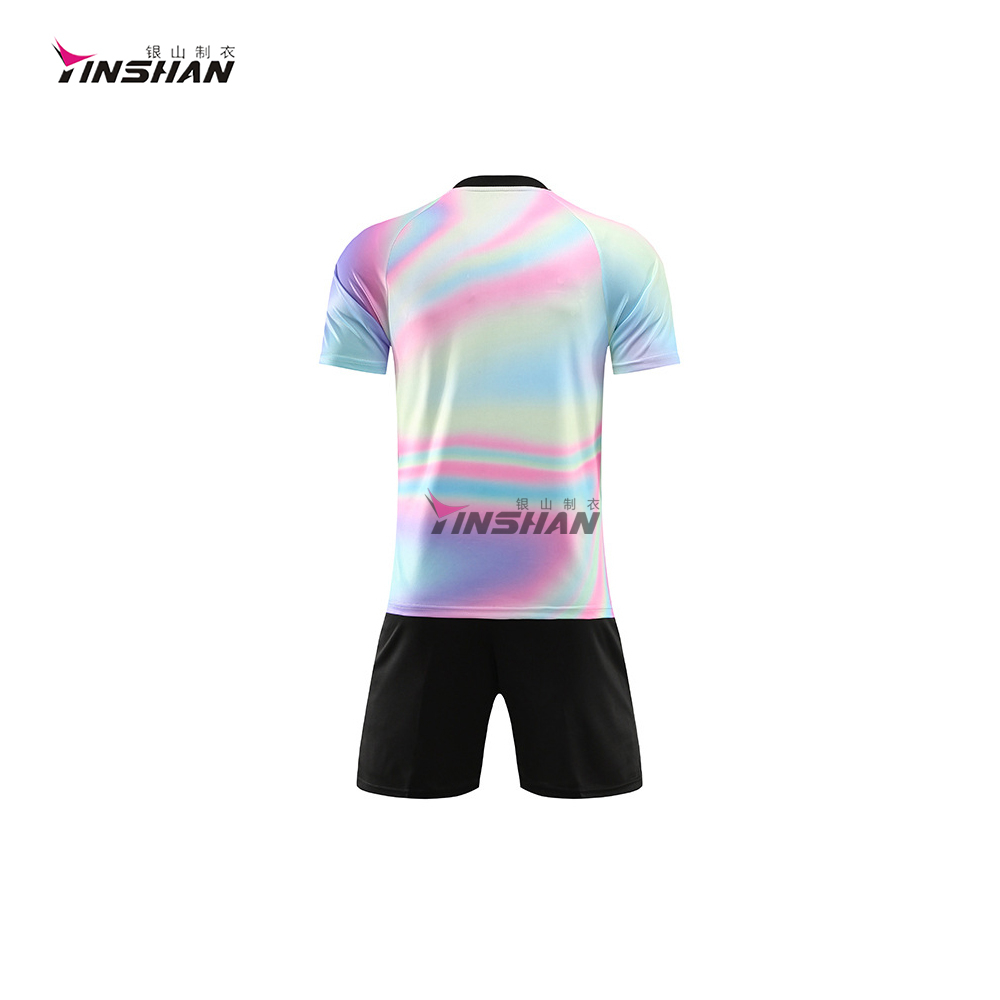
Fan merchandise is a separate product from performance kit, with a different buyer and a much shorter selling window.
Every event generates a layer of apparel that is ordered late and needed early: staff kit, official wear, volunteer clothing, media and hospitality garments. These are identity-led rather than performance-led, and they are needed in many sizes at a moment's notice.
Staff and volunteer kit — often the largest single quantity after merchandise.
Official and hospitality apparel — smaller quantity, higher expectation of finish.
Media and broadcast garments — designed to read on camera, with placement checked accordingly.
Sponsor and partner apparel — ordered by a third party, usually to a tighter deadline than the event.
These orders are the ones most likely to be late, because they sit below the headline kit in everyone's attention and above it in headcount. Specifying them early costs nothing and removes the usual scramble.
Work from the in-hand date backwards and allow for freight capacity, not just production time.
Fix the specification in writing, because a repeat order without it costs a sample round.
Sample in two sizes where fit tolerance is tight, which is cheaper than a returned run.
Approve colour on fabric, not on a screen, especially for saturated or official colours.
Book freight early, since capacity tightens ahead of any major date.
None of these is specific to a games event. They are simply the practices that an immovable date forces on a buyer, and they improve an ordinary club order in exactly the same way. The comparison of production methods that such an order relies on is set out in sublimation and digital printing.

The garments nobody thinks about — staff, officials, volunteers — are usually the ones ordered last and needed first.
The commercial opportunity around an event is not the event itself but the season after it, when club, school and corporate buyers act on what they have seen. A brand that documents its specifications during the event cycle can respond to that demand quickly, because it is repeating a garment rather than starting a project. That is the real prize, and it belongs to whoever kept the paperwork.
Work backwards from the in-hand date and allow for sampling, production, packing and freight. For a decorated order with a custom fabric, plan a full season ahead; for merchandise in a stock fabric the window is shorter but freight capacity becomes the constraint as the date approaches.
Four groups: performance kit for athletes, delegation and staff apparel, fan merchandise for retail and event channels, and sponsor or media garments. The last group is usually the smallest in quantity and the most likely to be ordered late.
Yes. Merchandise is bought by the general public, so the size curve follows the population rather than a squad, decoration is usually printed for speed and cost, and packing has to support retail or hand-out rather than team issue.
Design direction, mainly. The specification standards of elite kit are not transferable at club quantity, but the colour-blocking, panel layout and typography direction is, and it is the part that clubs and schools ask for after an event.
Send the date you need goods in hand and the audience you are dressing — athletes, staff or fans — and we will map the schedule backwards and propose a specification that the date can actually support.
 English
 Español
 Português
 Français
 Pусский
 Deutsch
 العربية