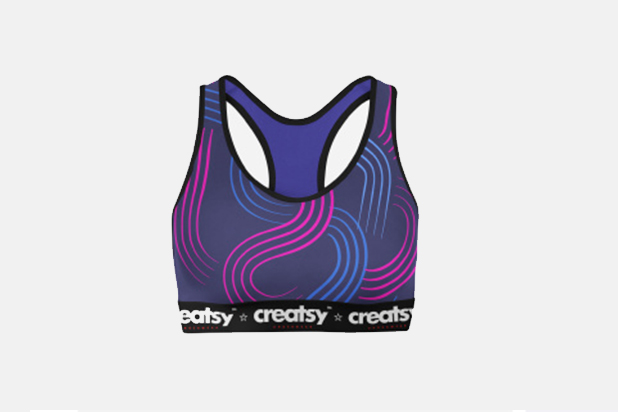
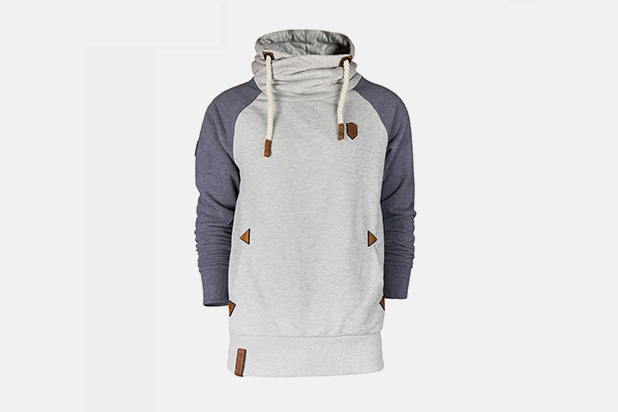
Comfort is not a soft benefit in motorcycle racing. A rider who is overheating, restricted or distracted by a seam is a slower rider, and a slower rider makes worse decisions. The three qualities buyers ask for in a custom suit — comfort, safety and performance — are not separate features; they are three outcomes of the same set of design decisions.
This guide looks at those decisions from the buyer's side: how ventilation, stretch and liner choices affect the way a suit performs, how to keep protection intact while improving comfort, and what to specify so a factory can build the suit your riders actually asked for.
Quick answer: Comfort in a racing suit comes from three things — ventilation that matches the climate, stretch panels placed away from impact zones, and a liner that manages moisture. Safety comes from the shell material, the protector specification and the seam construction. Performance is the result of getting all of it right for one rider in one riding position. Custom production exists to tune those variables, not to change the colourway.
This is written for race teams, privateer riders, motorsport merchandising brands and distributors who are sourcing rider kit and team kit together. If you are building a wider season kit, our custom sports teamwear range and custom sportswear collection cover the pieces that sit around the suit, and you can brief the whole order through a single custom requirement.
Buyers often treat comfort as something that appears in the finished garment. In practice it is settled by four decisions, all of which are made before production starts.
Ventilation strategy. Perforated leather panels, mesh inserts and zip vents all move air, but each removes material. Where the vents go decides whether the suit cools the rider without weakening the contact zones.
Stretch placement. Accordion leather panels and stretch textile inserts at the shoulders, elbows, waist and knees give mobility. Placed over an impact area, they create a weakness instead.
Liner and moisture management. A fixed mesh liner, a removable liner and a separate under-suit all behave differently after a full race distance.
Pattern and fit. The most effective comfort feature is a pattern cut to the rider's measurements and riding position, because nothing else can compensate for a suit that pulls in the wrong direction.

Comfort decisions in a racing suit — ventilation, stretch placement, liner — are made at the pattern stage, long before the leather is cut.
Every material decision trades one performance characteristic against another. The table below is the one we use when a buyer asks what to choose.
| Option | Effect on comfort | Effect on protection and performance |
|---|---|---|
| Full-grain cowhide | Warmer and heavier; needs deliberate ventilation to be usable in hot climates | Highest abrasion resistance among mainstream options; the reference standard for circuit racing |
| Kangaroo leather | Lighter and thinner, so less restrictive across the chest and arms | Comparable abrasion performance at lower weight; higher material cost and tighter supply |
| Technical textile and mesh | Coolest and lightest option; easiest to wear all day | Protection depends on fabric choice and reinforcement placement; suited to road and touring use |
| Hybrid construction | Comfortable in mixed conditions if the panels are placed well | Leather on contact zones, textile on flex zones — strong when the transition points are specified carefully |
A useful rule for buyers: decide the climate and the discipline first, then the material. A suit designed for a European spring circuit will feel unwearable in a hot, humid market, and the reverse is also true.
Comfort upgrades are the easiest way to reduce protection by accident, because the features that make a suit more wearable are usually the features that remove material. The table below lists the common changes and what each one costs in protection terms.
| Comfort change | What it gains | What to check so protection is not lost |
|---|---|---|
| Adding perforation or mesh venting | Airflow through the chest, thighs and arms | That vents are placed outside abrasion-critical zones and are not stitched through the protector pockets. |
| Adding stretch panels | Mobility at the shoulders, waist and knees | That no stretch panel sits directly over shoulder, elbow, hip or knee armour. |
| Removing the aerodynamic hump | Less bulk at the neck; lower cost | Whether the model relied on the hump for structure, and how the collar behaves at speed without it. |
| Switching to a lighter liner | Cooler wear and faster drying | That the liner does not allow the suit to shift over the armour when the rider moves. |
| Moving protectors to reduce chafing | Less discomfort on long stints | That the new position still covers the joint through its full range of movement. |
The pattern that survives this trade-off best is a suit where comfort features are additive: vents and stretch zones added to a complete protective plan, rather than material taken away from one.
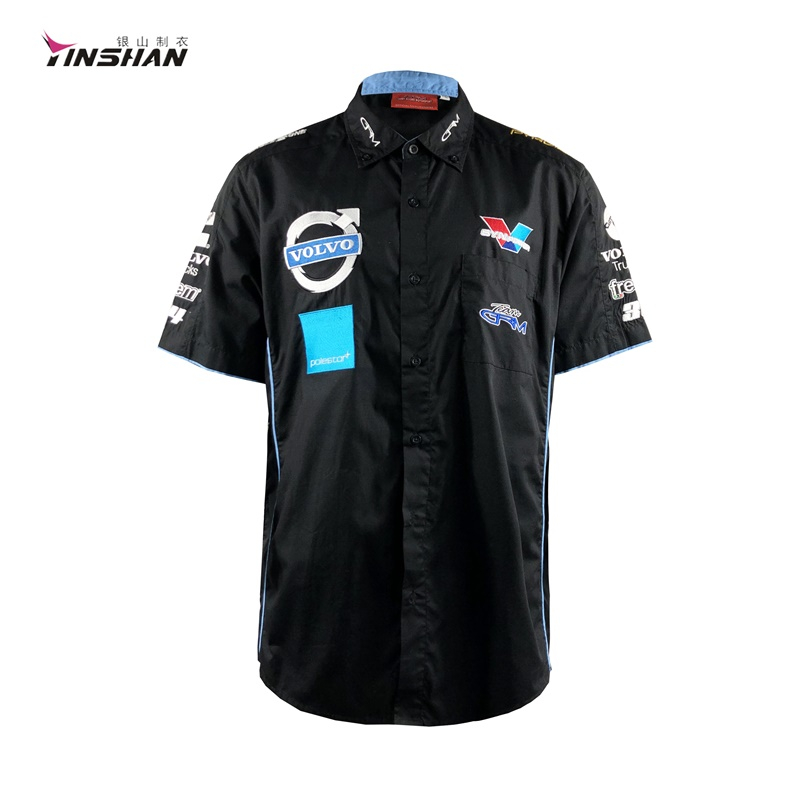
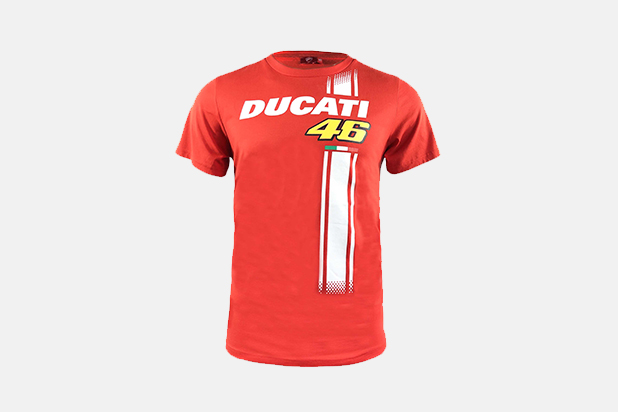
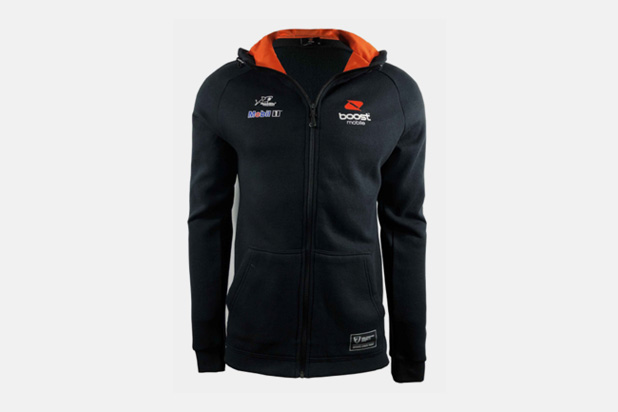
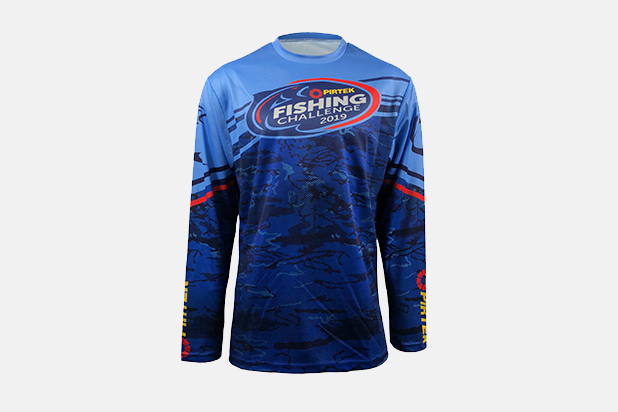
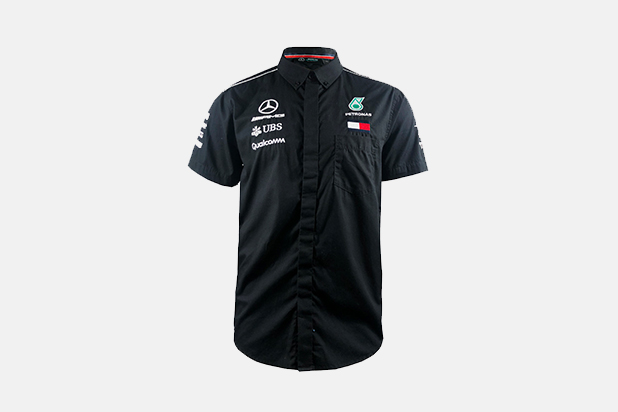
Teams usually specify rider kit and team kit together, so colours, logos and trims stay consistent across the whole order.
Some specifications are invisible in a photograph and obvious on the bike. These are the ones teams ask about after the first test day.
Freedom at the shoulders. The arm must reach the bars without the suit lifting the elbow armour away from the joint.
Knee stability. Knee sliders and knee armour should stay aligned when the rider hangs off the bike, not rotate.
Weight distribution. A lighter material reduces fatigue over a race distance, which is why kangaroo leather is used at the top of the sport.
Collar comfort. A collar that presses or rubs becomes a distraction at exactly the wrong moment.
Consistent cuffs and closures. Gloves and boots must seal against the suit without gaps, so cuff dimensions are worth specifying.
Team orders differ from individual orders: they need repeatability. A measurement template, a locked specification and a documented approval sample are what allow a second and third order to arrive identical to the first.
| Specification area | What to lock in the brief | Why teams care |
|---|---|---|
| Pattern per rider | A documented measurement set, including riding position notes | Protector placement depends on the pattern; reorders stay correct without re-measuring. |
| Shell material | Material, thickness and colour reference | Material substitutions silently change both weight and abrasion performance. |
| Protector package | Standard, level, coverage and retention method | Protectors are the component most easily substituted and the hardest to inspect later. |
| Ventilation and stretch plan | A marked-up diagram showing where material is added or removed | Prevents comfort upgrades from weakening the suit. |
| Branding | Logo positions, decoration method and artwork files | Sponsor commitments are contractual, and positions must match the agreements. |
| Approval sample | One physical suit signed off before bulk | The only reliable reference when a later batch is compared against the first. |
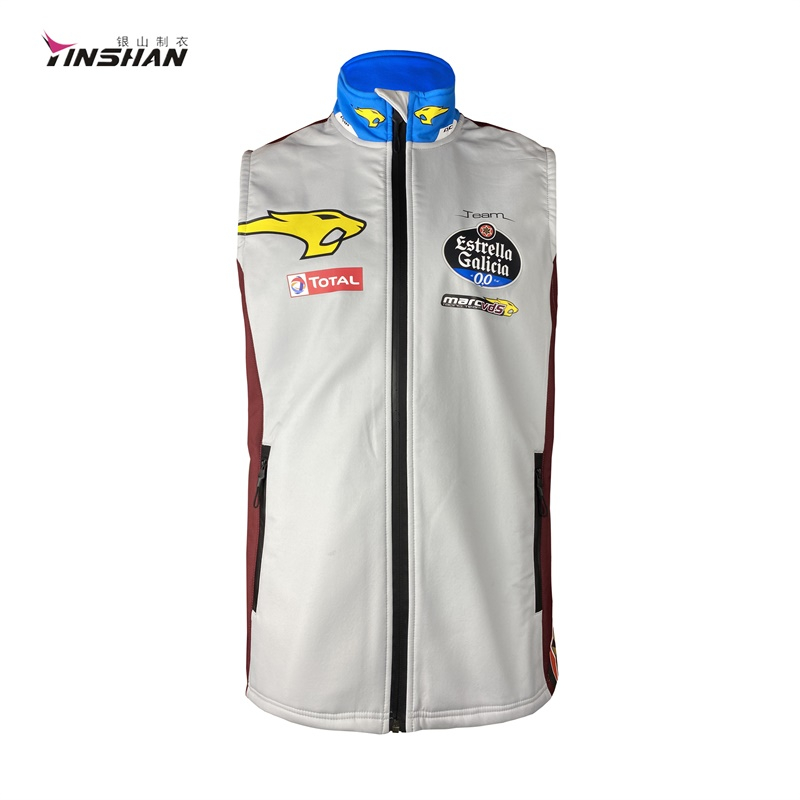
Vests, under-layers and pit kit are part of the same order as the suit, and they are usually the pieces that get reordered most often.
Start with material and ventilation rather than with a thinner suit. Perforated panels and mesh inserts in non-contact zones, a lighter moisture-managing liner and a close-fitting pattern usually achieve more than removing armour. For very hot markets, a hybrid or textile construction is often the more sensible starting point.
The difference is mostly in pattern work and measurement time rather than in materials. For a team, the cost is usually justified by a single avoided problem: correct protector placement, fewer returns, and reorders that match the original specification without re-measuring every rider.
Yes. Most team orders combine individual patterns for the lead riders with a graded size range for staff and support kit. Ask for the size curve to be included in the brief and confirm it on a physical sample of at least two sizes.
The discipline and riding conditions, material preference or reference garment, protector requirements, number of riders, sizes or measurements, branding and artwork, quantity, delivery destination and required date. With those details a factory can quote a realistic price and lead time instead of a range.
Comfort, safety and performance are the same conversation. Decide the climate and the discipline, specify the shell and the protectors, plan ventilation and stretch so that protection is never traded away, then approve a physical suit before bulk production.
Send Yinshan Sportswear your garment list, artwork, sizes, quantity and delivery country to request a custom quote.
 English
 Español
 Português
 Français
 Pусский
 Deutsch
 العربية