Packaging and shipping are the last two stages of an order and the ones most often decided at the last minute. That is a mistake with a measurable cost: a carton specification agreed after production finishes is either accepted with the delivery schedule at risk, or rebuilt at your expense.
This page covers how sportswear is packed and shipped from China — what to specify, how cartons are planned, which freight mode suits which order, and what the documentation involves.
Quick answer: Decide the packing specification while the order is still in sampling. The important choices are whether garments are individually polybagged, whether they are packed per person or per size, what is printed on the label, and the carton size and weight. Shipping then follows from urgency and volume: sea freight for bulk planned a season ahead, air for medium urgency, and express for samples and small top-ups. Packing that suits the receiving club or store often costs little more than packing that suits the factory.
The factory's default is usually the cheapest option for the factory: flat-packed garments in cartons by size. For a club handing out kit to forty players, that default creates a sorting job at the other end. For a retailer receiving stock, it may be exactly right.
Polybag or no polybag — individual bagging protects the garment and eases handing out, but adds handling cost.
Per person or per size — per-person bundles suit team and school orders; per-size packing suits stores.
Size sticker or label — the cheapest way to make a carton usable without opening it.
Carton weight and size — affects freight cost, manual handling and how easily a carton can be moved.
Inner packing material — tissue, board or a hanger pack, which raises protection and cost together.
There is no universal best answer, only a better fit. A school merchandise store wants flat, size-labelled cartons. A club wants per-player bundles. An event wants garments folded into individual bags that can be handed over immediately.
Carton planning is a volume problem with commercial consequences. The factory knows the packed volume per garment and works out how many fit in a carton at a sensible weight. Buyers should ask for the carton count, the weight per carton, and the dimensions before shipping, because those three numbers decide the freight charge.
| Specification | What it affects | Sensible default |
|---|---|---|
| Carton weight | Freight cost, manual handling limits | Keep within the limits your market applies to single-person handling |
| Carton dimensions | Pallet fit and freight class | Aim for a footprint that palletises evenly |
| Carton count | How many labels and inventory lines you receive | Fewer, larger cartons for bulk; more, smaller for stores |
| Mixed-content cartons | Receiving speed | Avoid mixing sizes unless the packing is per person |
If the order is going to a warehouse that uses barcodes, tell the factory before packing starts. A barcode label applied at the packing table costs far less than one applied on arrival at your warehouse, and it avoids a sorting line.
Three modes cover nearly every apparel order, and the choice is a trade between cost and time that is worth computing per order rather than per habit.
Sea freight — lowest cost per unit, suited to bulk orders planned a season ahead; transit is measured in weeks.
Air freight — a middle option, suited to a medium-urgency order that cannot wait for a sailing.
Express courier — fastest and most expensive per unit, suited to samples, approvals and small top-ups.
The comparison that matters is landed cost per garment, not freight cost alone. Air freight on a small order can approach the garment cost per unit while still being the right decision if the goods would otherwise miss a season. Shipment and delivery terms in more detail are in shipping and delivery for sportswear orders, and the production stages that come before packing are set out in the production process from pattern to finished garment.
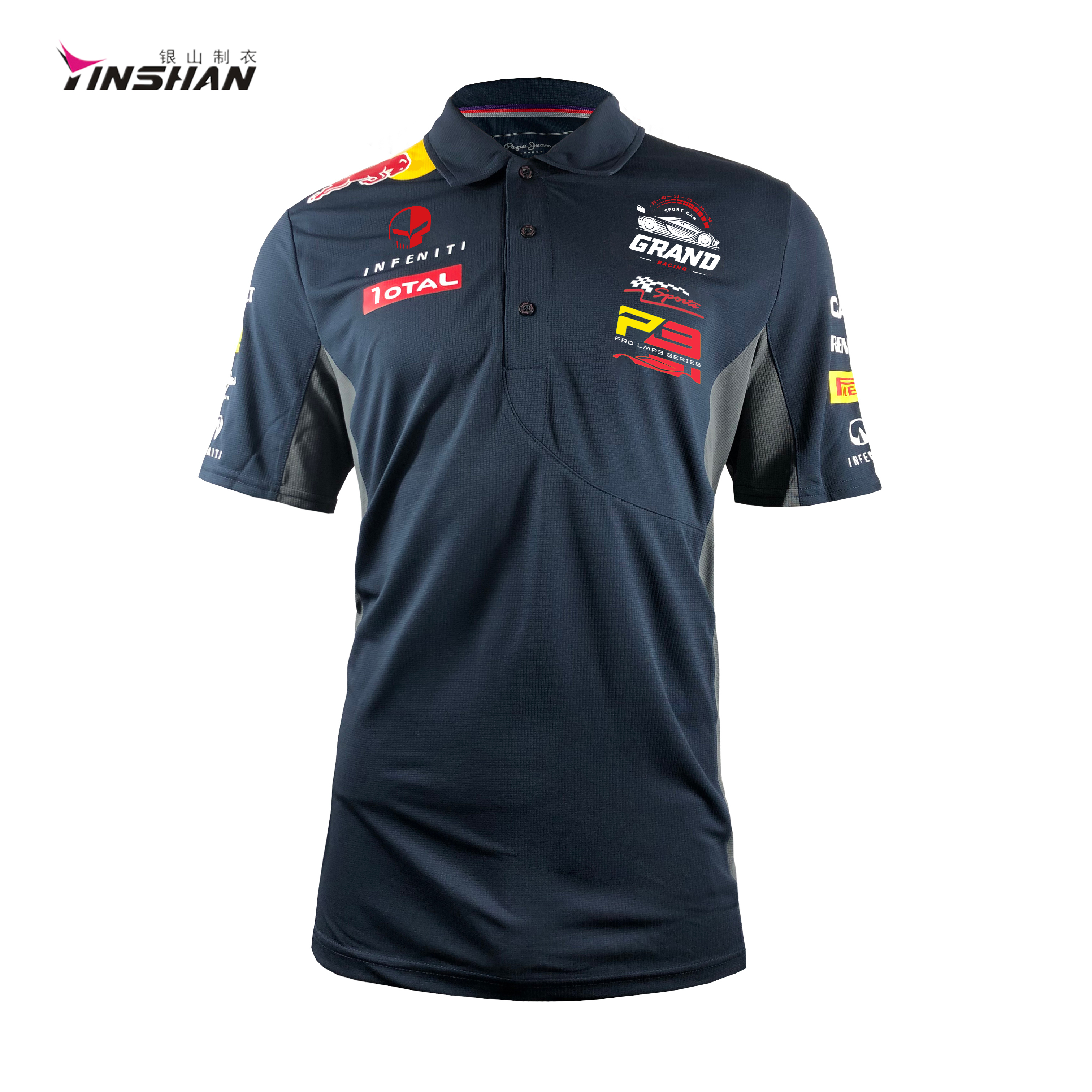
Packing is part of the product in a team order: the carton breakdown decides how long it takes the club to hand everything out.
Export documentation is routine when the specification is clear and painful when it is ambiguous. The order needs a commercial invoice, a packing list, and the transport document appropriate to the mode, plus any certification or origin paperwork your market requires.
Two details cause avoidable delay. The first is a description of goods that does not match what is inside the carton, which customs officers are entitled to question. The second is an incomplete consignee address or a delivery point that cannot accept the vehicle. Both are buyer-side items, and both are trivial to fix before shipping.

Individual polybagging slows handling at the factory but removes an entire step at the receiving end.
A delivery date is the sum of production, packing and transit, plus the documentation and booking time in between. Buyers who work backwards from the in-hand date rather than forwards from the order date rarely miss it.
Confirm the packing specification at sampling, not after production.
Confirm the freight mode and the forwarder at least two weeks before goods are ready.
Send the consignee details and any labelling requirement in writing.
Allow a buffer for the sailing or flight slot, which is not controlled by the factory.
For a first order, add one more buffer. The first shipment of a new relationship involves more questions from both sides, and that is a normal cost of starting rather than a sign of a problem.

Carton weight and size limits are commercial decisions as well as practical ones, because they set the freight cost.
The recurring losses are packing spec changes after production, a freight mode chosen late, and a consignee detail that only appears when the goods are ready to move. All three are decisions rather than events, and all three can be fixed in a single written specification agreed before the first garment is cut.
It depends on how the goods will be received. Per-player or retail delivery benefits from individual bagging; bulk delivery to a warehouse that re-packs anyway does not. The cost is modest, but it should be decided at sampling rather than after production.
Express is measured in days, air freight in one to two weeks including handling, and sea freight in several weeks to the destination port. Total door-to-door time also includes booking, documentation and inland delivery, so work from the in-hand date backwards.
Either side can. Many buyers use their own forwarder to keep control of the schedule and the cost, while others ask the factory to quote a delivered arrangement. Whichever you choose, fix it in writing before goods are ready, not afterwards.
Whether to polybag, per-person or per-size packing, the size labelling, any barcode requirement, and the carton weight limit your handling and freight arrangements allow. All of it belongs in the order confirmation.
Send the destination, the in-hand date and how the goods will be received — store, club or event — and we will propose a packing specification and a freight mode that fits both the schedule and the receiving end.
 English
 Español
 Português
 Français
 Pусский
 Deutsch
 العربية