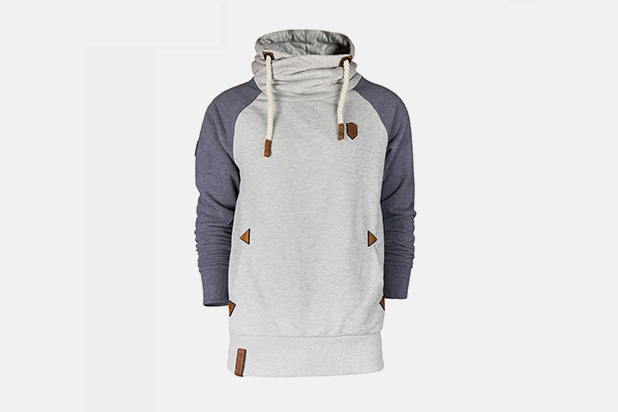
Campus merchandise is not kit. Nobody is issued a merchandise hoodie and nobody is required to wear one. It has to earn its place on a rail, in an online basket or at a freshers' fair stall, which makes it a retail product with a retail problem: it must sell, in the sizes and colourways people actually choose, at a price the market will pay.
This guide is about that commercial side of a campus hoodie order. It covers how merchandise specification differs from squad kit, how to choose a colourway and size curve that sell through rather than sit in storage, how presentation and packaging affect the price a shop can ask, and how to run small-batch drops around events and alumni moments.
Quick answer: A campus merchandise hoodie is specified for sell-through, not for issue. That means a small range of commercial colourways rather than one bold option, a size curve weighted towards the sizes that actually sell, a unisex fit for simplicity, decoration that stays crisp after repeated washing, and retail-ready labelling and packaging. The decisions that most affect the outcome are the colourway range, the size curve, fabric weight against retail price point, and how the crest is licensed and approved.
It is written for the people who run the range: campus retail and gift shops, students' unions and their commercial teams, alumni offices, licensing and brand managers, and distributors supplying a university merchandise programme. For squad kit rather than retail merchandise, see our companion article on custom university hoodies as teamwear; for the wider programme, start from the custom sports teamwear range.
The garments can look similar on a rail. The specification logic is almost opposite.
Volume is unknown. Squad kit is produced to a headcount; merchandise is produced against a forecast. That alone changes how sizes and colourways should be chosen.
The customer chooses. Nobody is obliged to take the size available. A size curve that ignores the real distribution leaves both stockouts and dead stock.
Price point is visible. Merchandise has a retail price attached, so fabric weight and decoration method are chosen against a target margin rather than against a wearer's requirement.
Presentation sells. Hangers, tags, folding and packaging affect the price a customer accepts, which is why retail-ready finishing is worth specifying.
The identity is licensed. Crests and wordmarks are usually subject to approval, and using them correctly is a commercial obligation rather than a design preference.

Campus merchandise is a retail product: it has to sell from a rail or an online store, so colourway, size curve and presentation matter as much as the design.
Most campus ranges underperform for two reasons: a colourway that only appeals to the person who chose it, and a size curve that reflects the committee rather than the customer.
| Decision | Practical approach | Commercial effect |
|---|---|---|
| Colourway range | Two or three commercial options — typically a core institutional colour, a neutral and one seasonal accent | Gives the shop something to merchandise and the customer a choice, without spreading the order so thin that no colourway reaches an economic quantity. |
| Size curve | Weighted towards mid and larger sizes, with more of the sizes that reorder fastest | Reduces both stockouts in popular sizes and unsold extremes, which are the two ways a merchandise order loses money. |
| Fit | Unisex as the default, with a fitted option only if the range justifies it | Simplifies the size curve and reduces the number of stock keeping units a small shop has to carry. |
| Fabric weight | Chosen against the retail price point and the local climate | A heavier fleece supports a higher price but costs more; a mid-weight garment usually offers the best margin and the widest season. |
| Decoration | Embroidery for crests, print or sublimation for graphic back designs | Durability drives repeat purchase and word of mouth, which matters more in merchandise than in kit. |
| Size labelling | Clear, retail-standard sizing on the garment and the tag | A customer who cannot identify the size will not buy, and a shop cannot merchandise an ambiguous rail. |
Each channel has its own constraint, and a range that ignores them tends to serve none of them well.
The campus shop. Needs a small, repeatable range with consistent sizing, retail labelling and the ability to reorder a colourway mid-season.
Freshers' fairs and events. Needs volume in the popular sizes and a strong single graphic, because decisions are made in seconds at a stall.
Online and alumni stores. Needs accurate size information and photography, and often a broader size range because the buyer cannot try the garment on.
Alumni and milestone moments. Needs a version that can carry a year or a class designation without redesigning the garment.
Departmental and society sub-ranges. Need the institutional identity in fixed positions, with the sub-brand in a reserved panel so the core design never changes.
The practical conclusion is that a programme should be designed once around fixed identity positions and then varied in colourway, garment and sub-brand. That structure is what allows a shop to add a new society, a new year or a new event without a new design fee each time.

A small range of commercial colourways sells better than a single bold option, because a shop cannot exchange a garment the customer never wanted.
Merchandise competes for attention, and presentation is part of the specification rather than an afterthought.
Retail tagging. A branded tag and a clear size label make an unbranded garment look like a product rather than a blank.
Folding and hanging. Garments delivered flat-folded to a consistent size merchandise far better than a mixed box.
Polybagging or tissue. Relevant for online sales and alumni gifting, where the unboxing is part of the purchase.
Colour consistency. Across a range, the crest should be the same size and the colourway should be the same within a season. Obvious variation reads as low quality even when the garment is well made.
Care labelling. Accurate fibre composition and wash guidance protect the customer and reduce returns — a direct cost in a retail programme.
Two operational topics decide whether a merchandise programme runs smoothly over several years.
Small-batch and drop strategy. Producing a small first run around an event, then reordering the proven colourways, is usually the lowest-risk approach for a campus range. It limits exposure on unproven designs and lets the best seller earn the larger order. The requirement for this to work is that fabric references, colour codes and the artwork template are documented so a reorder matches the first run.
Licensing and crest approval. Institutional marks are normally subject to an approval process, and the artwork must be supplied as approved vector files with correct proportions and clear space. Build the approval step into the schedule, because a design that is finalised before approval can be delayed by weeks. Where a sub-brand or sponsor is added, keep it in a reserved panel so the approved institutional elements never have to be re-submitted.
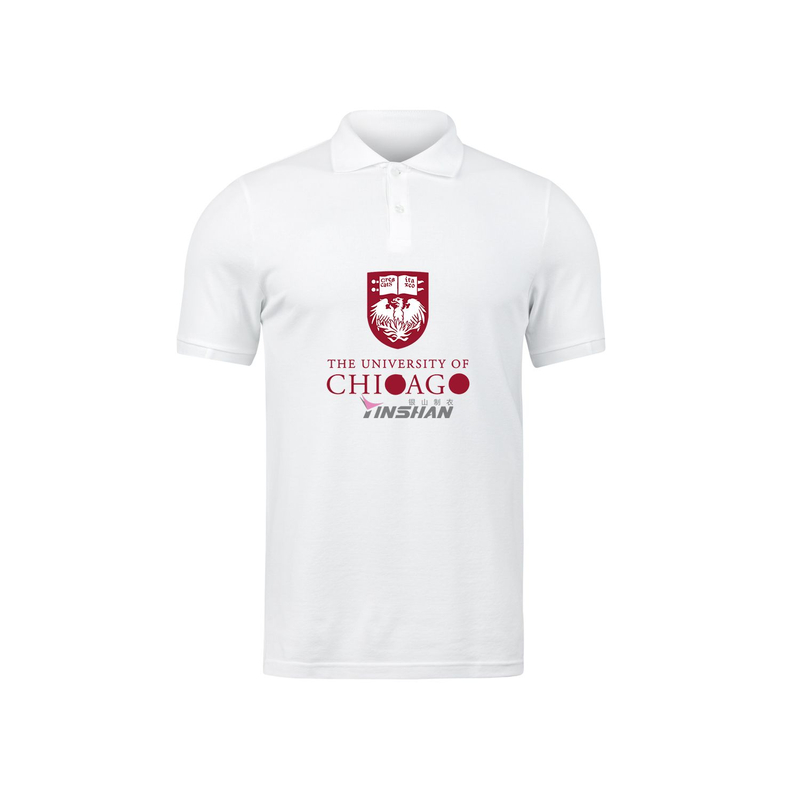
Most campus ranges mix garments so that price points and seasons are covered while the identity stays consistent.
How many colourways should a campus range have? Usually two or three. One restricts choice; five or six spreads the order so thinly that each colourway struggles to reach an economic quantity, which raises the unit price and the risk of unsold stock.
What size curve works for merchandise? One weighted towards the sizes that actually sell, with a deliberate overage in the fastest-moving sizes. The exact distribution depends on the campus, so review the previous season's sell-through before reordering.
Can merchandise and squad kit share a design? They can share the institutional identity, but they should not share a size curve or a fabric specification. Kit is issued; merchandise is chosen. Treating them as the same product is the most common planning error.
How do we keep reorders consistent? Document the fabric reference and weight, the colour codes, the decoration method and the artwork template at the first order. Consistency is a record-keeping outcome, not a manufacturing one.
What packaging should we ask for? Retail tagging, consistent folding and, for online or gifting channels, protective packaging. Ask for a sample of the finished presentation, not just the garment, because that is what the customer sees first.
Send the brief with the garments in the range, the colourways, the size curve you expect to sell, the fabric weight against your target price, and the artwork with approval status. A merchandise programme that is specified once, documented properly and reordered against proven sellers will outperform a larger speculative order almost every time.
You can send a custom requirement to start, review the teamwear range if the programme spans kit and merchandise, and read our guide to caring for custom sportswear — useful information to pass on to the customers who buy the range. Request a quote.
 English
 Español
 Português
 Français
 Pусский
 Deutsch
 العربية