Sponsor branding is the most commercially sensitive part of teamwear production. A logo that is the wrong size, in the wrong position or a slightly different colour is not a design quibble — it is a breach of a sponsorship agreement, and it is visible to the sponsor in every photograph of the season.
This guide covers how sponsor logos are actually applied to teamwear, what each method costs and how long it lasts, how to prepare artwork and colour references, and how to brief a factory so the finished garments match the contract.
Quick answer: Sponsor logos are applied to teamwear by four main methods — dye sublimation, screen print, heat transfer or vinyl, and embroidery. Sublimation is best for large, full-colour graphics on synthetic garments; screen printing suits simple artwork on larger runs; transfers allow logos to be changed or added after the base garment is made; embroidery suits small marks on structured garments such as polos and jackets. The two decisions that prevent expensive mistakes are a written logo position diagram and colour references that are checked on the actual fabric.
It is written for race teams, sponsorship managers, merchandise brands, distributors and private-label labels. Our custom teamwear range and specialist categories cover the garments, and you can send a full branding brief through our custom requirement page.
A note on rights. Sponsor logos and team marks are protected intellectual property. We apply artwork supplied by the buyer; securing permission to use each mark, and confirming the terms agreed with the sponsor, is the buyer's responsibility.
The table below compares the four main methods on the criteria that matter commercially: cost behaviour, durability and flexibility.
| Method | How it works | Best used for |
|---|---|---|
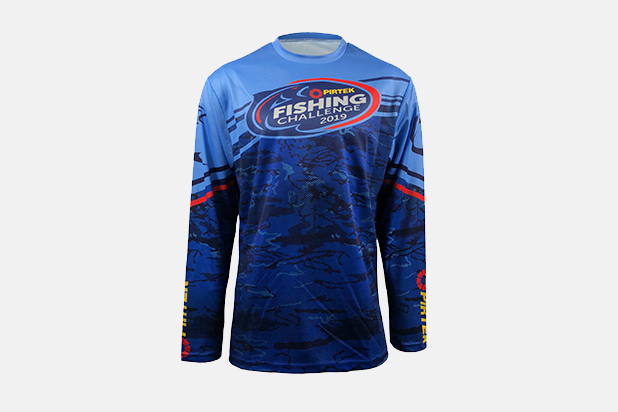
| Dye sublimation | Graphics are printed onto transfer paper and fused into the fabric under heat | Large, full-colour layouts on polyester garments. No per-colour cost, so unlimited colours cost the same as one. |
| Screen print | Ink is pushed through a mesh screen one colour at a time | Simple, bold artwork on larger runs, especially on cotton-rich fabrics. Setup cost per colour. |
| Heat transfer and vinyl | Pre-cut or printed film is applied with heat and pressure | Names, numbers and logos added to an existing garment; ideal where sponsor panels change mid-season. |
| Embroidery | Logo is stitched in thread from a digitised file | Crests and small marks on polos, jackets, caps and other structured garments. Highly durable and premium-looking. |
| Woven badge or patch | A separately woven label is sewn onto the garment | Premium merchandise and sponsor patches that may change between seasons without altering the garment. |
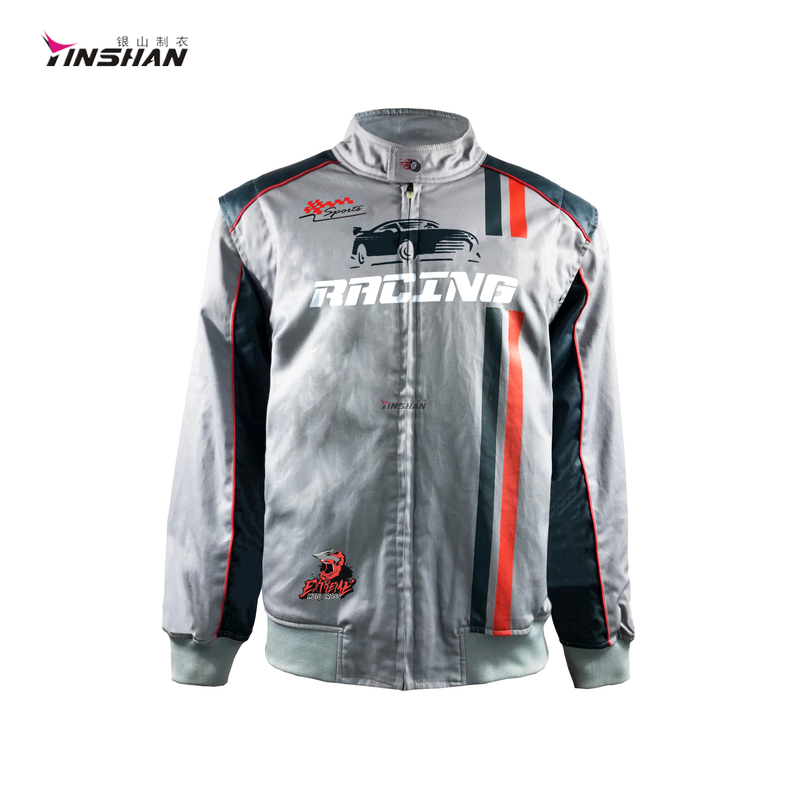
Sponsor branding is contractual: the logo, its size and its position are usually specified in a sponsorship agreement, so the teamwear brief has to carry them exactly.
Most racing garments use more than one method, because different positions have different requirements. The table below is the logic we apply when specifying a range.
| Position | Typical requirement | Sensible method |
|---|---|---|
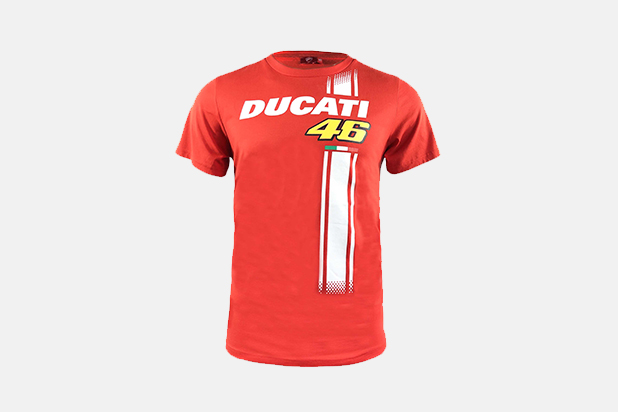
| Chest, main sponsor | Large, high-impact, must read in broadcast footage | Sublimation or print on team shirts; embroidery on polos and jackets |
| Back, title sponsor | Largest area, often full colour | Sublimation or screen print, with panel seams planned around it |
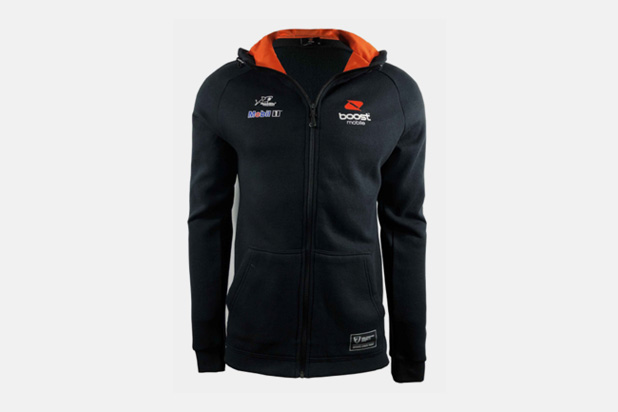
| Sleeves and shoulders | Smaller secondary marks, frequently changed | Transfers for flexibility, or embroidery for durability |
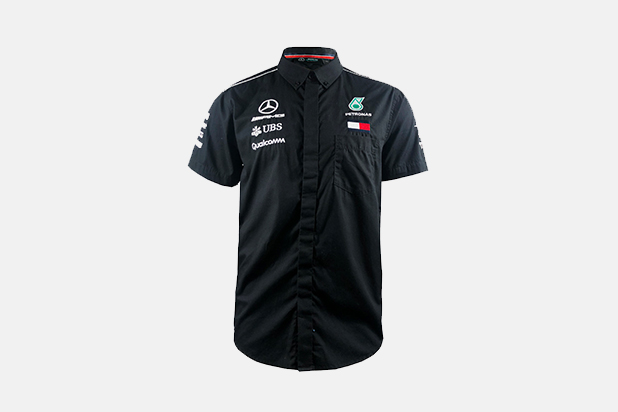
| Collar and cuff | Small, neat, premium | Embroidery or a woven badge |
| Hem and side panels | Supporting marks, often text-only | Print, transfer or embroidery depending on size |
| Names and numbers | Personalisation, changes per person | Heat transfer or vinyl, applied after the base garment is made |
A useful rule: put the marks that are least likely to change into the most permanent process, and keep the marks that may change in a process that can be updated. Sponsorship rarely stays static for a full season.
Almost every branding dispute traces back to artwork or colour. These are the preparation steps worth insisting on.
Vector files for print and sublimation. Logos supplied as low-resolution images are usually redrawn, and redrawing introduces small errors that are obvious in a photograph.
Stitch-ready files for embroidery. Digitising has to happen before embroidery, and it is part of the cost — ask who is doing it and confirm the result on a sample.
Defined colour references. Provide colour codes and confirm them on the actual fabric. The same reference reads differently on a polyester knit, a softshell and a woven, and no screen shows the difference accurately.
Background contrast check. Check every logo against the panel colour it sits on. Sponsor marks in dark tones disappear on dark panels, however accurate the colour reproduction.
Minimum sizes. Very small text cannot be embroidered or printed legibly. Confirm the minimum reproduction size for each method before finalising the layout.
One file standard. Circulate a single specification to sponsors and internal staff. Mixed-quality artwork arriving from multiple parties is the most common source of delay.

Embroidery suits small marks on structured garments, while large graphics are better sublimated or printed — most racing ranges use both on the same garment.
A position diagram is the single most useful document in a branded teamwear order. It turns a design conversation into a specification the factory can work to.
| Element | What to record | Why it matters |
|---|---|---|
| Position | Measurement from a fixed reference point, such as the centre front or the shoulder seam | Verbal descriptions such as "chest left" produce placement that varies between runs. |
| Size | Height and width of each mark in millimetres | Sponsorship agreements frequently specify a minimum logo size. |
| Method | Decoration process for each mark | Determines cost, durability and lead time — and whether changes are possible later. |
| Colour | Reference for each element of the logo | Enables a like-for-like check against the approved sample. |
| Priority | Which marks must not move or shrink if the layout has to be adjusted | Protects the sponsor relationships that carry the largest commitment. |
Branded teamwear is washed weekly, worn outdoors and photographed constantly. The differences between methods show up over time rather than on delivery day.
Sublimation age best. Because the graphic becomes part of the fibre, it does not crack, peel or flake, and abrasion affects the fabric before it affects the design.
Screen print is durable but rigid. Thick ink films crack when stretched, which is why prints on stretch zones and over seams should be avoided.
Transfers vary widely. Quality depends heavily on the film used; specify the material rather than assuming all transfers behave the same.
Embroidery lasts longest but can distort. Dense stitching on a lightweight or stretchy fabric puckers. Specify a stable backing, or choose a smaller mark.
Wash instructions matter. Tell the wearer what to avoid — high heat, aggressive detergents and tumble drying all shorten decoration life more than ordinary wear does.

A sponsor layout is designed as a diagram before it is designed as a garment; agreeing positions in writing prevents disputes later in the season.
For full-colour artwork on synthetic garments, dye sublimation is usually the most economical because there is no per-colour setup cost — a fifteen-colour layout costs the same as a single-colour one. For simple, bold artwork on larger quantities of cotton-rich fabric, screen printing can be cheaper per unit once the setup is absorbed.
Yes, in most cases. Heat transfers, vinyl and embroidery can be applied to finished garments, which is useful when a sponsor joins mid-season. Check the fabric composition first, because not every material tolerates the heat required.
Use a position diagram with measurements from a fixed reference point, and approve a physical sample with the decoration applied rather than a digital mock-up. Keep the approved sample as the reference for every later order.
It can look consistent, but not identical, because colour and texture differ between fabrics and processes. Confirm the colour on each substrate and accept that the same reference will read slightly differently on a knit, a softshell and a woven. Where exactness matters, agree which garment is the master reference.
Sponsor branding is a contract executed in fabric. Build the position diagram, define the colours, choose the method per mark and confirm it all on a physical sample — then the garments will still be showing the right logos to the right people at the end of the season.
Send Yinshan Sportswear your garment list, artwork, sizes, quantity and delivery country to request a custom quote.
 English
 Español
 Português
 Français
 Pусский
 Deutsch
 العربية