Sourcing custom sportswear from China is straightforward in principle and full of avoidable problems in practice. The differences between suppliers are rarely about equipment; they are about specification discipline, communication and whether the factory actually produces the category you need.
This guide explains how a teamwear factory works from the inside, what to verify before placing a first order, and how to structure a relationship so that the second and third orders are as predictable as the first.
Quick answer: A Chinese teamwear factory supplies custom sportswear by taking a specification — garment type, fabric, colour, branding, size curve and quantity — and turning it into a produced order. The factors that determine whether it goes well are the factory's experience in your product category, its sampling and quality-control process, its minimum order quantities, its fabric sourcing reliability, how it communicates during production, and whether it can produce under your own brand. Verify all six before committing to a season.
It is written for the buyers doing the sourcing: teamwear distributors, sports clubs and teams, event organisers, uniform buyers and private-label brands. If you already have a specification, send it through our custom requirement page. If you are still defining the range, our custom teamwear range and custom sportswear collection show the constructions we produce most often.
Buyers sometimes assume a factory simply sews garments. In practice, the production floor is the last third of the work, and the earlier stages are where most of the value — and most of the risk — sits.
Fabric sourcing. Finding the right knit or woven, confirming weight and composition, checking availability and holding colour references for repeat orders.
Pattern making and grading. Turning a design into patterns across a full size curve, which is what allows a range to be reordered accurately.
Sampling. Producing a physical garment with decoration applied so the buyer can approve fit, colour and branding before bulk.
Decoration. Sublimation, printing, embroidery and transfer work — often the most technically demanding step in the order.
Cutting, sewing and finishing. Assembly, trims, labels and pressing.
Quality control. Measurement checks, decoration placement, colour verification and finish inspection before packing.
Packing and shipping. Sorting by size or role, individual bagging, carton marking and export documentation.

Most of the work behind a custom teamwear order happens before production: fabric sourcing, pattern making, grading and sampling.
The table below is a practical assessment framework. Each row is a question worth asking directly, and a place where vague answers are informative in themselves.
| What to verify | What to ask | What a good answer looks like |
|---|---|---|
| Category experience | What proportion of your production is teamwear and sportswear? | Specifics: garment types, sports, decoration methods, sample images of comparable orders. |
| Fabric capability | Do you source fabric yourself, and can you confirm weight and composition in writing? | Named constructions, documented specifications and a willingness to send swatches. |
| Sampling process | What is included in a sample, and what does it cost? | A physical garment with decoration applied, in at least two sizes, with a stated revision policy. |
| Decoration in-house | Which decoration processes do you run, and which are outsourced? | Clear answers, because outsourced decoration is where lead times slip and colour drifts. |
| Minimum order quantity | What are the minimums per garment type and decoration method? | Differentiated minimums rather than one blanket number for everything. |
| Lead times | What is the sampling lead time and the bulk lead time, separately? | Two distinct dates, and a clear statement of what can delay each. |
| Communication | Who is the contact, in which time zone, and how often do you update during production? | A named contact, a defined update rhythm, and photos at key production stages. |
| Own-label capability | Can you produce with our labels, packaging and size grading? | Yes, with examples, and clarity about who supplies what. |
| Documentation | Which certifications or test reports can you provide? | Specific documents relevant to your market, not generic claims. |
Most sourcing disappointments are specification failures rather than manufacturing failures. The table below shows how the same order behaves with and without a written specification.
| Element | Without a written specification | With a written specification |
|---|---|---|
| Fabric | "Performance knit" — weight and composition unknown, changes between runs | Composition, weight in grams per square metre and stretch percentage recorded and repeatable |
| Colour | Described verbally or by photograph; shade drifts between orders | Colour references confirmed on the actual fabric, with swatches retained |
| Decoration | Method chosen by the factory; logo size and position vary | Method per position, with a measured logo position diagram |
| Fit and sizing | Approximate; reorders differ in size | Approved size chart and grading rules held on file |
| Packaging | Whatever is convenient at dispatch | Packing instructions by size, role or retail unit |
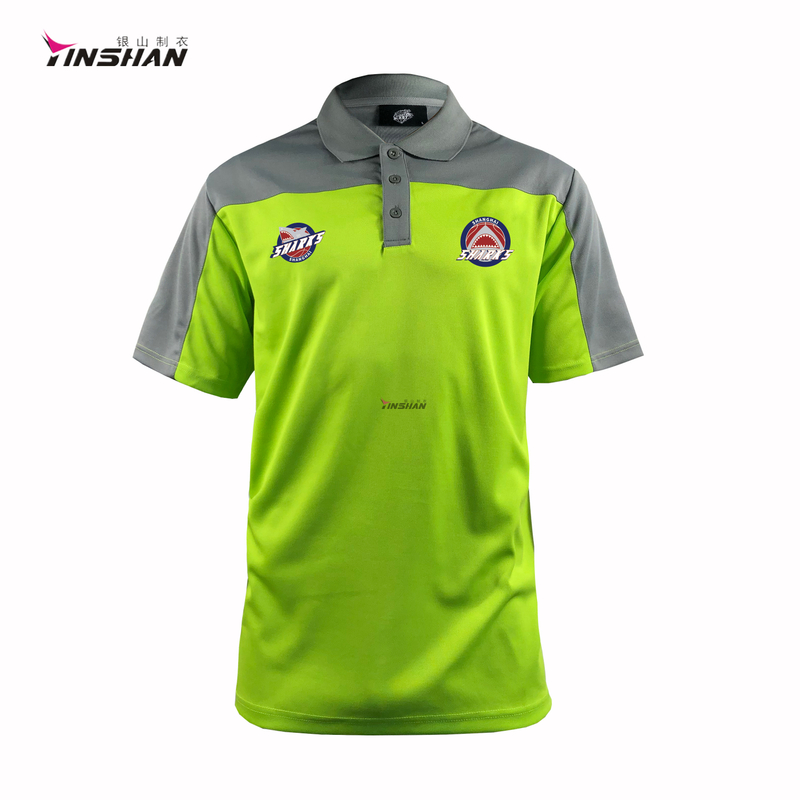
Measurement checks, decoration placement and finishing are the quality-control points that decide whether an order arrives correct or returns for rework.
Buyers comparing quotations often compare the wrong thing. A lower unit price is not a saving if it comes with a fabric that fails, a decoration method that does not last, or a lead time that misses the season.
What drives cost. Fabric weight and composition, garment complexity and panel count, decoration method, quantity, labelling and packaging, and the size of the size curve.
Where setup costs sit. Screen printing and embroidery carry per-design setup costs; sublimation does not, which is why sublimated ranges can be produced economically at smaller quantities.
Why minimums exist. They reflect fabric minimums, setup time and cutting efficiency. Ask for minimums per garment type, then decide which pieces to consolidate.
What lengthens lead time. Fabric sourcing, artwork revisions, sampling rounds, decoration outsourcing, and peak-season congestion.
How to protect the deadline. Approve the sample early, freeze the artwork, and order with a buffer before the event or season date rather than up to it.
The economics of custom teamwear improve sharply from the second order onwards — if the first order established the right records.
| Build this on the first order | What it enables later |
|---|---|
| Written specification for every garment | Repeat orders that match, without a new sampling round |
| Approved physical sample, retained | A single reference when a later batch is checked |
| Colour references and fabric swatches | Consistent shades across garments, seasons and fabric types |
| Size chart and grading rules | Reorders that fit the same way |
| Artwork files and position diagram | Fast, accurate logo changes when sponsors move |
| A single contact on both sides | Fewer errors and faster resolution when something does go wrong |

Own-label production means your branding, your labels and your packaging — the factory's identity stays invisible to your customers.
Compare them on category experience, specification discipline and sampling process before comparing price. Ask each supplier for photographic examples of comparable orders, a written fabric specification and a description of their quality-control steps. The supplier who answers those questions precisely is usually the more reliable choice, even at a slightly higher unit price.
It depends on the garment and the decoration method. Sublimated polyester garments are the most flexible because there is no per-colour setup cost. Embroidered and structured garments typically require higher quantities to be economic. Ask for minimums per garment type rather than a single number.
Yes. Own-label production is standard: your branding on the garment, your labels, hangtags and packaging, and your size grading. Customers deal with your brand, not the factory's.
Sampling and bulk production are separate stages and should be quoted separately. The variables are fabric availability, the number of garments, the complexity of the design and the decoration method. Work backwards from your deadline and allow time for one sampling revision.
Garment list with quantities per size, colour references, artwork files, a description of the branding and where it goes, any fabric or performance requirements, your delivery country and required date. The more complete the brief, the more accurate — and comparable — the quotation will be.
The most reliable way to source custom sportswear is also the least glamorous: write the specification down, agree it with one supplier, approve a physical sample, and keep the records. That is what makes the second season faster, cheaper and considerably less stressful than the first.
Send Yinshan Sportswear your garment list, artwork, sizes, quantity and delivery country to request a custom quote.
 English
 Español
 Português
 Français
 Pусский
 Deutsch
 العربية