High density embroidery is what most people picture when they think of a logo on a sports shirt: a solid, raised, glossy mark with no fabric showing through it, standing slightly proud of the garment. It is not a different machine or a different process — it is the same embroidery engineered for coverage and finish.
This page explains how high density embroidery works on custom logo sports shirts, where it belongs, what it costs relative to standard embroidery, and how to specify it so the result is dense rather than puckered.
Quick answer: High density embroidery uses a tighter stitch spacing and a higher stitch count to cover the fabric completely, usually with an underlay that supports the top stitches and stops the garment sinking through. It produces the most solid and durable logo available on a knit garment, and it is the right choice for a primary identity mark on a polo or shirt. Its limits are fine detail and very light stretch fabrics, where the density that makes it look good is the same density that distorts the garment.
Three technical choices separate a high density mark from a standard one, and all three are made in the digitising file rather than at the machine.
Tighter stitch spacing, so the threads sit against each other and leave no fabric visible.
A higher stitch count for the same area, which is what drives the appearance and the cost.
An underlay layer beneath the top stitching, which stabilises the mark and builds the raised effect.
Correct backing for the fabric, since a dense mark needs more support than an open one.
The result is a mark with a solid surface and a defined edge. On a polo or a woven shirt it reads as a badge rather than a decoration, which is why it remains the default for club crests, corporate marks and anything intended to look established.
| Garment | Suitability | Reason |
|---|---|---|
| Polo and pique knits | Excellent | Firm surface supports the density |
| Woven shirts | Excellent | Stable fabric holds the mark cleanly |
| Mid-weight knits | Good | Works with suitable backing |
| Light performance knits | Limited | Density can distort a very light fabric |
| Stretch panels | Unsuitable | The mark cannot stretch with the fabric |
| Fleece and lofted fabrics | Needs topping | The stitch sinks without a topping film |
The pattern is the same one that governs embroidery generally: firmer fabrics support denser stitching. A buyer specifying a high density mark on a light performance knit is asking for the two properties to work against each other, and the usual outcome is a puckered panel.
High density embroidery is judged on the mark's surface: dense, even and raised, with no fabric showing through.
High density rewards simple, solid shapes and punishes fine detail. The limitation is physical: a stitch occupies a certain minimum width, and below that width the design fills in rather than reproducing.
Solid shapes and moderate strokes work well; hairlines and fine serifs do not.
Limited colour count keeps the mark clean; many colours create a busy surface.
Letter spacing slightly open, so counters do not close up under dense stitching.
Mark size adequate for the detail — shrinking a detailed logo makes it a smudge.
Vector artwork, since a low-resolution image cannot be digitised accurately.
Where a logo contains fine detail that cannot survive, the practical options are to simplify it for embroidery, or to move that part of the identity to print. Many club ranges combine the two: a dense embroidered crest for durability, with a printed element carrying finer detail. The print method is described in custom sportswear printing.
High density embroidery costs more per garment than standard embroidery because it uses more stitches for the same area. The increase is proportional to the density and the mark size, and it is quoted from the stitch file rather than estimated. The pricing structure is covered in embroidery pricing.
More stitches per unit area, so the per-unit charge rises with density.
Longer machine time per garment, which affects capacity as well as price.
Greater durability, since the mark is thick, solid and difficult to abrade through.
Better perceived quality, which is often the commercial reason for choosing it.
The durability point is the strongest argument for it on a garment that will be washed weekly for years. A dense mark wears better than a light one because there is more thread to wear through, and because the solid surface does not expose the fabric underneath as it ages.
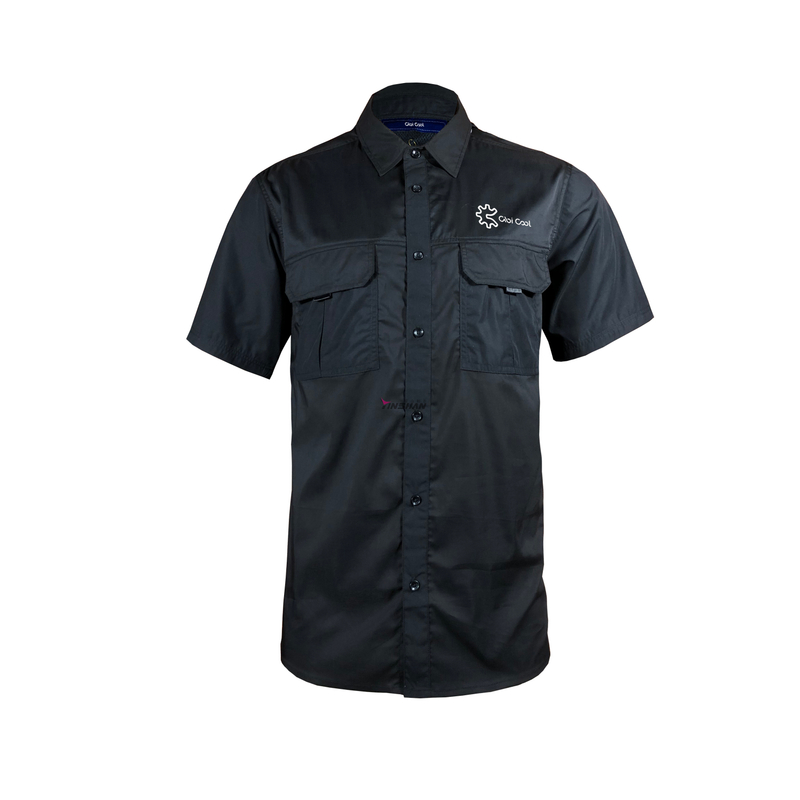
Density is what gives an embroidered mark its solidity, and it is a decision made at the digitising stage.
Supply vector artwork or a high-resolution file suitable for digitising.
State the mark size in centimetres, since size drives both appearance and cost.
Confirm the fabric, so the backing and density can be matched to it.
Ask for a sewn sample on the actual garment, not a digital simulation.
Confirm placement against the placket, pocket and any seam.
Keep the digitised file on record so repeat orders are identical.
The sample is the only reliable approval for a dense mark. Density is a physical property and cannot be judged from a screen preview; a sewn sample shows whether the fabric supports the stitching and whether the mark reads as intended.

On a firm knit, high density stitching sits cleanly; on a light stretch knit it needs careful support.
High density is not the answer when the design contains fine detail, when the garment is a very light knit, or when the mark sits across a stretch area. In those cases standard embroidery with suitable backing, or print, produces a better result — and the difference in durability is irrelevant if the mark distorts the garment it sits on. The rule that governs all embroidery decisions is that the fabric and the decoration are specified together, as described in embroidery in sportswear manufacturing.
Embroidery digitised with tighter stitch spacing, a higher stitch count and an underlay layer, so the stitching covers the fabric completely and produces a raised, solid mark. It is the most durable logo option on a knit garment and the default for club crests and corporate marks.
Yes, because it uses more stitches and more machine time for the same area. The increase is proportional to density and mark size and is quoted from the stitch file. It is commonly chosen for its durability and perceived quality rather than for economy.
Firmer fabrics: pique polos, woven shirts and mid-weight knits work well. Very light performance knits are limited because the density can distort them, and stretch panels should be avoided entirely.
No. Below a certain stroke width the stitching fills in rather than reproducing the shape. Fine lettering, hairlines and gradients need to be simplified for embroidery or moved to a printed element.
Send your logo and the garment it goes on, and we will digitise it for high density, advise on size and backing, and produce a sewn sample on the actual fabric before the order is placed.
 English
 Español
 Português
 Français
 Pусский
 Deutsch
 العربية