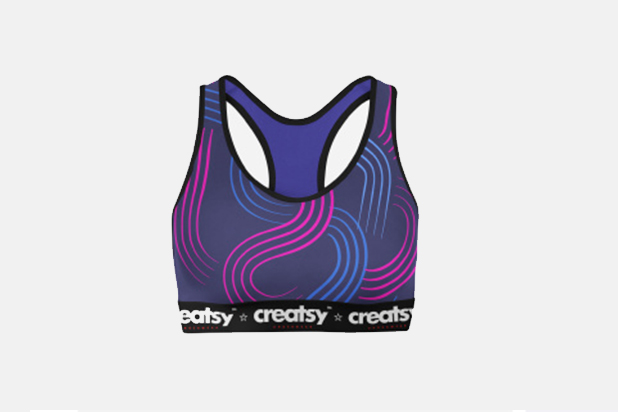
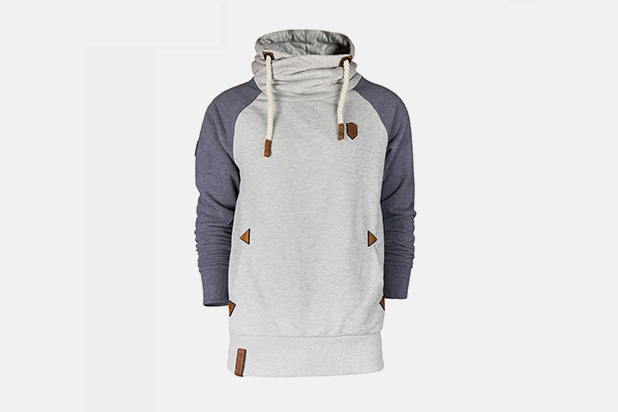
Cotton has been declared obsolete in sportswear for decades and remains one of the most ordered fabrics in the category. The explanation is not nostalgia. Cotton offers a hand feel and an appearance that synthetics still struggle to match, and most sports are played with long pauses in which comfort matters more than moisture management.
This page explains why cotton remains popular in sportswear, where it genuinely performs, where it fails, and how blends change the trade-off for a buyer.
Quick answer: Cotton is popular because it feels good against the skin, holds a shape and a print well, takes embroidery cleanly, and works as everyday wear as well as sportswear. Its limitation is moisture: it absorbs water rather than moving it, so it becomes heavy when wet and dries slowly. That makes it an excellent choice for casual sportswear, corporate ranges, warm-up garments and low-intensity sport, and a poor one for high-sweat activity in cool conditions. Blending with polyester shifts the balance without losing the feel.
Hand feel — soft and familiar, with none of the slickness that some synthetics have.
Appearance — a matte surface that holds colour and print with a depth synthetics do not match.
Decoration — takes embroidery cleanly and screen print with fine detail.
Everyday wear — the garment does not look like performance kit, which extends its use.
Durability in normal washing — it handles domestic laundry simply, without special treatment.
That last point matters more than it sounds. A cotton garment has a care instruction a normal person will follow without thinking, which means it gets worn and washed instead of being left in a drawer.
Moisture — it absorbs sweat and holds it, becoming heavy and slow to dry.
Cooling when wet — a wet cotton garment conducts heat away from the body, which is uncomfortable and can be unsafe in cold conditions.
Inelasticity — without a small elastane content, a cotton knit stretches at the neck and hem and does not recover.
Shrinkage — untreated cotton can move dimensionally, which is why the care instruction specifies temperature.
These are not defects; they are properties. The buying question is whether they matter for the garment's intended use, and the framework for that judgement is set out in selecting sportswear fabrics.
| Use case | Cotton suitability | Reason |
|---|---|---|
| Casual and athleisure wear | Excellent | Comfort and appearance are the whole point |
| Corporate and promo apparel | Excellent | Decoration quality and everyday wearability |
| Warm-up and sideline garments | Good | Low sweat, high visibility, comfortable when standing |
| Low-intensity training | Acceptable, better as a blend | Sweat volume is moderate; drying speed less critical |
| High-sweat sport in cool conditions | Poor | Wet cotton cools the body and dries slowly |
| Long-duration endurance | Poor | Moisture load becomes heavy and chafing increases |
Read down the table, the pattern is consistent: cotton suits garments where the wearer is comfortable and stationary, and it fails where sweat volume and cooling are the governing concerns.

Cotton's appeal is comfort and appearance, and its weakness is exactly the thing that makes it comfortable: it holds water.
Blending is how most of the range actually behaves. The ratio decides which set of properties dominates, and it should be specified rather than assumed.
Cotton-rich blends with a small polyester content — soften slower drying, improve durability and print stability.
Polyester-rich blends with cotton — retain a softer hand than pure polyester while keeping quick drying.
Cotton with elastane — adds recovery, which is what stops a cotton garment stretching at the neck.
Cotton-feel polyester — a polyester knit engineered to feel softer, which holds print and dries quickly.
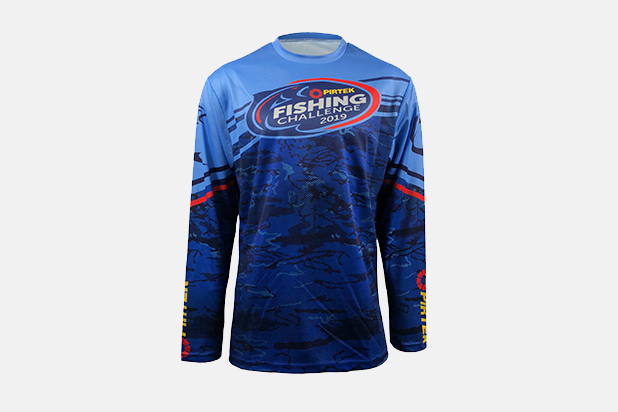
The last option deserves attention for teamwear: a cotton-feel polyester gives the appearance of cotton with the moisture behaviour of polyester, which is often a better answer than a genuine blend. It is the same family used for sublimation printing, described in custom sublimated polo shirts.
Cotton and decoration get along well, with two constraints worth knowing before the order is specified.
Sublimation requires polyester — it does not bond reliably with cotton, so a cotton garment needs print or embroidery instead.
Screen print on cotton is a mature process with excellent results, but ink choice affects the hand feel of the printed area.
Embroidery is stable on a firm cotton knit and needs less backing than on a light synthetic.
Washing affects decoration less on cotton than on synthetic knits, provided the temperature instruction is followed.
The comparison between decoration methods and their fabric requirements is covered in custom sportswear printing.
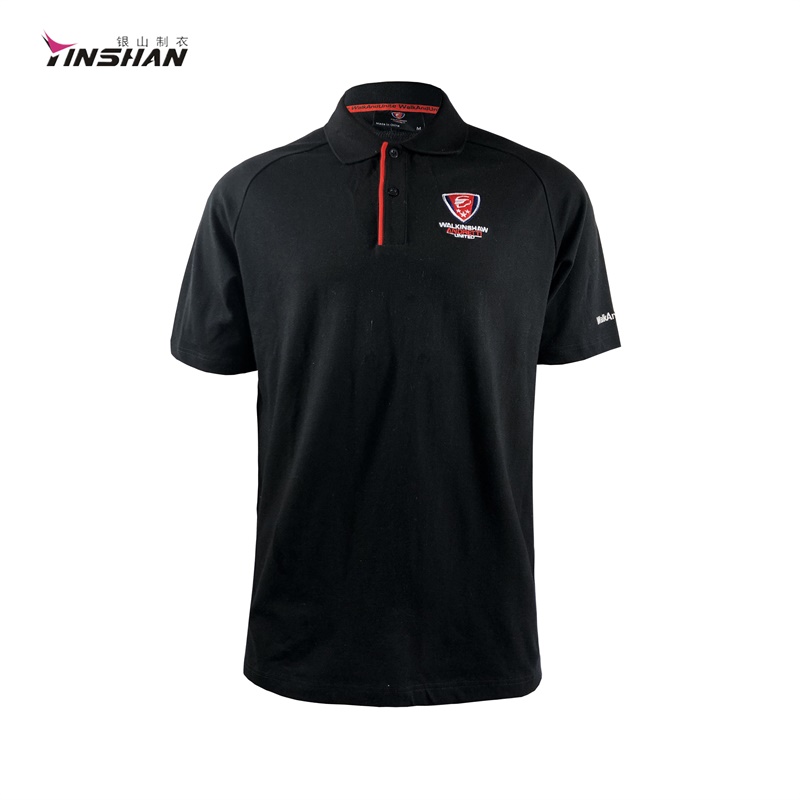
A cotton-rich polo carries embroidery well, which is why the fabric remains common in club and corporate ranges.
Cotton's environmental profile depends heavily on how it is grown and processed, which is why organic standards exist for it. A buyer intending to make a claim about cotton should specify the standard and expect documentation, rather than assuming that a natural fibre is automatically the lower-impact choice. The certification route and what it covers are set out in sustainable natural and organic fabrics.
Choose cotton where comfort, appearance and everyday wearability are the priority.
Choose a cotton-rich blend where a little moisture handling is needed without losing the feel.
Choose cotton-feel polyester where the look should read as cotton but the performance must not.
Avoid cotton where the wearer will sweat heavily and cool down while still wearing the garment.
Specify the blend ratio and the care instruction in writing, because both affect the delivered garment.
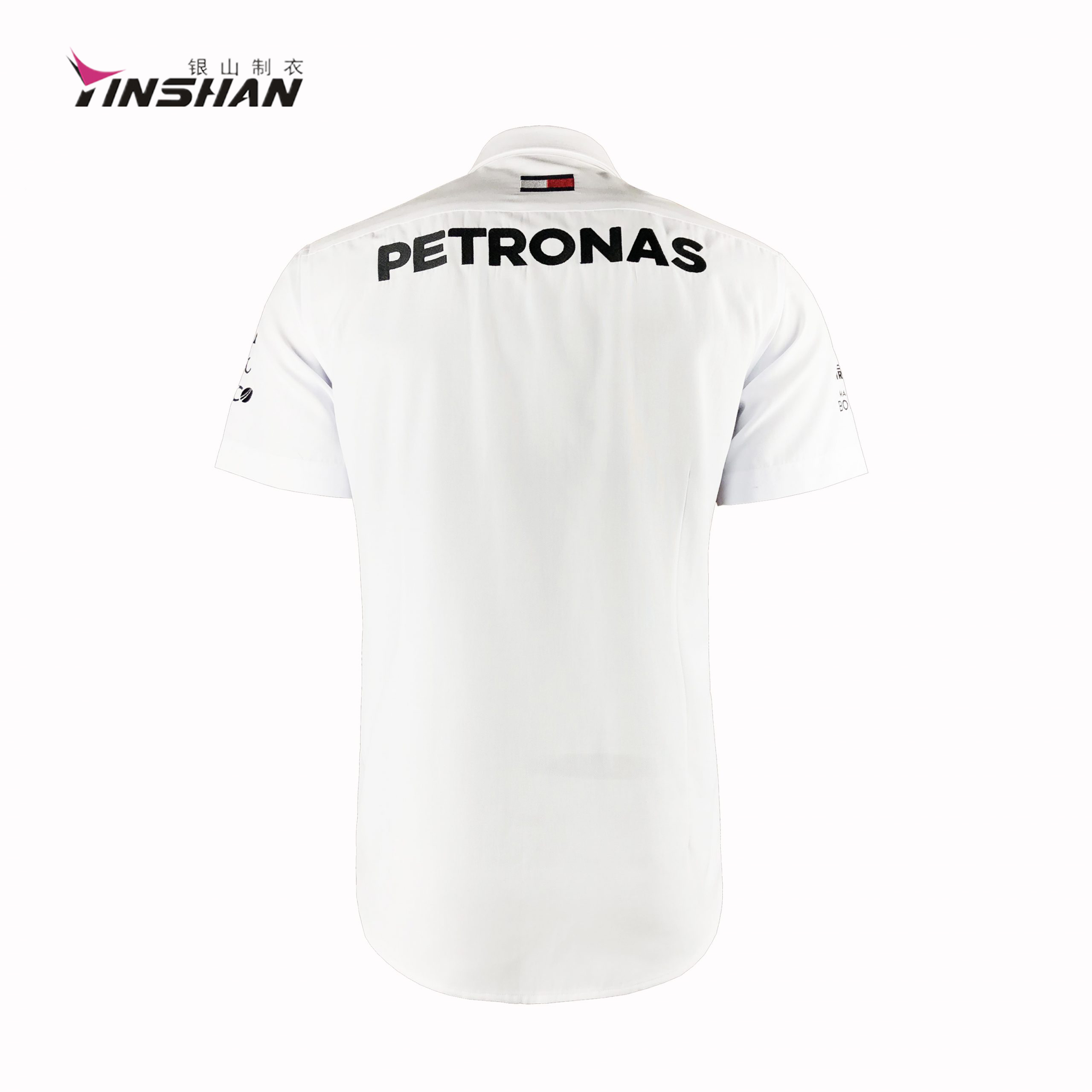
Blends are a compromise, and the blend ratio is what decides whether the garment behaves like cotton or like polyester.
For casual sportswear, corporate and promo ranges, warm-up garments and low-intensity activity, yes — it is comfortable, wears well and takes decoration beautifully. For high-sweat activity in cool conditions it is a poor choice, because wet cotton holds moisture and cools the body.
A cotton-rich blend can work for moderate activity, and a cotton-feel polyester is often better because it combines the appearance of cotton with quick drying. For genuine high-output sport, a polyester or poly-rich fabric performs better.
A pure cotton knit has little recovery, so it stretches at the neck, cuffs and hem under repeated use. A small elastane content restores recovery, which is why cotton-rich sportswear usually includes some elastane.
No. Sublimation dye bonds with polyester fibre and will not develop reliably on cotton. Cotton garments are decorated by screen print, transfer print or embroidery instead.
Send the garment, the activity and the wash conditions, and we will recommend a cotton, blend or cotton-feel quality with the ratio, the decoration method and the care instruction stated in writing.
 English
 Español
 Português
 Français
 Pусский
 Deutsch
 العربية