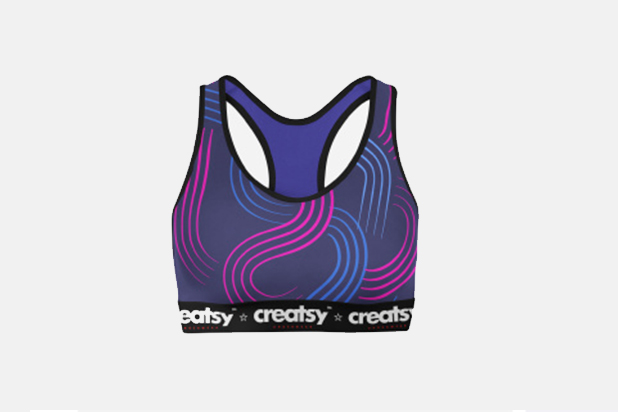
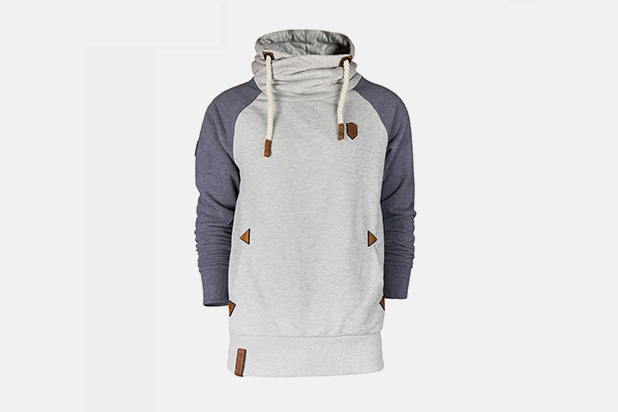
A sports tee shirt looks like the simplest garment in a team kit and is usually the one that gets specified last. It is also the garment that is worn most often, washed most often and judged most quickly — by the person handing them out, by the team wearing them, and by whoever ends up reading the care label a year later.
This guide is written for buyers rather than sewers: clubs and schools placing group orders, promotional distributors, sports brands building a range, and corporate buyers who need branded performance wear that survives more than one summer. It covers how fabric choice, print method and production sequence interact, and where an order is most likely to come apart.
Quick answer: Custom sports tee shirts are made in three steps that matter commercially — fabric selection, decoration, and the approval sequence around them. Fabric choice sets the performance and the price; the decoration method sets the look and the durability. Sublimation suits full-colour team graphics and stays part of the fabric, screen printing suits large single-colour runs on cotton, and embroidery suits small logos and names. For group orders the safest structure is one approved fabric reference, one approved artwork template and one pre-production sample, repeated across every subsequent run.
If you are choosing between garment types rather than print methods, the wider custom sports teamwear range is the place to start. If you already know the garment, read on for the production detail.
The fabric is decided first because everything else — price, print method, wash behaviour — follows from it. Four families cover most sports tee shirt orders.
| Fabric family | Best suited to | What to expect in use |
|---|---|---|
| 100% polyester interlock | Team kit, running, training wear, high-volume promotions | Light, quick drying, wicks well and is the best base for sublimation. Feels technical rather than soft. |
| Combed cotton single jersey | Casual fan wear, school and staff shirts, retail-style merch | The softest hand feel and the look most people picture for a tee. Heavier when wet and slower to dry. |
| Cotton-polyester blend | Orders that must balance comfort, price and shrinkage control | A middle path: softer than pure polyester, more dimensionally stable than pure cotton. Print results vary by blend ratio, so confirm the ratio in writing. |
| Polyester-elastane performance knit | Running, gym and any garment that must hold its shape | Better recovery and stretch. Costs more, and needs care during pressing to avoid shine. |
Ask for the weight in grams per square metre and the composition as percentages. "Cotton-rich" is not a specification; 60/40 cotton-polyester is. The same applies to the colour: request a fabric reference code so a repeat order twelve months later can be matched.
Sustainability claims are now part of most sports tee briefs, which makes it more important to separate what can be evidenced from what is marketing language.
Recycled polyester. Available in the same weights as virgin polyester and prints identically. Ask for the recycled content percentage and the certification that covers it, not just the word "recycled".
Organic cotton. Requires a chain-of-custody certificate to be verifiable. Ask which standard and which certificate reference covers the batch you are buying.
Blends and pre-consumer waste. Increasingly common and genuinely useful, but confirm exactly what the recycled input is — pre-consumer offcuts and post-consumer bottles are both valid and are not the same thing.
What to ask for in writing. The claim, the standard it is measured against, and the certificate reference. A supplier who cannot put those three on paper cannot support a claim you intend to publish.
Treat this as a documentation exercise rather than a design one. The fabric behaves the same; the difference is whether you can stand behind the label.

The fabric decides how a sports tee behaves; the print method decides how it looks. Specifying one without the other is how group orders go wrong.
Decoration is where the majority of customer complaints originate. Each method has a natural home.
| Method | Works best on | Limits to plan around |
|---|---|---|
| Sublimation | Polyester fabrics, full-colour graphics, gradients, all-over prints, team kits | Requires a high polyester content to bond properly. On cotton the colour is weak and washes out. |
| Screen printing | Large single-colour or few-colour designs on cotton, high-volume runs | Colour count drives cost, and each colour needs its own screen. Heavy ink deposits can stiffen a thin fabric. |
| Heat transfer / vinyl | Personalised names and numbers, small runs, quick turnarounds | Edge lift is the common failure. Wash instructions matter more here than with any other method. |
| Embroidery | Chest logos, crests, club marks, staff shirts | Not suited to fine gradients and not used across a full garment panel. Needs correct backing on a light knit. |
Most real orders use two methods together: a sublimated or screen-printed body with an embroidered chest logo, or a printed body with heat-applied names and numbers. Specify each element separately, including its position and size in millimetres, so nothing is left to interpretation at the factory.
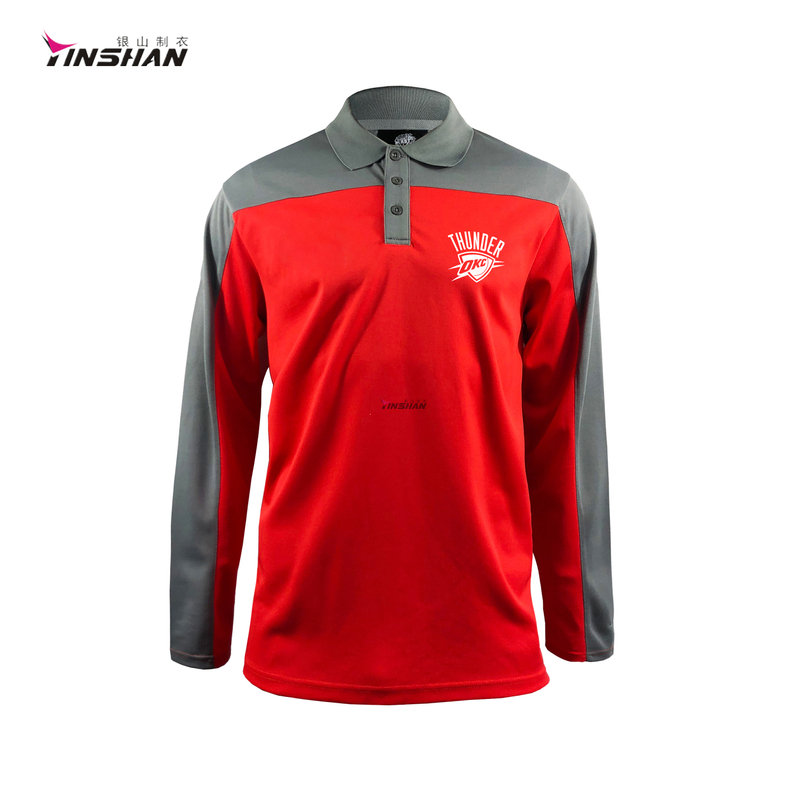
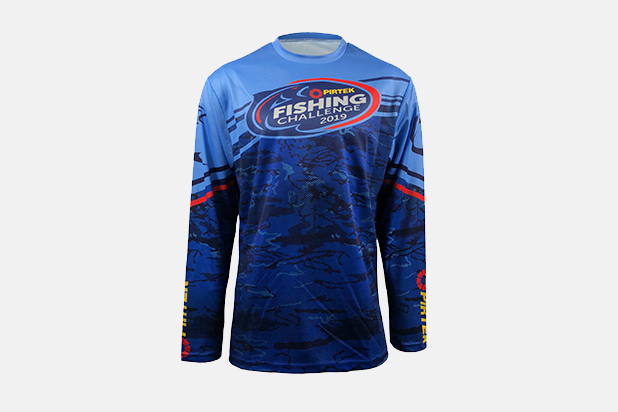
Sublimation prints into the fibre rather than sitting on top of it, which is why full-colour team graphics survive repeated washing.
Artwork is the most common cause of delay in a group order, and almost all of it is avoidable.
Send vector files. Supply artwork in a vector format with fonts converted to outlines. Pixel files force the factory to redraw, and redrawing changes detail.
Plan for the panel, not the page. Sublimated designs wrap around the body, so a flat front view is not a production file. Supply a technical drawing or panel-by-panel artwork.
Fix the colours. Reference your brand colours, and confirm whether they will be matched to a fabric or a print. Full-colour sublimation reproduces gradients well; screen printing needs each colour separated.
Agree size and placement. Chest logo width, name height in millimetres, number size on the back. Getting these in the file removes an entire round of correspondence.
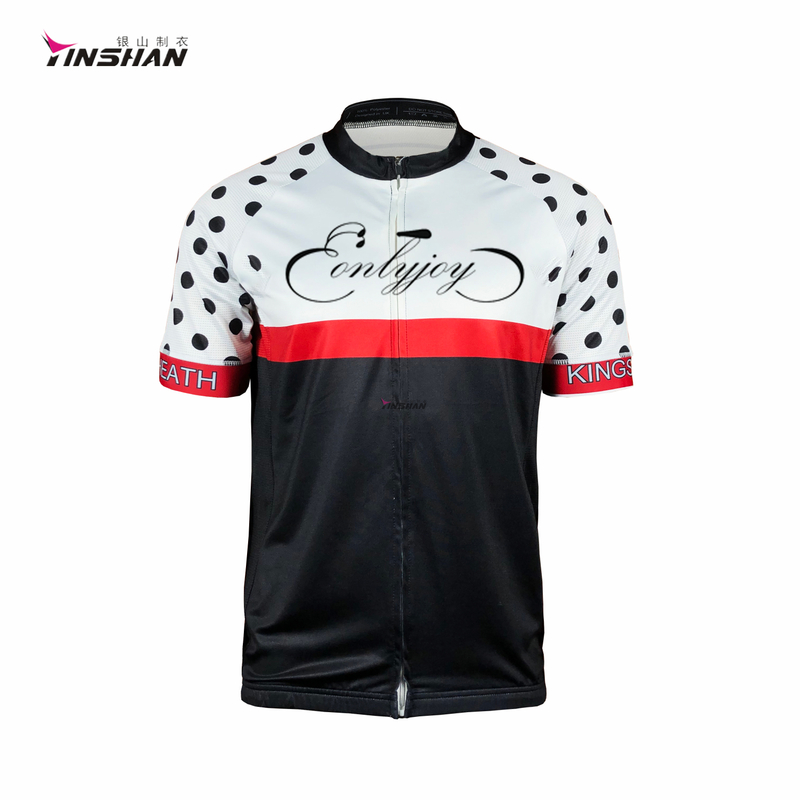
For group orders the fabric is chosen once and repeated, so the priority is a reference the supplier can hold across seasons.
Group tee shirt orders carry one problem that single-garment orders never see — a long list of people, each with their own size and their own spelling of their own name.
Collect sizes in a controlled format. One spreadsheet row per person with size, exact spelling and any number. Free-text lists produce errors that cannot be corrected after printing.
Send the size chart by measurement. Confirm whether the tee is cut to sit close to the body or loose, because a shirt sized for a base layer will not fit the same person over anything else.
Confirm the personalisation sheet back. Ask the factory to return the name list for checking before production. This one step removes nearly all personalisation errors.
Order spares. A group order of 100 usually needs a handful of spare garments in the most common sizes. Individual reprints later cost far more than the spares.
Agree the inspection points before the order, not after it arrives.
Print registration and colour against the approved artwork, including the position on the garment.
Embroidery stitch density, logo shape and cleanly trimmed backing.
Measurements against the stated tolerance rather than a single sample.
Personalisation verified against the approved sheet, with a photo record taken before packing.
Packaging that protects the decoration in transit, particularly for embroidered and heat-applied items.
Which fabric is best for a group sports tee? For a team that will be active, a lightweight 100% polyester interlock is the safest default because it wicks, dries quickly and takes sublimation well. For fan wear and casual uniforms, a combed cotton or a cotton-rich blend usually feels better.
Can we print on both sides? Yes. Two-sided printing is straightforward with sublimation and with screen printing, but it should be stated in the brief because placement and artwork files differ for each panel.
How many colours can sublimation reproduce? Effectively unlimited, because it is a full-colour process. Screen printing is the method where the number of colours drives the cost.
How long does production take? The schedule is normally set by artwork approval and sample approval rather than by sewing. Approving the template once and reusing it is the reliable way to keep later orders short.
Will the print survive washing? Sublimated graphics become part of the fabric and are the most durable option. Screen prints and heat-applied names last well if the care instructions are followed, particularly the advice against ironing directly over the decoration.
To get an accurate quote for a custom sports tee shirt order, send four items: the garment and fabric family, the decoration method with artwork, the quantity and size breakdown, and the date you need delivery. You can send a custom requirement directly, browse the wider sports teamwear range, or read our guide to personalised cotton sports shirts if the order is cotton rather than performance fabric. Request a quote.
 English
 Español
 Português
 Français
 Pусский
 Deutsch
 العربية