Printed sports T-shirts are the highest-volume product in custom sportswear and the easiest purchase to get wrong. The garment looks simple, the unit price is low, and the order is often placed quickly — which is precisely why so many buyers end up with a shirt that fades, cracks, or arrives in a shade nobody approved.
This guide is for brand owners, clubs, retail buyers, distributors and marketing teams ordering custom sports T-shirts. It covers how the market works, the print methods available and what each is good at, how to prepare artwork so a factory can produce it accurately, and how to run the order so the second batch matches the first.
Quick answer: for sports T-shirts, choose the print method before the shirt. Sublimation suits full-colour, all-over artwork on polyester. Screen printing suits bold, flat shapes on any fabric at low cost per unit. Heat transfer suits small, detailed or variable artwork. Embroidery suits logos on polos and heavier garments. Then confirm the artwork size, the substrate and the wash requirement on a physical sample before bulk production.
If you are ready to order, start from our custom sports teamwear range, or read the comparison of sportswear printing methods for the technical detail.
The T-shirt is the entry point and the volume driver of almost every sportswear programme, and understanding why helps buyers plan quantities and reorders sensibly.
Lowest unit cost in the range. A printed T-shirt is the cheapest way to put a brand, a club or a campaign onto a body, which is why it is the first product most programmes order.
Fast to reorder. Simple construction and short production runs mean reorders arrive quickly, which suits teams, events and short campaigns.
Works as merchandise. The same garment serves as team kit, staff uniform, sponsor collateral and retail merchandise, so one specification supports several budgets.
Highly competitive manufacturing. Because the category is crowded, buyers can obtain very good value at volume, provided the specification is clear.
Marketing utility. A printed T-shirt is the most cost-effective wearable promotional item in existence: it travels, it is photographed, and it is worn repeatedly.
The practical consequence is that small differences in specification — fabric weight, print method, artwork size — have a large effect on perceived quality at this price point. The buyer who specifies precisely gets a garment that looks twice as expensive as the one who does not.

The printed sports T-shirt is the volume product of the category: low unit cost, high visibility and fast to reorder.
The table below sets out the methods used most often for sports T-shirts, with the factors that decide which one a factory will recommend.
| Method | How it works | Best for | Limits |
|---|---|---|---|
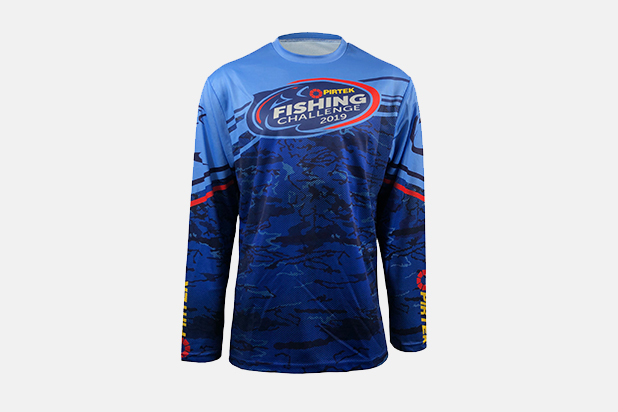
| Sublimation | Dye is printed onto paper and transferred into the fabric under heat | Full-colour, all-over artwork on polyester | Polyester-based fabrics only; colour is affected by the base fabric |
| Screen printing | Ink is pushed through a mesh screen, one screen per colour | Bold, flat shapes on large quantities | Cost rises with the number of colours; gradients are difficult |
| Heat transfer | Printed film is pressed onto the garment | Small, detailed, multi-colour artwork | Hand-feel can be noticeable; durability depends on the film |
| Direct-to-garment | Ink is printed directly onto the garment surface | Short runs and sample quantities | Slower per unit at volume; needs a suitable pre-treatment |
| Embroidery | Thread is stitched into the fabric | Logos on polos, caps and heavier garments | Not suitable for fine gradients or very small type |
| Heat-sealed / bonded | A pre-cut badge or trim is fused to the surface | Silicone logos, reflective and technical trims | Limited to prepared shapes; adhesion needs correct pressing |
Two rules follow from this. First, if the design is full-colour and covers most of the garment, sublimation is almost always the right answer. Second, if the design is a small logo on a cotton or blended shirt, print or embroidery will outperform sublimation on both cost and appearance.
Most print problems originate in the artwork file, not on the press. The specification points below prevent the common failures.
Vector artwork for logos. Vector files scale without loss of quality. A low-resolution raster logo enlarged onto a shirt will look soft, and no print method can recover the detail.
Colour references, not screen colours. Supply a colour-library reference or a physical swatch alongside the file. Print colours are matched to references, not to what a monitor displays.
Correct artwork size and placement. Give the printed dimensions in millimetres and the position on the garment. Positions are agreed from the centre of the chest, the collar seam or the hem.
Plan for the garment, not the drawing. A design approved on a flat rectangle will distort where it crosses seams, side panels or a placket. Check the placement on a size that matches the largest and smallest in the order.
Minimum line weight and type size. Very thin lines and small type fill in on screen print and are unreadable in embroidery. If the artwork depends on fine detail, say so, and expect the method to be chosen around it.

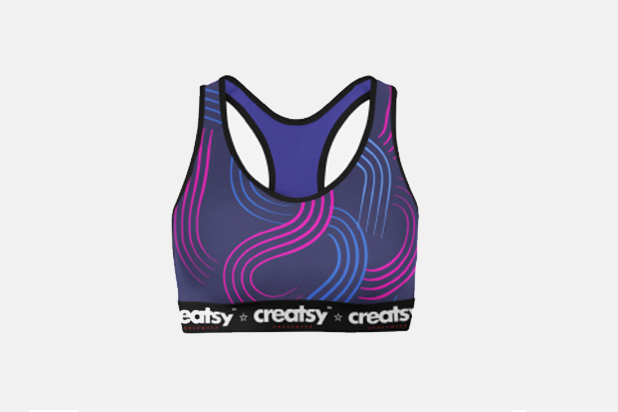
Large graphics need the right print method — sublimation carries full-colour artwork, screen print carries flat bold shapes.
For marketing teams, the printed T-shirt behaves differently from other promotional products, and the difference is worth understanding before quantities are set.
It is worn repeatedly. Unlike a brochure or a banner, a T-shirt is used many times, which multiplies the exposure per unit of spend.
It is photographed. Event photography, team photos and social content all carry the printed design into channels the buyer does not pay for.
It signals belonging. A shared shirt identifies members of a team, a staff group or a community, which is why it works for both internal and external campaigns.
It converts into a product line. A campaign shirt that performs well can be re-listed as retail merchandise, extending its commercial life.
It scales up or down. The same design can be produced at twenty units for a small team or several thousand for an event.
The marketing value depends on the garment surviving use. Cheap print on a thin shirt undermines the message within a few washes, which is why fabric weight and print method belong in the marketing brief, not only in the purchasing brief.
| Stage | What happens | What the buyer should settle |
|---|---|---|
| Brief | Garment, quantity, sizes, print method, artwork | Delivery date, destination and size curve |
| Artwork check | File quality and printability review | Confirmation of printed dimensions and placement |
| Sample | Physical pre-production sample produced | Approval of colour, placement, hand-feel and size |
| Bulk production | Printing or sublimation at volume | Quality checks at the agreed standard |
| Packing and shipping | Sorting, bagging and dispatch | Labelling, carton marks and delivery terms |
| Reorder | Repeat batch from the recorded specification | That the specification and colour references are on file |
The sample is the single most valuable stage. A physical pre-production sample reveals whether the print sits where it was intended, whether the colours match the reference and whether the fabric weight is right for the price. Approving from a digital mock-up skips exactly the checks that matter.

For brand marketing orders, the printed T-shirt works as a wearable billboard, which is why campaigns reorder it by the thousand.
Choosing the print method last. The method constrains the fabric, the artwork and the cost. Decide it first.
Supplying low-resolution artwork. Enlarged raster files cannot be repaired downstream.
Approving colour on screen. Screens are not calibrated and ink behaves differently on fabric.
Ignoring wash requirements. Fastness and crack resistance depend on the ink, the film and the fabric together. State how the shirt will be laundered.
Not recording the specification. Without a recorded spec and colour references, the reorder will not match the first batch.
Over-specifying the design for the budget. Six print colours on a low-cost shirt rarely looks like six print colours on a good one.
It depends on the artwork and the fabric. Sublimation is best for full-colour or all-over designs on polyester. Screen printing is best for bold, flat shapes at volume. Heat transfer suits small, detailed artwork, and embroidery suits logos on polos and heavier garments.
With sublimation, effectively any number, because the design is printed rather than assembled from separate inks. With screen printing, each colour needs its own screen, so cost and setup time rise with the colour count — most buyers keep screen-printed designs to one to three colours.
It depends on the ink, the film and the fabric together, plus how the garment is laundered. Tell the factory how the shirt will be washed, and follow the care instructions provided. A wash test on the pre-production sample is the reliable way to confirm durability.
Garment type and fabric preference, quantity and size breakdown, print method if known, artwork files, printed dimensions and placement, delivery country and target date. With those, a factory can quote accurately rather than estimate.
A printed sports T-shirt succeeds on specification. Decide the print method first, prepare artwork at the right resolution with colour references, agree the printed dimensions, and approve a physical sample before bulk production.
Send Yinshan Sportswear your garment list, artwork, print requirements, estimated quantity, target date and delivery country to request a custom quote.
 English
 Español
 Português
 Français
 Pусский
 Deutsch
 العربية