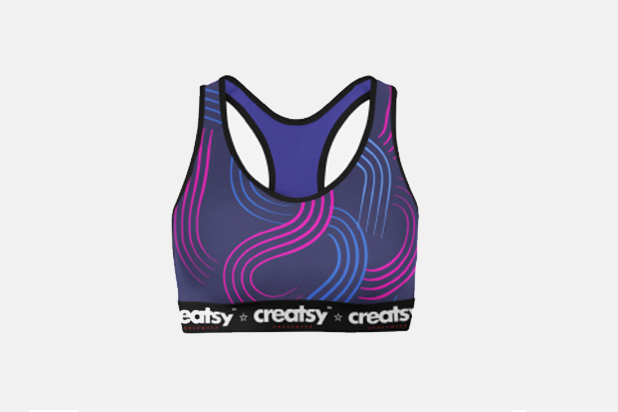
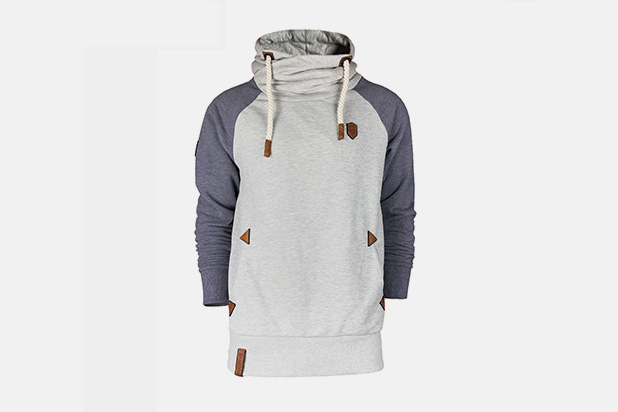
Gym, studio and fitness programmes buy clothing in a different way from sports teams. Instead of a fixed squad with known sizes, the order is driven by membership, staff turnover and retail demand — which makes size planning and repeatable specification more important than any single design decision.
This guide is for gym owners, fitness studios, personal training businesses, corporate wellness programmes and the brands that supply them. It covers the product list that works in this category, fabric and weight choices, how to plan a size curve that avoids dead stock, and when to embroider rather than print.
Quick answer: build a gym or studio range from a small core — a performance tee, a singlet or tank, shorts, a hoodie or sweat top, and a polo for staff. Choose fabric by how the garment is worn rather than by fashion, plan the size curve from actual membership demographics, and use embroidery on structured pieces such as polos and hoodies while printing the lighter training tops.
If you are specifying a fitness range, start from our fitness and activewear range, and see our guide to yoga and fitness fashion for the studio side of the category.
| Piece | Who wears it | Typical fabric | Decoration |
|---|---|---|---|
| Performance T-shirt | Members, class participants | Polyester knit, moisture-wicking | Print, heat transfer |
| Singlet or tank | Training and classes | Lightweight knit | Print, small embroidery |
| Long-sleeve training top | Outdoor and winter training | Brushed knit or fleece-backed | Print, embroidery |
| Shorts | All training | Polyester–elastane woven or knit | Print, applied logo |
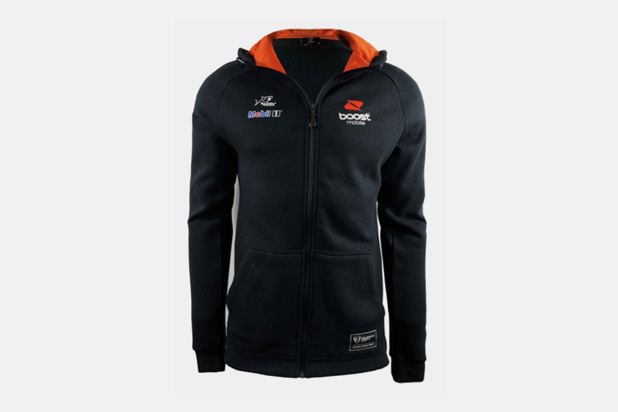
| Hoodie or sweat top | Warm-up, staff, retail | Brushed-back fleece | Embroidery, print |
| Polo shirt | Staff, reception, coaching | Cotton or performance piqué | Embroidery |
| Leggings or tights | Studio and fitness classes | Polyester–elastane knit | Print, tonal branding |
| Cap or headwear | Members, staff | Cotton twill or performance | Embroidery |
The commercial logic of a gym range is that a few pieces carried in depth outperform a wide range carried shallowly. Members reorder the same tee; staff reorder the same polo. Depth in a core piece is what makes a programme profitable, because it keeps minimum order quantities, tooling and stock management simple.

Gym and polo programmes usually combine a performance top for training with a polo for staff and reception wear.
Buyers often choose gym fabric by description. It is more reliable to choose by weight and behaviour, because those two numbers predict how the garment will feel and wear.
| Fabric | Typical weight | Best for | Notes |
|---|---|---|---|
| Lightweight polyester knit | 130–160 gsm | Training tees, singlets | Fast drying; check opacity on light colours |
| Mid-weight performance knit | 160–200 gsm | General training, studio tops | The most versatile single choice |
| Heavyweight performance knit | 200–240 gsm | Premium retail tees | Holds shape well; higher cost |
| Brushed-back fleece | 260–340 gsm | Hoodies, sweat tops | Check pilling performance |
| Cotton piqué | 180–220 gsm | Staff polos | Shrinkage control matters |
| Polyester–elastane knit | 200–280 gsm | Leggings, fitted tops | Specify stretch percentage and opacity |
Two specifications should always be recorded, because they are what a reorder has to match: fabric weight in grams per square metre, and composition or stretch percentage. A programme that records only "performance tee" will not receive the same tee next time.

Planning the size curve matters more than the design in gym programmes, because orders are placed by membership rather than by taste.
Size planning is where gym programmes make or lose money, because unsold sizes become dead stock and missing sizes become complaints.
Start from your own data. If the programme is a renewal, use the previous order's size breakdown rather than a general assumption.
Match the demographic. Membership age and gender distribution drives the curve; a student gym and a corporate wellness programme do not order the same sizes.
Allow for staff separately. Staff and coaching sizes differ from member sizes and are usually ordered in smaller quantities.
Include a mid-range concentration. Most programmes sell most units in the middle of the curve, with small numbers at the extremes.
Plan the reorder before the first order. Agree which pieces will be held as reorder stock, so the size curve can be repeated accurately.
Consider unisex versus fitted. If both are offered, the size curve changes for each; treat them as separate lines.
| Order size | Practical approach |
|---|---|
| Under 50 units | Concentrate almost entirely on mid sizes; avoid extremes |
| 50–200 units | Full practical curve, small quantities at each extreme |
| 200–1000 units | Detailed curve by piece; separate staff allocation |
| Over 1000 units | Plan per garment type and per channel, with reorder stock held |

Embroidery suits the structured pieces in a gym range, while lighter training tops are usually printed.
The choice follows the garment rather than the brand. As a rule, structured, heavier and formal pieces are embroidered; light, technical and large-format pieces are printed.
Polos are embroidered. A small chest logo in thread reads as premium and survives repeated laundering, which matters for staff uniforms.
Hoodies and sweat tops are embroidered. The fabric takes embroidery well and the stitched logo matches the perceived value of the garment.
Training tees are printed. Large back prints, member names and campaign graphics are all print territory.
Leggings use tonal branding. Heavy decoration interferes with stretch; small tonal prints or woven labels work better.
Caps are embroidered. The structured crown suits stitching and does not suit large printed areas.
A practical point on mixed programmes: if a chest logo appears on both a polo and a tee, use embroidery on the polo and a matching print on the tee, and confirm the two read consistently on a sample. They will not be identical, and that is normal, but they should look deliberate.
A wide range carried shallowly. Depth in a few core pieces is more profitable than breadth.
Guessing the size curve. Use your own membership or renewal data wherever it exists.
Choosing fabric by description. Specify weight and composition, or the reorder will not match.
Printing logos on polos. Embroidery reads better on structured fabric and lasts longer in a staff uniform.
Ignoring opacity. Lightweight light-coloured pieces that become translucent generate returns.
Leaving reorder stock unplanned. Without a recorded specification, the second order will not match the first.
A performance T-shirt, a singlet, shorts, a hoodie or sweat top, and a polo for staff, plus optional leggings and headwear. A small core carried in depth is more commercial than a wide range carried in small quantities.
Use your own membership or previous order data wherever it exists, and allow separately for staff. If no data exists, concentrate on the middle of the curve for the first order and refine it at reorder.
Usually a variation of it. Members are served by printed performance tops; staff are better served by embroidered polos or hoodies, which read as uniform rather than merchandise.
Yes, though the decoration route affects the practical minimum. Embroidery and heat transfer are flexible from small runs, while screen printing becomes economic at higher volumes. Sublimation has low colour-related minimums but requires a suitable polyester fabric.
Gym and studio programmes reward planning over design novelty. Choose a small core, specify fabric by weight and composition, build the size curve from your own data, and match the decoration method to each garment before approving a physical sample.
Send Yinshan Sportswear your garment list, fabric preferences, artwork, estimated quantity, size breakdown, target date and delivery country to request a custom quote.
 English
 Español
 Português
 Français
 Pусский
 Deutsch
 العربية