A softshell vest earns its place in a kit bag because it covers the gap between a shirt and a jacket. It keeps the wind off the torso, sheds a light shower, and leaves the arms free — which is exactly what someone standing on a touchline, working a stage or walking to a match on a cold morning wants. Print a design across the front and the same garment stops being generic outerwear and becomes something a crew is identified by.
This page covers our custom softshell sports vests with front printing: how the fabric is built, what printing on a bonded softshell actually involves, where a design should sit on a zipped front panel, and how to order a run that matches between sizes and between seasons.
Quick answer: A softshell vest is a three-layer bonded fabric — a woven face, a membrane or film for wind and water resistance, and a light inner face for comfort — usually assembled with a full front zipper, a stand-up collar, zipped side pockets and an adjustable hem. Front printing puts your graphic on the chest panels, either side of the zipper. The main planning points are that a matte softshell surface produces a softer, slightly deeper print than a shiny shell, that artwork must be split across the zipper opening, and that the size of the front panel limits how large a graphic can be.
If the design needs to cover most of the garment rather than sit on the chest, our artwork-design softshell vest with front zipper is the closer match. If the logo must look raised rather than printed, start from the embroidered softshell vest.
| Element | Typical specification | Why it matters to the wearer |
|---|---|---|
| Face fabric | Woven polyester or polyester-spandex, usually with a matte or lightly textured finish | Gives wind resistance and gives the print something to bond to. A matte face produces a deeper, less glossy print than a shiny one. |
| Middle layer | A membrane or a coated film for wind and light water resistance | This is what separates a softshell from a simple fleece. Confirm whether the garment is water-repellent or waterproof, because the two are different claims. |
| Inner face | Light fleece, brushed tricot or a mesh backer | Determines how warm the vest feels and how it slides over a shirt. Brushed tricot is the usual choice for a mid-layer. |
| Front closure | Full-length zipper, sometimes with a chin guard | A chin guard stops the zip rubbing the neck on a long day. Zipped pockets are the detail people notice within the first hour. |
| Hem and collar | Elasticated or adjustable hem, stand-up collar | An adjustable hem keeps wind out when the wearer is standing still, which is when a vest is most used. |
Because a softshell is a bonded fabric rather than a simple knit, the fabric reference matters more than usual. Two softshells that look identical on a swatch can differ in how they take print and how they behave after washing, so keep the reference code with the specification.
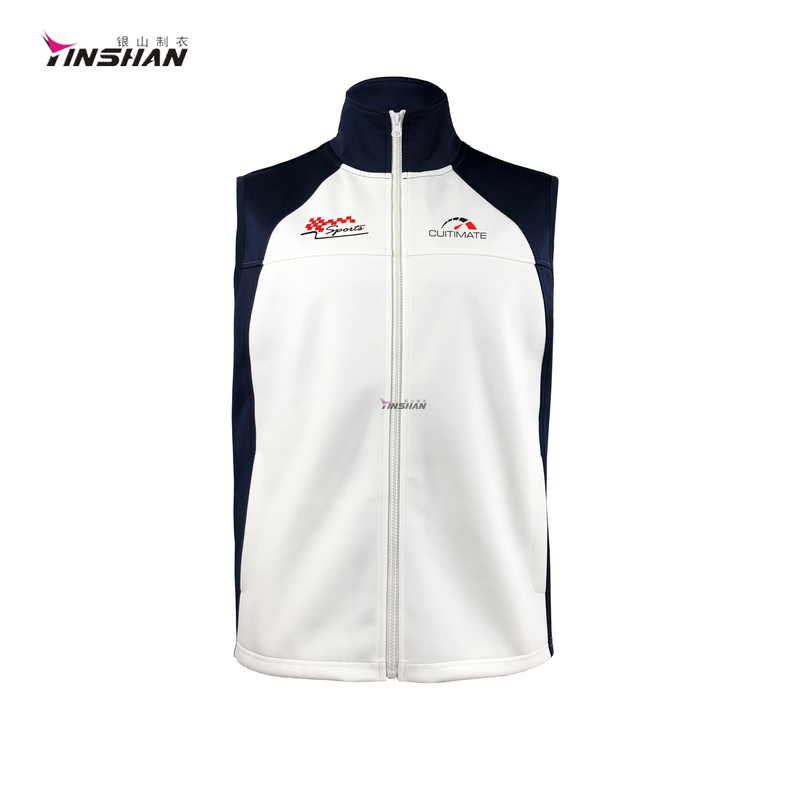
A softshell vest is the most useful layer in a kit bag: warm enough to matter, light enough to be worn all day, and printed across the front it becomes a team garment.
Printing a softshell is not the same as printing a cotton shirt, and the differences are worth knowing before artwork is finalised.
The surface is less absorbent. A woven bonded face does not drink ink the way a knit does, so the print sits more on the surface. This is fine for most designs, but it means adhesion is the priority and artwork should avoid very fine isolated detail.
The fabric has a slight surface texture. Linework and small type can lose a little crispness compared with printing on poplin or cotton. Increase the weight of fine lines slightly and keep small type larger than you would on a shirt.
Colour reads differently. On a dark softshell, a light print appears slightly cooler and flatter than on a light fabric. Approve the design on the actual colourway rather than on a white mock-up.
Heat sensitivity. Bonded fabrics dislike excessive heat, so the print method is chosen to suit the fabric. Confirm the method being proposed for your specific softshell rather than assuming one method fits all shells.
Wash behaviour. Print on a softshell is durable when the care instructions are followed. Inside-out washing and no direct ironing over the decoration are the two instructions that matter most.
A practical rule: for a softshell, keep the printed design to a graphic or a block logo rather than photographic detail, and embroider the elements that must look sharp at close range.
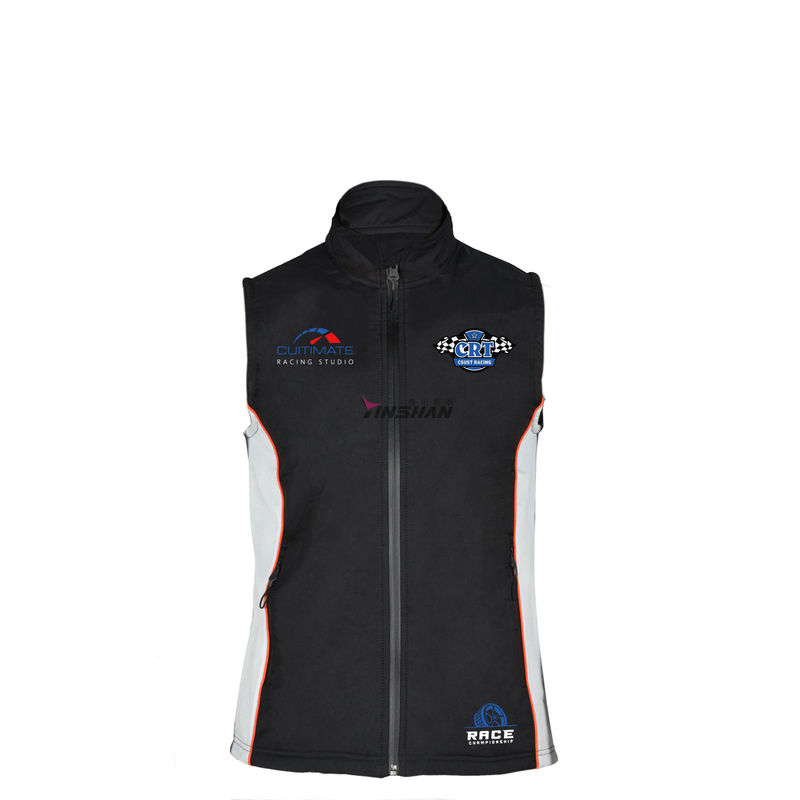
The zipper and the print have to be planned together, because the front panel is split into two halves that must line up across the closure.
The front zipper splits the chest into two panels, and that shapes every placement decision.
Left chest, one side of the zip. The default position for a logo or club mark, usually 70–90 mm wide. Ensure the mark is clear of the zipper tape on both sides at the widest point of the stitch.
Right chest. A second mark, typically a sponsor or event logo. Keep both marks on the same horizontal line so the front reads as balanced.
Across the full front. A graphic that spans both panels must be supplied as two separated artwork panels with an agreed gap for the zipper. Supplying a single joined design and expecting the factory to split it is the most common cause of a misplaced front print.
Back panel. The largest printable area on the garment, and where team or event names usually go. The back is also where a large print is least likely to interfere with fit.
Sleeve area. Not applicable on a sleeveless vest, but the shoulder yoke and the hem can carry small marks.
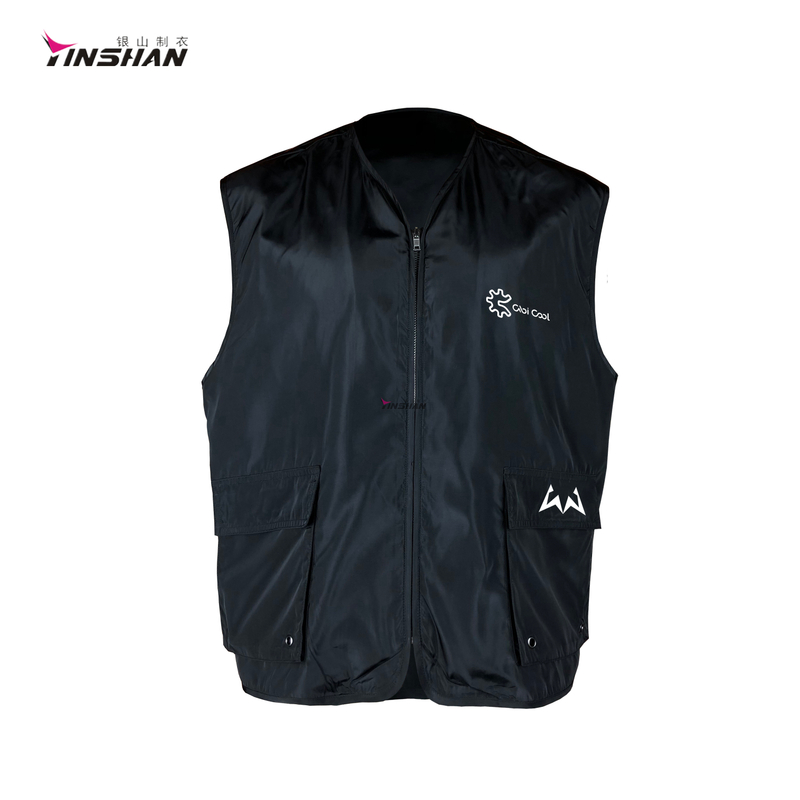
Crews and teams usually order one colourway in a wide size run, so the size curve matters as much as the artwork.
Sports teams and coaching staff who need a match-day layer that carries the club identity and can be worn over a shirt or a playing top.
Event and production crews who need identifiable staff garments that work outdoors across a full day.
Corporate and field teams using a vest as a branded mid-layer that is less formal than a jacket and warmer than a shirt.
Brands and distributors adding a layering piece to an existing printed range, where the priority is that the colourway matches garments already in the line.
Size curve. A vest runs over other garments, so confirm whether the cut is intended as a mid-layer or as an outer layer. That decision changes which size a wearer should order.
Minimum order quantity. Ask separately for the garment, for each colourway and for each decoration method. A softshell usually carries a higher minimum than a simple knit, because the fabric is bonded to order.
Swatch and print proof. Approve the fabric swatch and see the print on that fabric before production, not on a white mock-up.
Pre-production sample. Ask for a sample with the front print applied and the zipper in place, so the split across the zip can be checked in the hand.
Repeat runs. Record the fabric reference and keep the approved sample. A softshell is a fabric-led garment, so a reference code is what makes a second run match the first.
Is a softshell vest windproof and waterproof? A softshell is normally wind-resistant and water-repellent rather than fully waterproof. Ask for the specific claim the fabric carries, and treat the two terms as different specifications.
Can a design run across the front zipper? Yes, if the artwork is supplied as two panels with a defined gap. A single joined graphic cannot be printed across the opening.
Can we embroider instead of printing? Yes, and many teams do both — a printed front panel with an embroidered chest logo. Embroidery suits a crest or a monogram; print suits larger graphic work.
Will the print survive washing? Yes, when the care instructions are followed. Wash inside out at a moderate temperature and do not iron directly over the print.
How long does production take? The schedule is usually set by artwork approval and sample approval rather than by assembly. Keeping the artwork on file for later runs is the most reliable way to shorten a repeat order.
To get an accurate price, send the quantity and size breakdown, the colourways, the artwork split into front panels with any embroidery marked separately, and the date the order is needed. You can send a custom requirement directly, compare this vest with our artwork-design softshell vest, or browse the wider teamwear range. Request a quote.
 English
 Español
 Português
 Français
 Pусский
 Deutsch
 العربية