Performance fabric and embroidery are a difficult pairing to get right and an easy one to get wrong. A polyester elastane shirt moves with the wearer, which is exactly what makes it comfortable and exactly what makes a stitched logo prone to puckering, waving or distorting if the file and the backing are not chosen for the fabric.
This page covers our customised polyester elastane sports shirts with top quality embroidery: what the fabric does, why embroidery behaves differently on a stretch knit, what "top quality" means in specification terms, where the logo belongs, and how team orders are structured.
Quick answer: This is a stretch performance sports shirt — polyester with a small elastane content — decorated with embroidered logos and lettering. The fabric gives moisture management, quick drying and shape recovery; the elastane is what lets the shirt move without going slack. Embroidery on this fabric requires a cut-away stabiliser and a stitch file digitised for a stretch knit, otherwise the logo pulls the fabric and loses its shape. For large graphics or full-colour work, print is the better method; embroidery is for marks that must look precise.
If the design is graphic rather than logo-led, compare this shirt with our artwork printing tee shirt in polyester elastane. For a moisture-wicking alternative with a printed treatment, see the polyester wicking sports tee.
| Property | What it does | Who notices it most |
|---|---|---|
| Moisture management | Moves sweat away from the skin and dries quickly | Anyone training or playing for more than an hour in warm conditions. |
| Stretch and recovery | Extends with movement and returns to shape | Wearers who are reaching, rotating or lifting — the shoulder and back are where this shows first. |
| Shape retention | Resists going slack at the collar and hem | Teams issuing a shirt that has to look consistent across a whole squad. |
| Light weight | Low mass for the coverage it provides | Running and indoor training, where a heavy shirt is immediately noticeable. |
| Decoration compatibility | Excellent for print; embroidery needs correct stabilising | Buyers choosing between a printed and an embroidered logo. |

Performance fabric with a small elastane content moves with the wearer, which is exactly why the embroidery has to be stabilised properly.
The challenge is that embroidery pulls. On a rigid fabric the stitch simply compresses the cloth; on a stretch knit it deforms it. Four decisions control the result.
Backing. A cut-away stabiliser is normally used on stretch knits, because it supports the stitch area permanently rather than being torn away and leaving unsupported fabric.
Digitising. Density, underlay and pull compensation must suit a stretch fabric. Ask whether the file was digitised for this shirt or reused from a rigid garment — the answer is usually visible in the finished logo.
Stitch density and size. A logo stitched too densely will stiffen the panel and pucker; a logo stitched too large will exaggerate any distortion. Chest marks of 70–90 mm are the reliable range.
Thread and finishing. Match thread to the brand palette by reference, and confirm that backing is trimmed cleanly — untrimmed backing is uncomfortable against skin on a performance shirt.
Prices for embroidery work vary with the stitch count and the preparation, so the honest specification conversation is about the digitised file and the backing, not about whether a supplier "does good embroidery".
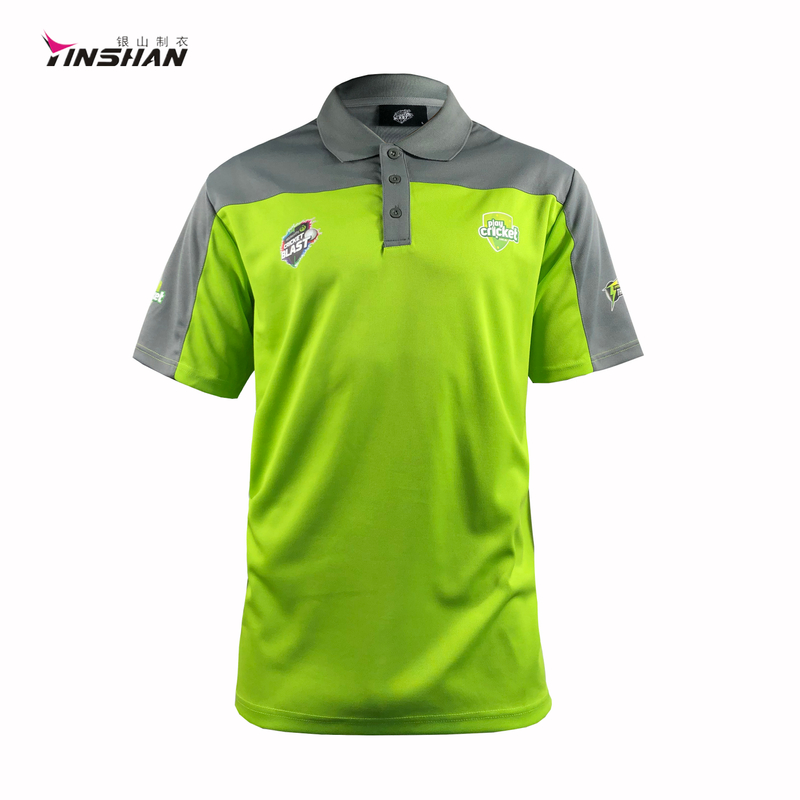
Stitch on a stretch fabric is judged close up, so density, backing and thread colour all have to be specified rather than assumed.
Elastane percentage. A small percentage is enough for comfort and recovery. Ask for the exact figure, because it determines how the shirt behaves after repeated washing.
Weight in grams per square metre. Lighter fabric suits running and indoor training; slightly heavier fabric drapes better and suits presentation wear.
Finish. Ask whether moisture management comes from the yarn or from a finish, and whether it survives repeated washing.
Colour reference. A fabric reference code is essential on a garment that will be reordered as part of a team kit.
Shrinkage. Ask for the allowance on this specific fabric, and take the size chart after it has been applied.
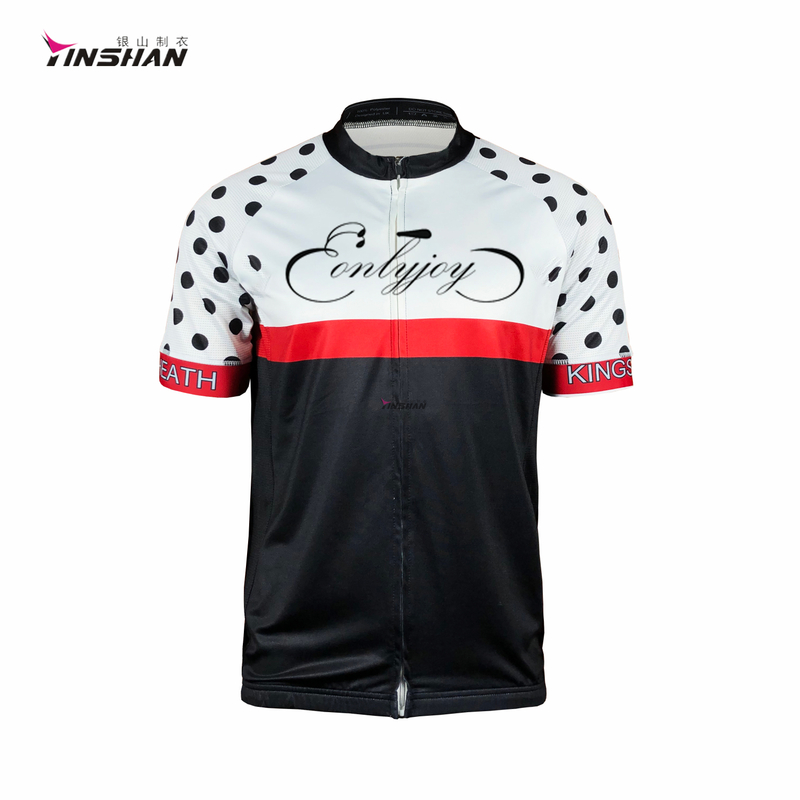
Team orders usually want one fabric reference across several sizes, so the specification has to be repeatable rather than improvised.
Left chest. The standard logo or crest position, embroidered, typically 70–90 mm wide.
Right chest. A second mark — a sponsor or a partner logo — kept on the same horizontal line as the chest logo.
Sleeve. Flags, member numbers or a small repeat logo. Very visible on a performance shirt and cheap to add.
Nape. A small mark or the team name, often used on kit that carries no front graphic.
Back. Better printed than embroidered at large sizes, because a big stitched block adds weight to a lightweight performance fabric.
Minimum order quantity. Ask separately for the garment, for each colourway and for each decoration method. Embroidery and personalisation can carry their own thresholds.
Sizes. Because the fabric stretches, the same nominal size fits closer than on a rigid knit. Confirm the intended fit before publishing a size chart.
Personalisation. For individual names, send a controlled list with exact spelling, number and size, and ask for the list to be confirmed back before production.
Sample. Ask for a pre-production sample with the embroidery applied. On a stretch fabric this is the only reliable way to confirm the logo sits flat.
Care label. Composition, decoration method, wash temperature and a warning against high-heat drying — the label is what protects the stretch and the stitch.
Can embroidery be applied to a stretch sports shirt? Yes, with a cut-away stabiliser and a file digitised for a stretch knit. Ask for a stitch-out on the actual fabric before production.
Why does an embroidered logo sometimes pucker? Usually because the stitch file was digitised for a different fabric or the backing is wrong for a stretch knit. Both are correctable at the sample stage.
Should a large back design be embroidered or printed? Printed. A large stitched block adds weight and stiffness to a lightweight performance fabric, and print reproduces colour and detail better at that scale.
Will the shirt keep its shape? With a small elastane content and a moderate wash temperature, yes. High-heat drying is the most common reason a stretch garment goes slack.
How long does the order take? It is normally governed by artwork and sample approval. Keeping the logo file on record makes repeat orders for the same team considerably faster.
Send the logo or crest as vector artwork with the size and placement, the garment and quantity with a size breakdown, the colourways, and your required delivery date. You can send a custom requirement directly, compare this shirt with our artwork printing polyester elastane tee, or browse the wider teamwear range. Request a quote.
 English
 Español
 Português
 Français
 Pусский
 Deutsch
 العربية