Merchandising is where a club or a school finds out whether its audience actually wants its logo. A hoodie is the item that answers the question, because it is bought by people who are not on the team, not in the class and not on the staff list. That makes the garment itself the product, and a hoodie that feels thin, pills under the arms or loses its shape after a month will not sell twice.
This page covers our customized logo design sports cotton hoodies with printing and embroidery: what the fabric weight means in use, how printed and embroidered decoration differ on a brushed fleece, how a hood, drawcord and pocket are specified, and how club, school and promotional orders are structured.
Quick answer: A custom cotton sports hoodie is a cotton or cotton-rich fleece garment made to order in the client's own colours, with a printed graphic and usually an embroidered logo. The fabric weight determines whether the hoodie suits year-round wear or colder months, and it determines how the decoration behaves: embroidery reads sharply on a stable fleece, while print coverage depends on the surface being tested first. The three details that most affect how a hoodie is judged after a month of wear are the weight of the fleece, the drawcord and hood construction, and the strength of the embroidered backing.
If a lighter or polyester-blend top suits the brief better, the closer matches are our cotton polyester jersey sports hoodie and the zipper hoodie with heat-transfer printing.
Weight is the first specification to settle, because it drives the price, the season the garment suits and the decoration method that works. A hoodie quoted without a weight is not really quoted.
| Weight band | Feel | Season | Decoration | Typical use |
|---|---|---|---|---|
| Light | Soft, drapes | Year-round layering | Print works well; embroidery needs care | Promotional and event merchandise |
| Mid | Substantial but not heavy | Spring to autumn | Both print and embroidery work well | Club and school ranges |
| Heavy | Firm and warm | Cold months | Embroidery reads best; broad print also works | Staff and workwear, winter club wear |
The mistake to avoid is choosing a light fleece for a garment that will be worn as outerwear in winter. It costs less per piece and it will be the reason the range does not repeat.

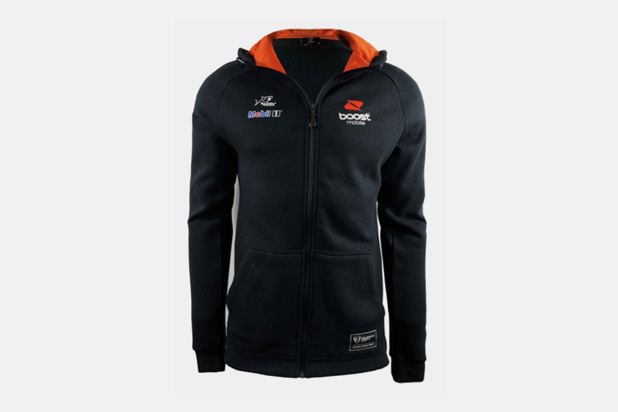
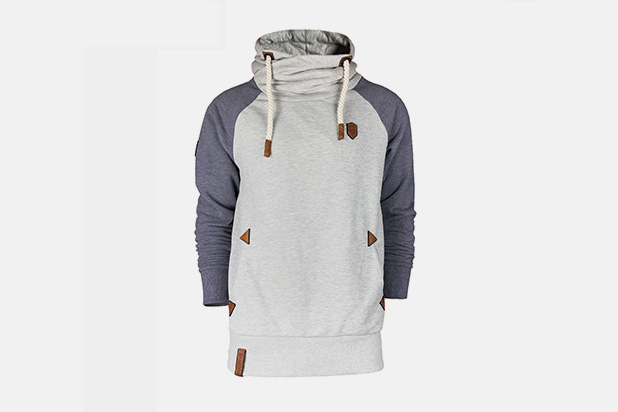
A cotton hoodie with a printed front and an embroidered chest logo is the most ordered shape in club and school merchandising.
A brushed fleece has a looped inner face and a smoother outer face, and the two behave differently under decoration. Almost all decoration is applied to the outer face, which is the one that has to be tested.
Embroidery. Works well and reads with a crisp edge, provided the backing is chosen for the fleece weight. On a heavy fleece with the wrong backing, a large stitch field pulls the fabric and the logo softens at the edges.
Print. Screen print, transfer and other methods all work on a cotton face, but the surface has to be tested where the graphic contains fine text. Fleece is thicker than a tee, so the ink sits differently.
Combination. The usual structure is an embroidered logo on the chest and a printed graphic on the front lower area or the back. Keep the two zones apart.
Inside the hood. Where a logo is printed inside the hood it is mostly decorative, because the hood lining is rarely seen. Only specify it if it serves a purpose.
Sleeve and cuff marks. Small printed or embroidered elements on the sleeve work, but the position should be standardised so repeat runs line up.

Embroidery on a brushed fleece needs a stable backing, otherwise the stitch field pulls the looped inner face and the logo edges soften.
These three components are where a cheap hoodie is recognised, and all three can be specified in advance.
Hood. A single-layer hood packs flat; a lined hood holds its shape and looks fuller but adds bulk. Which is right depends on whether the hoodie is worn as outerwear or under a jacket.
Drawcord. Ask whether the cord is fixed or adjustable, where the eyelets are and how the ends are finished. Metal tips last longer than knotted cord; cord colour can be matched to the print.
Pocket. A kangaroo pocket suits casual wear and can hide print on the body below it. Split pockets are easier to use with a phone. Zip pockets suit anything worn while moving.
Cuffs and hem. Rib weight determines whether the hoodie still sits correctly after a season. Lighter rib relaxes faster.
Seams and cover stitching. On a heavy fleece, ask how the shoulder and side seams are finished. This is the first place a hoodie tells the truth about its construction.
Sports clubs adding a supporter and member garment to a range alongside kit.
Schools and universities running leavers' hoodies, society hoodies or staff wear, often with individual names.
Companies using a hoodie as branded staff wear or event merchandise where the garment is taken home.
Event organisers needing a keepsake garment for participants or crew that still gets worn afterwards.
Gyms and studios selling a branded layer to members as part of a retail range.
Brands and distributors commissioning a range where consistency between drops matters more than the lowest piece price.
| Item | Why it matters | What to send |
|---|---|---|
| Quantity per size | Sizes are cut in groups, so an uneven count raises the piece cost | A table of size codes with a count against each |
| Fleece weight | Drives the price, the season and the decoration behaviour | The season and the intended use |
| Colourways | Each colourway carries its own minimum | The reference, plus a physical swatch approval where colour matters |
| Hood, cord and pocket | Decides whether the garment is kept and worn again | Whether it is outerwear, layering wear or merchandising |
| Decoration | Print and embroidery carry separate setup and minimums | Vector artwork with printed and embroidered parts marked separately |
| Names or numbers | Changes the packing and usually the minimum | One row per person with exact spelling, name, number and size |
| Delivery date | Determines whether a sample round fits | The date the hoodies must be in hand |

Hoodie orders are packed by size so the boxes can be distributed without opening every one to find an individual size.
What weight should we choose? Match it to the use. Year-round layering takes a lighter fleece; a garment worn as winter outerwear needs a heavier one, and the price difference is real but smaller than the cost of a range that does not repeat.
Can we print and embroider the same hoodie? Yes, and it is the usual combination. Keep the embroidered logo and the printed graphic in separate areas.
Can each person have a different name? Yes. Send one row per person with the exact spelling, name, number and size, and ask for the list to be confirmed back before production.
Does a lighter fleece embroider as well? It can, but a light fleece needs more careful backing. Ask for the decoration to be tested on the actual fabric before the full run.
Will the hoodie shrink? Cotton-rich fleece moves slightly in the first wash. Confirm the shrink allowance and check the size chart after it has been applied.
How should the hoodie be washed? At a moderate temperature and inside out, without high-heat drying or fabric softener, and without ironing directly over printed or embroidered areas.
Send the quantity by size, the colourways, the required fleece weight or intended season, the hood and pocket preferences, the artwork with printed and embroidered elements marked separately, the name list if personalisation is needed, and the date the garments must be delivered. You can send a custom requirement directly, compare this hoodie with our cotton polyester sports hoodie, or browse the wider teamwear range. Request a quote.
 English
 Español
 Português
 Français
 Pусский
 Deutsch
 العربية