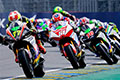
Motorsport fanwear is a retail product wearing a racing identity. A supporter tee and a pit crew shirt can carry the same logo and still be two different businesses — one is bought by the thousand against a retail price point, the other is worn by twenty people for a whole season. Yinshan Garment has manufactured custom sportswear in Ningbo, China since 1986, and has produced official replica and fan ranges under licence across Formula One, MotoGP, MotoCross, NASCAR and Formula E. This page sets out how motorsport fanwear is specified, what makes a retail-ready order different from a team order, and what belongs in a brief before the range reaches a cutting table.
Fanwear covers four groups, and they are usually bought by different people on different deadlines.
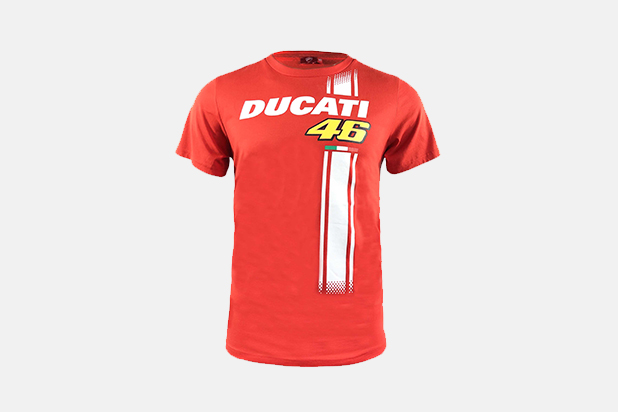
Supporter tees and graphic shirts. The base of almost every fan range. Full-colour graphics, large front or back prints, and a unit cost that has to leave margin at the retail price the team or distributor has already decided on.
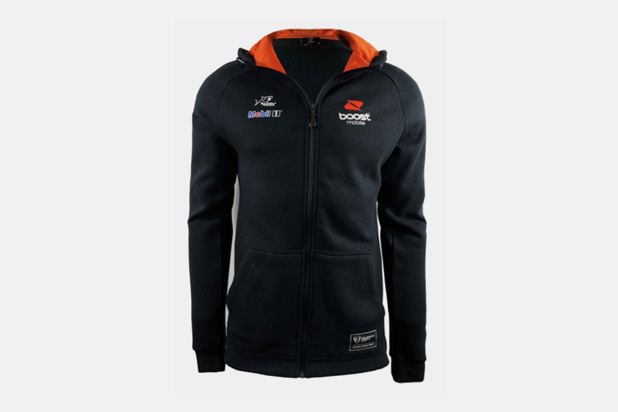
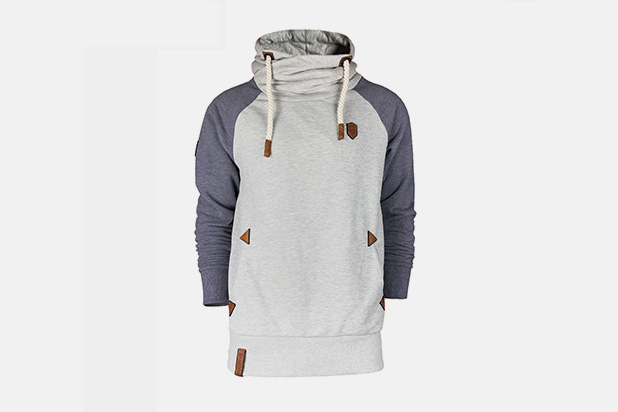
Fan hoodies and sweats. The highest-value item in most ranges and the one that carries the brand away from the circuit. Heavier fabric, fewer sizes on the shelf, and a longer selling season than a race-weekend tee.
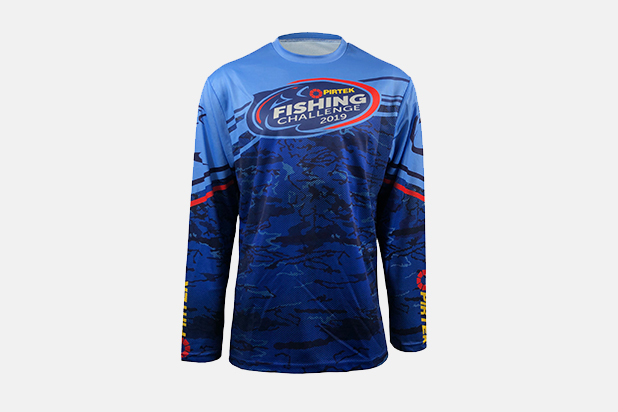
Race-weekend and event merchandise. Built for a fixed date — a race weekend, a launch, a signing event. These ranges are usually one or two base styles decorated several ways rather than many styles decorated once.
Lifestyle and accessory lines. Caps, polos, gilets and travel pieces sold through a team shop or an online store all year rather than at one event.
A supplier who quotes all four from a single stock list will usually get two of them wrong. Fanwear and teamwear share a design language and almost nothing else — a racing team hoodie sold at retail and a hoodie issued to staff are built to different briefs even when the fabric comes from the same shelf.
Three constraints separate a fanwear programme from a team programme, and all three change what the factory has to be told up front.
Unit cost, not durability, decides the specification. A team order can justify a heavier fabric because twenty people will wear it fifty times; a fan range cannot. The retail price is set before the factory is contacted, so the garment is engineered backwards from that number — a lighter fabric route, a simpler construction, and decoration chosen for cost per unit rather than longevity.
The size curve is a retail curve. Team kit is ordered in a narrow band with more mid sizes, because the same bodies wear the same garments all season. Fanwear follows the buying public: the middle sizes carry the volume, the extremes are ordered in single digits, and getting that curve wrong is the most common way a range ends up with dead stock.
Delivery is fixed to a date that cannot move. A race weekend, a launch or a tour date is already public before the order is placed. Fanwear therefore runs backwards from the event rather than forwards from the order, and every approval step has to fit inside that window.
The table below shows the routes we quote most often for fan ranges. These are the common bands, not the only options — a lighter or heavier fabric can be sourced against a specific order.
| Fanwear item | Typical fabric route | Weight band | Decoration that fits |
|---|---|---|---|
| Supporter tee | Cotton or poly-cotton jersey; performance interlock for sport-led ranges | 160–190 gsm | Sublimation, screen print, transfer |
| Fan hoodie | Cotton/poly fleece, or recycled fleece | 280–360 gsm | Embroidery, screen print, appliqué |
| Fan polo | Poly piqué or cotton piqué | 180–220 gsm | Embroidery, sublimated panels |
| Fan gilet / vest | Lightweight woven shell with synthetic fill | Shell 100–130 gsm | Embroidery, heat transfer |
| Cap | Brushed cotton twill, structured or unstructured | 180–240 gsm | 3D or flat embroidery |
| Event tee (short run) | Lightweight jersey, sublimation-grade | 150–180 gsm | Full-colour sublimation |
Two decisions sit above that table. The first is whether the range is a single hero style or a small family — a range built around one supporter tee and one hoodie usually outperforms five styles that each sell a handful. The second is whether the graphic is a season-long design or an event design, because that decides whether the artwork is set up once or re-cut for every date. A cotton racing jacket added late in a season follows the second model rather than the first.
This is where a fanwear order is usually won or lost, and it is the part buyers most often leave out of the brief. A garment that arrives folded in a plain bag cannot go straight onto a shop shelf, and re-packing locally destroys the margin the range was built around.
Yinshan builds packaging in four selectable layers, and each layer is quoted against the order rather than being a fixed inclusion.
| Layer | Options |
|---|---|
| Single item | Individual polybag with a size sticker, or bulk-packed by size |
| Tagging | Custom swing tag, neck label, care label |
| Retail | Retail bag, gift box, or mailer |
| Export | Shipping mark, barcode packing, customised carton specification |
Two details matter more than the rest. Size stickers let a retailer take delivery and shelve the stock without unpacking it. Swing tags and neck labels are what make a garment read as an official product rather than a blank with a print on it — and for licensed ranges they are part of what the licensor signs off.
Decoration positions are quoted individually — chest, sleeve, back, collar, neck tape, swing tag, polybag and shipping mark are separate line items, matching how the factory prices decoration per position rather than per garment. Trims available across a range include woven labels, screen-printed labels, swing tags, buttons, zips, neck tape, zip pulls, silicone badges and TPU badges.
For ranges with a sustainability story, biodegradable packaging is available and can be discussed without a certificate claim attached to it.
Standard packing runs one garment per polybag, around 50 pieces per carton, with carton marks built to the buyer's specification.
Two things go wrong in fan ranges more than anywhere else: the size breakdown and the colour consistency across sizes.
Sizes. The standard range runs XXS to 4XL, with kids, youth and adult fits available on the same programme. Fan ranges are usually placed with a size split rather than a single average size, because the whole point of the curve is that it matches what the market actually buys.
Colour. Every order is cut from a single dye lot, so a mixed-size order still matches on colour. That matters more at retail than anywhere else: if a medium and an XL of the same style sit side by side on a shelf in slightly different shades, the buyer sees a defective product, not two dye lots. The reference is set from a Pantone number or a physical swatch, confirmed on the pre-production sample, and kept on file so a repeat run lands on the same shade.
That file is also what makes a second season cheap to run. A repeat order is a revision of a known specification rather than a fresh build — two or three things change, and the fit, the colour and the decoration stay where they were.
The decoration route is a cost decision before it is a design decision, and for fanwear the split usually falls along how complex the graphic is.
| Route | Best fit | What it means at retail |
|---|---|---|
| Sublimation | Full-colour graphics, all-over prints, event designs | No colour count limit, no per-colour cost, soft hand feel |
| Screen print | Bold flat colour, high volume, simple marks | Lowest unit cost at volume, but cost scales with colour count |
| Transfer / heat print | Photographic or detailed artwork in small runs | Full detail without screen setup, suited to event runs |
| Embroidery | Caps, polos, hoodies, chest badges | Premium look, survives repeated washing, no colour limit within thread range |
| Mixed construction | Sublimated body with an embroidered badge | The common answer for a hero fan item |
For a graphic-led hero item the answer is usually a sublimated racing tee, because the route removes both the colour-count limit and the per-colour cost.
Licensed ranges add one constraint that overrides cost: the artwork has to match the licensor's approved sample exactly, so the route is decided by what the licence permits rather than by what is cheapest. Yinshan has run replica jacket programmes and replica vest lines under licence, where the approval chain runs through the licensor rather than the buyer.
A fan range is scheduled from the date the goods have to be on a shelf or at a stand, not from the day the order is placed. Working backwards usually produces the same sequence: artwork approval, a pre-production sample, production, packing, and then shipping that has to land before the event rather than on it.
Sampling typically runs three to five days. Bulk lead time is confirmed per order and counted from sample approval, so the event date is planned backwards from that approval rather than forward from the purchase order. Two consequences follow.
Ranges that carry a fixed date should be sampled early, even while the final artwork is still moving, so that only the graphic is outstanding when the window opens.
Stock needs to arrive in one shipment, not in waves. A race-weekend range that arrives half-sized cannot be merchandised, and the second shipment usually lands after the event it was built for.
A brief containing the following can be quoted and sampled without a second round of questions.
Send whatever exists at that stage — a reference garment, a rough sketch or a photo of a previous season both work as a starting point.
Yinshan Garment operates five factories with 25 production lines, four design studios and ten design teams, employing over 500 skilled workers on a monthly capacity of 120,000 pieces. The company releases more than 800 new styles a year and runs design, fabric sourcing, printing, embroidery, washing, packing and delivery in-house rather than through a chain of subcontractors — which is what makes retail-ready packing a standard option rather than a third-party add-on.
The factory is a BSCI-audited and Sedex-compliant site and a GOTS-certified factory, and is registered with Dun & Bradstreet. Fabric testing follows the GB/T series: shrinkage is measured on a 1 m × 1 m panel washed twice at 80°C and anything above 1% is rejected, weight is checked against a ±5% tolerance, and tear strength is measured in the 600–1,000 N band. Every order passes in-line QC, end-line inspection and a final audit before packing.
The motorsport side of the business is licensed work rather than generic sportswear. Yinshan has produced official replica sportswear and teamwear programmes across Formula One, MotoGP, MotoCross, NASCAR and Formula E, including six seasons as an official teamwear and replica clothing supplier to a Formula One team, with licence to manufacture and export.
What is the minimum order for custom motorsport fanwear?
It varies by style and by decoration. Many items start at five pieces, and licensed or fully sublimated ranges are confirmed against the specific item once the artwork and packaging level are known.
Can you produce a small run for one event?
Yes, and event runs are common. A single-event range is normally built from one or two base styles decorated one way, which keeps the setup cost in the artwork rather than in the tooling.
Can the range be packed to go straight onto a retail shelf?
Yes. Retail bag, gift box or mailer are all available as the third packaging layer, with swing tags, neck labels and barcodes underneath. Individual polybags with size stickers are the standard starting point.
How do you handle sizing when a retail buyer orders a curve?
The order is placed as a size split rather than an average size, and every size is cut from the same dye lot so the whole curve matches on colour. Kids, youth and adult fits can run on the same programme.
Can you produce licensed fan merchandise?
Yes, where the buyer holds the licence. Send the licensed artwork files and the approval contact, and the artwork control process runs against the licensor's sign-off rather than the buyer's own.
How long does a fanwear order take?
Sampling typically runs three to five days. Bulk lead time is confirmed per order and counted from sample approval, so the event date is planned backwards from approval rather than forward from the order date.
Buying custom rather than ready stock? Send the style list, the size curve, the artwork files and the date the goods have to land. A brief with those four things in it can be quoted and sampled without a second round of questions. Start with the custom requirements form or contact us directly, and see the wider range in our event and promotion clothing and teamwear collections.
Yinshan Garment — custom sportswear manufacturer, Ningbo, China. Since 1986.
 English
 Español
 Português
 Français
 Pусский
 Deutsch
 العربية