Most buyers ask for a sportswear MOQ as if it were a price list - one number, the same for every customer. It is not. A minimum order quantity is quoted against the specific garment and the specific decoration method, because those two variables decide how much setup the factory has to recover before the first unit is worth making. This page explains how an MOQ is actually calculated, what a pre-production sample proves, and how a first order runs from artwork to bulk without anything reaching the cutting table before it is approved.
Yinshan Garment has been manufacturing custom sportswear in Ningbo, China since 1986, in facilities we describe as 5 factories and 25 production lines. You can see the range we build and read more about the company before you brief us. In that time the pattern has not changed much: the orders that go wrong are rarely the ones with an unusual design. They are the ones where the buyer and the factory were working from two different versions of the same specification.
A custom garment is not pulled from a shelf, so the cost of starting up does not disappear when the quantity is small. Every order carries a fixed setup that has to be absorbed somewhere:
Spread that setup across 5,000 units and it is a rounding error. Spread it across 50 and it is the price. That is the whole reason MOQ exists, and it is also why the honest answer to "what is your MOQ" is always "for what, decorated how?"
When we quote a minimum order quantity for apparel, five variables move it. Buyers usually know the first one and are surprised by the rest.
1. Garment construction. A single-panel tee and a ten-panel racing suit do not start at the same place. More panels mean more cutting, more joining, more ways to be wrong - and a higher floor before the order is efficient.
2. Decoration method. A one-colour screen print has one screen to burn. Full-colour sublimation across an all-over print has an artwork file that has to be prepared, proofed and colour-matched before it prints. Our comparison of sublimation, screen printing and heat transfer sets out what setup each route carries. Embellishment is usually the single largest driver of a minimum.
3. Fabric and colour. If your shade is available as a stock colour, the minimum is set by cutting. If it is a bespoke Pantone, the minimum is set by the dye lot. Buyers who are flexible on shade early in a programme usually get a lower first order than buyers who are not.
4. Number of decoration positions. A chest logo is one position. Chest, back, both sleeves and a neck tape is five. Because we quote per decoration position, every position you add adds its own setup.
5. Colourways. An MOQ applies per style per colourway, not per purchase order. Three colourways of the same polo is three minimums, even though it is one shipment. This is the misunderstanding that most often turns an apparently agreed quote into a delay.
The table below shows how the minimum behaves across the garment families we produce, from the simplest tee through to the workwear and uniform range. It is directional rather than a quotation - the confirmed figure comes with the specific specification.
| Product family | What the minimum is driven by | Relative MOQ |
|---|---|---|
| Tees, single-colour polos, simple shirts | One print or one embroidery position; stock fabric | Lowest |
| Performance polos, team wear shirts, hoodies | Multi-position branding; mixed size split | Low to mid |
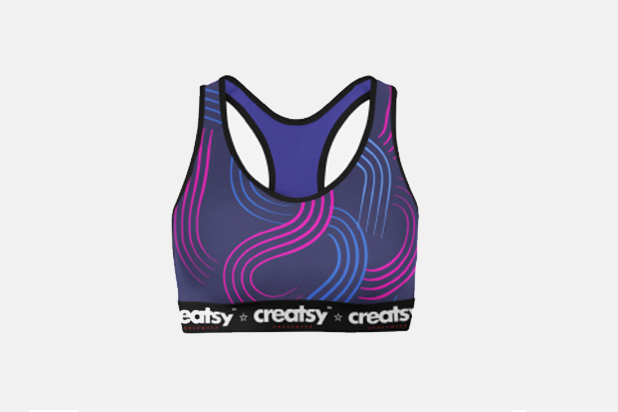
| Sublimated teamwear, cycling and esports jerseys | Full-surface artwork; polyester sublimation base | Mid |
| Softshells, bonded outerwear, quilted vests | Bonded fabric lot; multi-panel construction | Mid to high |
| Reflective-taped and multi-panel workwear | High-visibility tape lot; panel alignment; higher wastage | High |
| Racing suits and multi-panel protective kit | Ten-plus panels; bespoke pattern; one garment per size | Highest |
Two rules of thumb follow from that table. First, most simple styles are quoted from single-digit quantities, which is what makes a trial order practical. Second, the minimum rises with the number of things that have to be got right at once - not with the price of the garment. The last row is the one buyers underestimate: a sublimated racing shirt and a ten-panel racing suit sit at opposite ends of the table even though both are motorsport garments.
A smaller first order is normally available, and we would rather a buyer ran one. It works best where the specification is already settled:
The conversation that works is a quantity, a date and a garment - not a request for a discount. Send those three and we will tell you plainly what the minimum is and what it would take to go below it. If you are still shortlisting suppliers at this stage, run the same questions the other way round using our notes on how to find a custom sportswear manufacturer.
Bulk does not start on a quotation. It starts on a signed-off pre-production sample, produced after artwork and fabric are confirmed, and approved before the cutting table is touched.
The sample is not a formality. It is the only step in the process where you can physically check:
One practice is worth adopting on any order that will be washed repeatedly: approve the sample after a wash test. Shrinkage, pilling and print durability all show up in one or two cycles, and the cost of finding out on a sample is a fraction of the cost of finding out on the bulk run. Our own inspection standard treats more than 1% shrinkage, a weight variance beyond ±5% or colour-fastness that fails the relevant GB/T test as a rejection - and those are the things a wash test on a sample is designed to expose. The documentation buyers ask for at supplier-approval stage is on our certificates and audits page.
Sampling is charged separately from bulk, because the sample consumes fabric, labour and setup that the bulk order does not. Once the sample is approved, bulk pricing is built on the same fabric and decoration specification you have just signed.
Sampling is short when the inputs arrive complete. In practice, almost every delay traces back to one of three things.
Artwork that is not final. A raster image screenshots well and prints badly. Send vector artwork, with the logo in the exact proportions it should appear, and send the version you have authority to approve. If the artwork is still moving between two departments, the sample will move with it.
No colour reference. "Dark red" is not a specification. Send a Pantone number or a physical swatch. The reference is matched, confirmed on the sample and then kept on file, so that repeat orders hold the same shade without a second approval loop.
An undecided size split. The sample is made in one size. The bulk run needs the size breakdown before cutting, and a team that has not decided how many mediums it needs cannot be graded. Send the size breakdown with the order rather than an average size, because sizes are cut from one fabric lot and a mixed run still has to match.
There is a fourth failure mode, and it is the expensive one. Our own view of it is blunt: what usually goes wrong on an order like this is not the sewing, it is an unapproved artwork version reaching the cutting table.
It happens like this. The sample is approved. A sponsor sends a revised logo. A new file is forwarded to production without a second sample. Fabric is cut, printed and sewn against artwork that nobody signed - and by the time the discrepancy surfaces, the order is in cartons.
The fix is procedural, not technical. Keep one artwork version under version control. Any change to it, however small, re-enters the sampling loop. Treat the approved sample plus the approved file as a single locked reference, and the risk disappears.
Approving a pre-production sample locks four things at once:
| Locked by approval | Why it matters later |
|---|---|
| Fabric and weight | Substituting a lighter fabric later changes fit as well as feel |
| Shade and colour reference | The reference is filed, so repeats match without re-approval |
| Decoration method and placement | Changing method after approval restarts the sampling clock |
| Fitting and construction details | Collar, cuff, pocket and thread decisions are frozen |
Changes after approval are possible, but they restart sampling, because a changed garment has to be proved again. That is the real cost of a late decision - not the sample fee, but the place in the production schedule.
Once the sample is signed, the order moves to bulk. Bulk lead time is counted from sample approval rather than from the enquiry, which is why a week lost in sampling is a week lost on delivery. Sampling and bulk timelines are confirmed per order against the actual garment and season, and the order documents state them explicitly rather than leaving them as a general promise.
Payment follows the same shape on most programmes: a 30-50% deposit to start, with the balance settled before shipment, by T/T or another agreed method. Production starts when the sample is approved, the purchase order is confirmed and the deposit has landed - three conditions, in that order, and the same three listed on our custom requirements page.
| Stage | What you send | What you get back |
|---|---|---|
| Enquiry | Garment type, quantity per style, destination, target date | Indicative minimum and indicative pricing |
| Specification | Artwork, colour reference, fabric and function, size split | Confirmed MOQ, confirmed pricing, decoration recommendation |
| Sampling | Approval to proceed | Physical pre-production sample; wash test on request |
| Approval | Signed sample, confirmed artwork version | Frozen specification; bulk slot in the schedule |
| Bulk | Purchase order and deposit | Production, in-line and final inspection, packing |
| Shipping | Shipping marks and documents | Goods despatched; air or sea matched to your deadline |
Two stages in that table cause more trouble than the rest. "Specification" is where a vague brief becomes an expensive revision, and "Approval" is where an unsigned file can still leak into production. Neither is a factory problem - both are briefing problems, and both are cheap to fix before the order starts.
If you want a minimum order quantity you can plan against rather than a range, send:
With those six things we can usually answer with a real number on the first reply, and the sampling stage becomes a formality rather than a negotiation.
Is there one MOQ for everything you make?
No. It varies by garment and by decoration method, so we quote it against the specific item rather than giving one figure for the whole range.
What is the minimum for a first trial order?
Most simple styles are quoted from single-digit quantities. Multi-panel, bonded and reflective-taped constructions carry a higher minimum, and we will say which category your style falls into before you commit.
Can I mix sizes in one order?
Yes. Sizes are cut from one fabric lot, so a mixed run still matches on colour. Send the size breakdown with the order rather than a single average size.
Can I match our brand colour?
Yes. Send a Pantone reference or a physical swatch. We match against it, confirm it on the sample, and keep the reference on file so repeat orders hold the same shade.
Will I see a sample before bulk starts?
Yes. A pre-production sample is produced and signed off before bulk, and approving that sample is what locks the fabric, the colour and the decoration method.
How long do sampling and bulk take?
Both are confirmed per order and counted from sample approval, because the garment and the season change the answer. The confirmed dates are stated in the order documents. If this is your first custom order, our FAQ page covers how a custom sportswear order is made.
What if we change the logo after approval?
The change re-enters the sampling loop. A revised file has to be proved on a new sample, because an unapproved artwork version reaching the cutting table is the single most expensive mistake in a custom apparel order.
Buying custom rather than ready stock? Send the garment, the quantity and the date, and we will come back with the minimum, the decoration route and a realistic schedule - tell us about your programme and we will reply with specifics rather than a brochure. If you are still choosing between decoration methods, our sublimation, screen printing and heat transfer comparison explains which ones push a minimum up and why. Buyers who are earlier in the process usually start with how to start a sportswear business, and those vetting suppliers can run the checks on how to choose a manufacturer.
 English
 Español
 Português
 Français
 Pусский
 Deutsch
 العربية