Most buyers decide the garment first and the decoration later. In custom sportswear that order is backwards. Sublimation vs screen printing is not a price question — it is a fabric question. Each method bonds to a different fibre, in a different way, and once you pick the fabric you have usually already picked the method.
This guide compares the four decoration routes we run in-house every week, shows what each one can and cannot do, and gives you the decision rules we use when a buyer sends a design brief.
Start here. The rest of this page is the detail behind these four lines.
A team order often uses two of these on the same garment: a sublimated body with an embroidered sponsor crest, for example. That is normal, and it is usually the right answer.
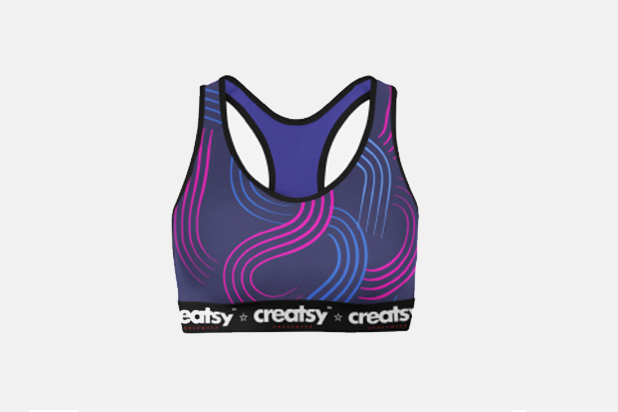
Sublimation is a dye process, not a print process. The artwork is printed onto transfer paper, the paper is pressed against the fabric at roughly 190–200 °C, and the dispersed dye turns to gas and penetrates the polyester fibre. When the press opens, the paper comes away blank — the colour is now part of the cloth, not a layer on it.
What it buys you:
What it cannot do:
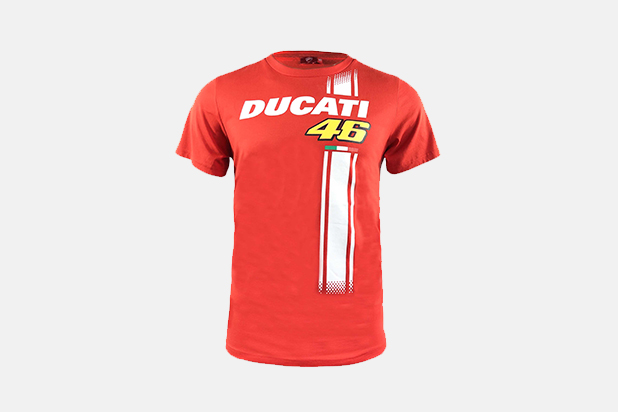
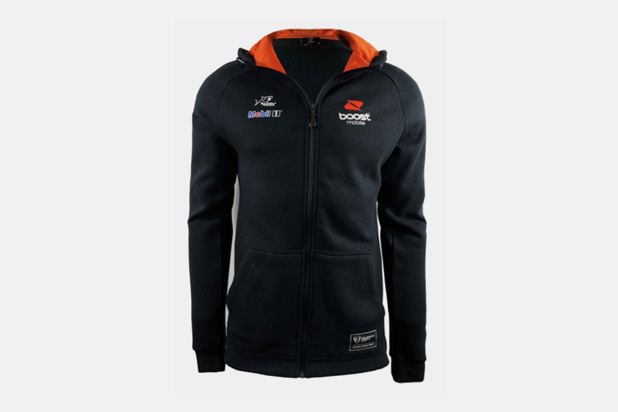
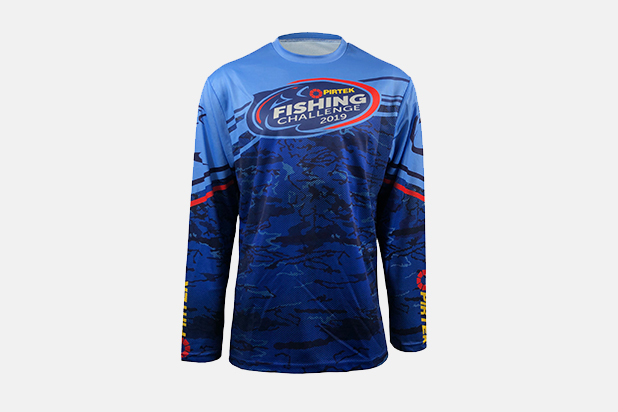
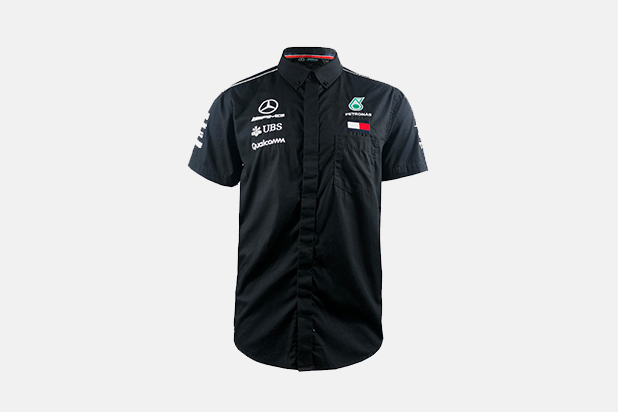
Where sublimation wins: cycling jerseys, esports jerseys, fishing jerseys, racing shirts with heavy sponsor density, and any design with gradients or an all-over pattern. Our own sport-line examples that run this way include `YS-S-TEE-2303` (a sublimated e-game events tee), `YS-S-JERSEY-2301` (a sublimated cycling events jersey) and the SPF50 fishing jersey range. You can see the finished effect on our sublimated polyester sportswear and the sublimated racing tee range.
Screen printing pushes a water-based or plastisol ink through a mesh screen with a squeegee. One screen per colour; four colours, four passes, four setups. That statement is the whole economics of the method.
What it buys you:
What it cannot do:
Where screen printing wins: workwear and staff tees, promotion and event apparel, single-colour back prints, and any cotton-dominant garment where the design is bold rather than detailed. It is also the best option when the buyer needs dozens of garments in two or three colours at the lowest possible cost - the usual shape of a staff uniform tee or a promotion work polo order.
One note on our water-based route: we use water ink, which gives a softer hand feel than plastisol on large print areas. On very dark cotton, achieving full opacity with water-based ink takes more care — a buyer comparing quotes should ask which ink system is being priced.
Heat transfer sits between the other two. Artwork is printed onto a carrier film — by digital printer for short runs, or by screen for long runs — and then pressed onto the garment.
What it buys you:
What it cannot do:
Where heat transfer wins: small and mid-run team orders with detailed crests, personalised name and number work, sponsor patches, and any order where the artwork carries fine detail that the customer wants to keep. On our production floor this is the usual route for heat-transferred work shirts and for quick-drying work jackets where a printed back panel sits above a stitched chest mark.
Thread is the only decoration that changes how a garment feels in the hand. On polos, hoodies, softshells and caps, an embroidered logo reads as a permanence signal in a way that a print does not.
We run five embroidery routes in-house:
| Route | What it is | Best used on |
|---|---|---|
| Flat embroidery | The standard. Thread sits flat, clean edges, lowest thread count | Small chest logos on polos and shirts |
| HD embroidery | High density — more stitches per square centimetre, sharper edges | Chest logos on team polos and racing shirts that see constant wear |
| 3D embroidery (puff) | A foam layer under the stitches lifts the logo off the surface | Caps, beanies, hoodie crests, streetwear-influenced kit |
| HQ / mixed embroidery | Wider stitch field, higher thread count, multi-colour | Jacket backs, large club crests, commemorative pieces |
| Patch and bead embroidery | A woven or embroidered patch applied to the garment; beadwork for decorative detail | Tournament kit, limited editions, motor club wear |
What embroidery cannot do: gradients, photographic images, or text below roughly 4 mm cap height. It is also the slowest and, on a large multi-colour crest, the most expensive route per unit. The trade is durability and perceived value — an embroidered logo will outlast the garment's print equivalent by years.
The most common premium specification we produce pairs the two: a sublimated or screen-printed body carrying sponsor artwork, with the primary brand mark embroidered. That way the loud, detailed artwork is cheap to print and the logo that must look expensive is thread. You can see both halves of that pairing in our embroidered teamwear polos, the embroidered polo range and the sublimation-and-embroidery combination polos we build for club and corporate programmes. For a worked example on a heavier garment, see the embroidered sports uniform shirt.
| Sublimation | Screen printing | Heat transfer | Embroidery | |
|---|---|---|---|---|
| How it bonds | Dye bonds into the fibre | Ink layer on the surface | Film pressed onto the surface | Thread stitched through |
| Best fabric | Polyester, poly-dominant | Cotton, cotton/poly | Most fabrics | Any woven or knit |
| Colour limit | Unlimited, no extra cost | 1–3 practical, per-colour setup | Full colour, no setup | ~12 practical thread colours |
| Gradients / photos | Yes | No | Yes | No |
| White ink on dark | No | Yes | Yes | Yes |
| Hand feel | None | Noticeable on large areas | Slight, film-dependent | Raised, tactile |
| Durability | Lifetime of the fabric | Good; can crack on stretch | Good; depends on press settings | Excellent |
| Economic from | ~50 pcs and up, colour-heavy art | ~150 pcs and up, 1–3 colours | ~1 pc, any colour count | ~20 pcs and up |
| Typical lead impact | In-line with garment production | Adds a finishing stage | Adds a finishing stage | Adds the longest finishing stage |
| Best for | Cycling, esports, fishing, sponsor-dense racing kit | Workwear, staff tees, promotion, event apparel | Small runs, fine crests, names and numbers | Polos, hoodies, caps, softshells, uniforms |
> The row that decides most orders is "colour limit". Count your colours first; if the artwork has more than three, screen printing is usually off the table before you compare prices. If you would rather compare finishes than tables, the clearest way is to look at one garment per route: our custom sportswear range and our sports teamwear range between them show all four methods on production pieces, and the sublimated softshell and jacket range shows how far a print can be pushed on a bonded outer fabric.
Decoration and fabric have to be chosen together. This is the working table we use by product type.
| Product type | Typical fabric and weight | Decoration we recommend | Why |
|---|---|---|---|
| Technical polo | 100% polyester interlock or piqué, 150–180 gsm | HD or flat embroidery; heat transfer | Structure holds a stiff crest; print sits cleanly |
| Team shirt (long sleeve) | Poly/cotton easy-care poplin, 110–135 gsm | HD embroidery, heat transfer | Woven shirting takes fine print and crisp thread |
| Racing shirt, sponsor-dense | Polyester mechanical-stretch woven, 115–140 gsm | Sublimation body + embroidered crests | Sponsor panels need unlimited colour; the crest needs presence |
| Cycling / esports jersey | Polyester, sublimation grade | Sublimation | Gradient and all-over artwork; zero hand feel under a harness |
| Cotton staff tee | 100% cotton or 65/35, 140–180 gsm | Screen printing, heat transfer | Cotton takes water-based ink best; heat transfer for detail |
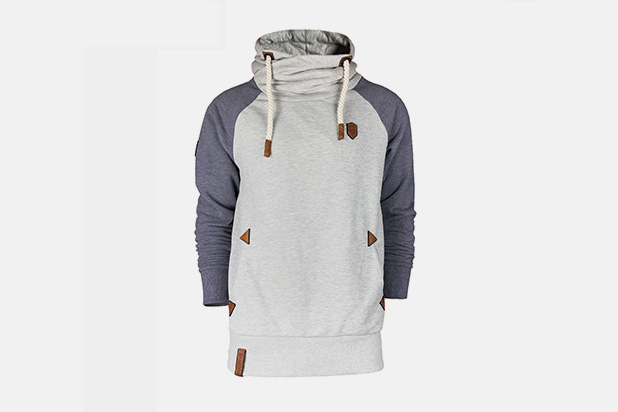
| Hoodie | Cotton/poly fleece, 300–360 gsm | 3D or HQ embroidery; heat transfer | Fleece pile swallows fine print; thread reads better |
| Softshell jacket / vest | 100% polyester, 280–380 gsm | HD or HQ embroidery | Bonded shell needs a decoration that does not puncture the membrane |
| Workwear polo | Polyester or poly/cotton, 160–220 gsm | Embroidery + screen print or transfer | Reflective and safety detail is applied, not printed |
| Cap | Polyester or cotton twill, 180–240 gsm | 3D embroidery | Structured crown suits a raised mark |
The weight matters more than buyers expect. Below about 140 gsm a woven shirting fabric will show the shadow of a heavy print through the cloth; above 300 gsm a fleece or bonded fabric will pull a dense print apart at the stitch line. When a design and a fabric disagree, we move the decoration — not the fabric — because the fabric is usually the part the buyer specified for a reason. If you are still choosing the garment, our custom work shirts and corporate workwear shirts are the two product families where decoration choice most often changes the recommendation.
Five failures account for most of the decoration problems we are asked to fix.
1. Specifying sublimation on cotton. The most frequent error. If the artwork needs unlimited colour and the buyer also wants cotton, the answer is not "sublimation on cotton" — it is either a poly-dominant fabric or a heat transfer. We raise this at brief stage rather than at sample stage.
2. Pricing screen printing by unit cost instead of total cost. A five-colour screen print setup is a fixed cost. Split that across 60 pieces and the effective price is not the quote's per-piece line.
3. Sending raster artwork. Watermark-scanned logos, screenshots and JPEGs cost revision rounds. Vector files (AI, EPS, PDF) or a clean high-resolution source remove a week from the front of the schedule.
4. Forgetting that colour has to match across a mixed order. If half the order is sublimated polyester and half is screen-printed cotton, the "same" Pantone will not read the same on both. We colour-match the base and the ink separately and warn before production, not after.
5. Choosing the method before the delivery date. Embroidery adds a finishing stage, and a large crest can add days. On a fixed event date, decoration choice is a schedule decision as much as a cost decision.
Send this and the method recommendation usually comes back the same day.
Where the printed mark needs to sit on both a polyester shell and a cotton shirt in the same team order, say so up front. That single sentence is what lets us plan two decoration routes and one colour reference instead of discovering the mismatch at the sample stage. For programmes with unusual requirements — a wearer-owned garment, a mixed fabric range, or a decoration position outside the standard set — our custom requirements page sets out what we can take on.
Yinshan Sportswear has been producing custom sportswear and teamwear since 1986. Decoration runs in-house, so the method is chosen for the design rather than for a subcontractor's capability: sublimation, screen printing with water-based ink, heat transfer, rubber and glitter printing, plus flat, 3D, HD, patch and bead embroidery.
MOQ is confirmed per style and decoration — most styles start from 5 pieces, and the figure moves with the construction, the fabric and the number of decoration positions, so we quote it against your actual brief rather than against a flat number.
Can you sublimate on cotton?
No. Sublimation dye needs a polyester fibre to bond into. On cotton it washes out. If your artwork needs unlimited colour and your garment has to be cotton, heat transfer is the route — send us the design and we will confirm.
Which is cheaper, sublimation or screen printing?
It depends on colour count and quantity, not on the method alone. Screen printing has a per-colour setup; sublimation does not. Below roughly 150 pieces, or above three colours, sublimation or transfer usually costs less per piece — above that, at one to three colours, screen printing wins.
Does sublimation printing fade or crack?
It cannot crack or peel, because there is no surface layer — the colour is inside the fibre. Fading is limited by the fabric's own light fastness rather than by the print.
Can I mix methods on one garment?
Yes, and it is common. A sublimated or screen-printed body with an embroidered crest is the most requested premium combination for team and sponsor-heavy kit.
Can you print white on a dark garment?
Sublimation cannot. Screen printing, heat transfer and embroidery can. On a dark polyester garment that needs white, we use a white base layer or move the mark to transfer or embroidery.
How long does decoration add to production?
Sublimation is in-line with garment production. Screen printing, transfer and embroidery are finishing stages added after the garment is made; embroidery is the longest. Sampling and bulk lead time are confirmed per order, counted from sample approval, so tell us your delivery date and we will map the decoration route to it. Timing questions we are asked most often are collected on our FAQs page.
If you have artwork and a quantity, send both and we will come back with a recommended method, a fabric suggestion and a quotation against your actual brief — including the comparison if two routes are genuinely close.
Buying custom rather than ready stock? Send your design and target date through our contact page with your quantity and destination.
 English
 Español
 Português
 Français
 Pусский
 Deutsch
 العربية