Racing clothing looks like a uniform and behaves like equipment. A suit protects a rider in a crash, a team kit identifies who belongs to which garage, and both carry the sponsors who pay for the season. That combination — protection, identity and commercial value — is why racing clothing is treated as a category of its own rather than as sportswear with a different logo on it.
This guide explains why racing clothing matters in competition, what the category actually contains, and how to order custom racing clothing that survives the season rather than the first wash.
Quick answer: Racing clothing matters because it performs three jobs at once — it protects the rider, it identifies the team, and it carries sponsor branding. The category includes protective pieces such as suits and armour, technical base layers, and team and fan kit such as shirts, hoodies and jackets. When ordering, the specification of the protective pieces is the part that should never be improvised; the branded pieces are where design freedom is greatest.
It is written for teams, motorsport merchandising brands, distributors and private-label labels who order racing clothing in quantity. If you are building a full kit rather than a single piece, our teamwear range and custom sportswear collection sit either side of it, and you can send the whole brief as a custom requirement.
At any level above club racing, clothing is regulated, and the reasons go beyond safety alone.
It is protective equipment. Abrasion, impact and heat protection are the core functions. In most sanctioning bodies, certain items are mandatory and are checked before a rider is allowed on track.
It is regulation-driven. Technical regulations specify which garments are required, what they must protect, and sometimes where branding may appear. A garment that fails inspection is a competitor who does not start.
It is team identity. In a paddock full of similar machinery, clothing is how a team is recognised — by officials, by broadcast cameras and by spectators.
It is sponsor inventory. Every square centimetre of a racing suit is commercial space. Clothing is often the primary deliverable a team sells to a sponsor.
It is a performance variable. Weight, ventilation and fit affect how a rider feels over a race distance, which is why comfort is treated as a performance topic rather than a comfort topic.

Racing clothing is a system: the suit protects the rider, and the team kit around it carries identity, sponsorship and safety roles.
Buyers new to the category often underestimate how many pieces sit behind a race weekend. The table below maps the pieces, their function, and who typically orders them.
| Piece | Main function | Typically ordered by |
|---|---|---|
| Racing suit | Abrasion and impact protection for the rider | Riders, teams, private-label motorsport brands |
| Protective base layer | Moisture management and comfort under the suit | Teams, riders, distributors |
| Gloves and boots | Grip, protection and control feel | Riders, teams, retail brands |
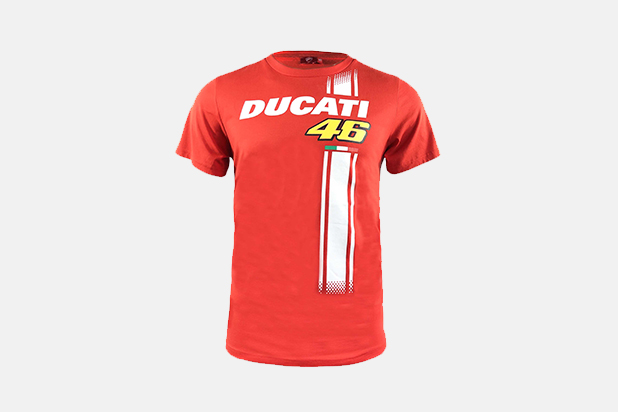
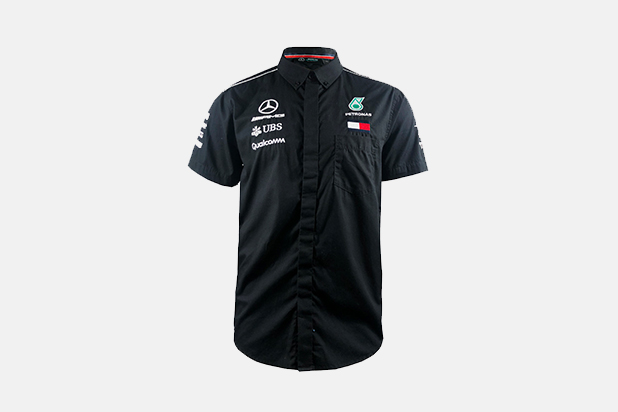
| Team shirts and polos | Identity and sponsor visibility in the paddock | Teams, sponsors, fan merchandise brands |
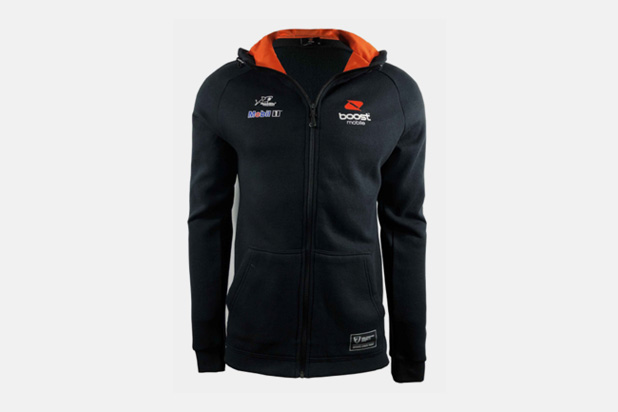
| Hoodies and jackets | Warmth, staff and fan identity, retail revenue | Merchandise brands, teams, distributors |
| Softshell and outerwear | Weather protection for pit crew and staff | Teams, organisers, corporate buyers |
| Pit crew and staff kit | Safety visibility and clear team identification | Teams and event organisers |
| Fan merchandise | Revenue and brand reach beyond the paddock | Merchandise brands and fan clubs |
The split matters commercially. Protective pieces are low-volume, high-specification items; branded and fan pieces are high-volume and design-led. A supplier who can handle both in one order saves a team a great deal of coordination.
Racing graphics have to survive heat, motion, washing and television close-ups. The decisions below are the ones that determine whether they do.
| Decision | Why it matters in racing | Practical note |
|---|---|---|
| Decoration method | Print, sublimation, embroidery and heat-seal behave differently on stretch zones and on leather | Match the method to the substrate: sublimation on polyester teamwear, embroidery on structured pieces, transfers where logos must be repositioned. |
| Colour system | Team colours must match across garments produced in different materials and batches | Provide colour references, and confirm shades on the actual fabrics — the same reference reads differently on a knit and a softshell. |
| Logo hierarchy | Sponsor visibility is contractual | Agree a logo size hierarchy and a position diagram before production, not afterwards. |
| Panel layout | Panels carry colour and let one pattern serve several teams | A modular panel plan allows a distributor to serve multiple clubs from one base pattern. |
| Size range | Teams mix riders, staff, mechanics and guests | Define a size curve rather than ordering singles; it reduces stock gaps and reorder costs. |

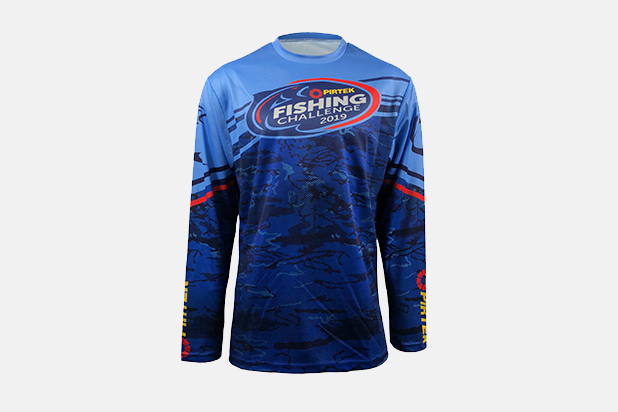
Printed and sublimated team pieces are usually the highest-volume items in a racing clothing order, because staff and fans order them too.
The market contains factories that make technical protective garments and factories that make printed sportswear. Very few do both well, and the questions that reveal the difference are straightforward.
Specification discipline. Can they document the material, protectors and stitching of the protective pieces, and hold those specifications across repeat runs?
Sampling. Do they produce a physical sample for approval, including decoration, before bulk production?
Own-label capability. Can they produce under your brand with your labels, packaging and documentation?
Order flexibility. Can a small team order a few protective pieces and a larger volume of branded kit in the same order?
Consistency over time. Can they reproduce a design accurately six months later, when the team has new sponsors and the same colours?
Ask for references from buyers in the same discipline. Motorsport apparel is a specialist category, and past orders in a comparable sport are the strongest available signal.
Most problems in a racing clothing order trace back to a brief that was missing a decision. Agree the following before sampling.
Piece list. Which protective pieces, which branded pieces, and which are for staff, riders or fans.
Specifications for protective items. Material, protectors, coverage and documentation required.
Design and artwork. Colour references, logo positions, decoration methods and file formats.
Sizes and quantities. A size curve per garment type, plus individual measurements where fit is critical.
Branding. Own label, sponsor logos, care and size labels, packaging.
Timeline. Sampling date, bulk date and delivery destination — planned backwards from the first race.
Approval. One named person who signs off the pre-production sample.

Fan-facing pieces are the commercial side of racing clothing: same design language, simpler specification, far larger quantities.
Specification and purpose. Racing protective pieces are built around abrasion, impact and heat resistance, and their construction — materials, protectors, stitching — is what makes them fit for the job. Branded racing teamwear is closer to normal sportswear, but it is usually built with stronger colour-fastness and decoration durability because it has to survive a season of use and washing.
Start with the pieces that are seen most often and worn most often: team shirts or polos for the paddock, a softshell or jacket for staff, and the protective pieces each rider actually needs. Adding fan merchandise later is straightforward once the design system is agreed.
Yes, and it is common. A printed or sublimated body with an embroidered logo is a practical combination that keeps costs down while giving the brand mark a premium finish. Confirm the decoration plan per garment rather than per order.
By defining colour references once and checking them on each substrate. The same colour specification will look slightly different on a polyester knit, a softshell and a leather panel, so the approval step should cover every material in the range.
Racing clothing is judged twice: by the regulator before the race, and by the customer after a season of use. Both judgements come down to the same thing — whether the specification was written down and followed.
Send Yinshan Sportswear your garment list, artwork, sizes, quantity and delivery country to request a custom quote.
 English
 Español
 Português
 Français
 Pусский
 Deutsch
 العربية