Recycled content has moved from a marketing line to a line item on the purchase order. Retailers ask for it, brand owners report on it, and procurement teams increasingly need a document rather than a statement. For a sportswear programme that means one practical question: can the factory actually source recycled fibre, and can it prove where that fibre came from?
The document that answers that question in most cases is a GRS certificate — but not all GRS certificates are equal, and understanding which one you need is the difference between a clean sourcing file and a claim you cannot defend.
Quick answer: the Global Recycled Standard (GRS) is a voluntary international standard owned by Textile Exchange, covering recycled content, chain of custody, social and environmental practice, and chemical restrictions. A Scope Certificate is issued to one legal entity for a specific site and product category, usually for a single year, and — as the certificate itself states — it provides no proof that any goods delivered by its holder are GRS certified. That proof is a Transaction Certificate (TC), issued per shipment and covering the fibre type, composition and recycled content of the goods actually delivered. For a custom order you normally need both.
This page explains what GRS covers, why buyers ask for it, what our recycled programme supplies, how to check a certificate before you accept it, and what documentation comes with an order. If you are specifying recycled fabric now, send us the fibre, blend and quantity and we will confirm what is available and which documentation comes with it.
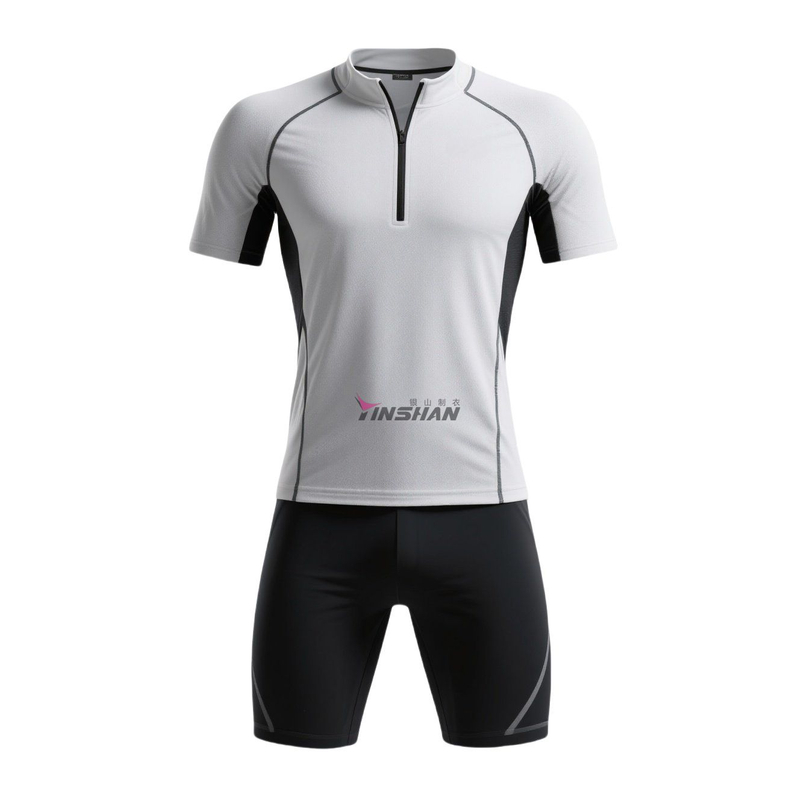
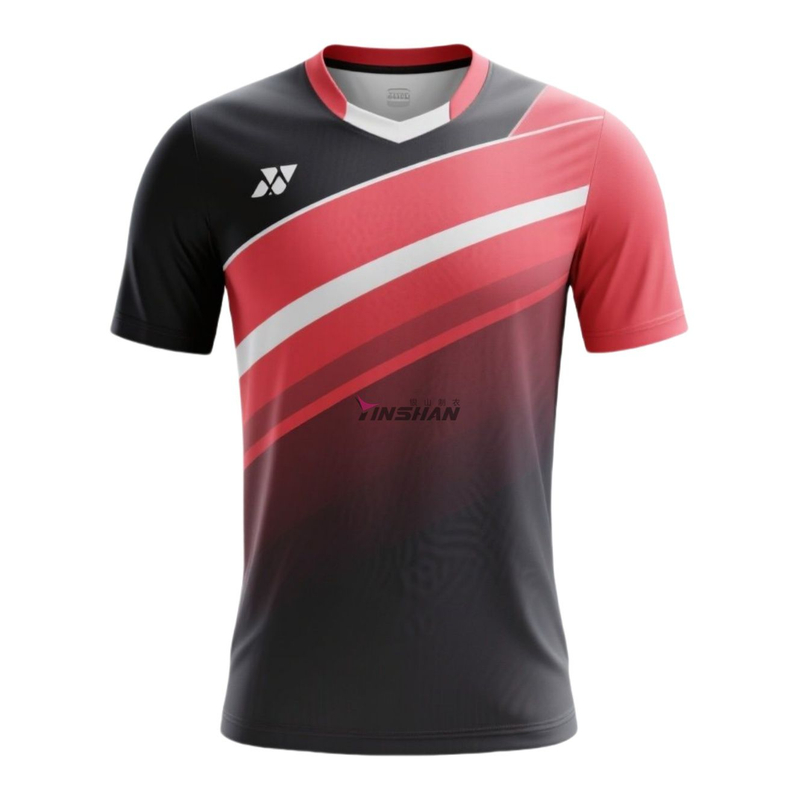
Recycled-fibre knits are made up in the same ranges as conventional fabric — here in a quick-dry jersey and short set.
GRS is often described as a recycled-content standard, which undersells it. Recycled content is the entry point; the standard also imposes requirements across the supply chain that surrounds it.
Recycled content and chain of custody. The standard defines what counts as pre-consumer and post-consumer recycled material, sets minimum recycled content thresholds for a product to be labelled, and requires the material to be traced from the recycler through spinning, weaving or knitting, dyeing and finishing, to the finished garment.
Social criteria. Certified sites are assessed on working conditions, including fair working hours, freedom of association, no forced or child labour, and health and safety.
Environmental and chemical criteria. Requirements cover wastewater and waste management, energy use, emissions, and restricted substances in the production process.
Claims and labelling. The standard controls how the recycled content may be described on product, packaging and marketing material, which is precisely what makes the certificate useful to a buyer.
Because the scope is broad, GRS is usually accepted as evidence under more than one heading in a brand's sustainability or compliance programme — which is one reason buyers ask for it by name.
Buyers rarely ask for a certificate out of curiosity. In our experience there are four recurring drivers, and they change what the buyer needs from you.
| Driver | What it usually means for the order |
|---|---|
| Brand or retailer sustainability targets | Recycled content per garment is reported upwards. The buyer needs a stated percentage and a document that supports it. |
| Marketing and product claims | The garment will carry a claim on pack or online. The claim has to match what the certificate supports, including the fibre type and content percentage. |
| Greenwashing and consumer-law exposure | Regulators in Europe and North America have tightened scrutiny of environmental claims. Buyers want third-party evidence rather than a supplier declaration. |
| Tender and framework requirements | Public sector, education and large club procurement increasingly list certified recycled content as a scored criterion. |
The practical consequence is that a buyer should specify the recycled content and the fibre at the briefing stage, not after the order is placed. Retrofitting a claim onto a completed order is usually impossible, because the chain-of-custody documents have to run alongside the material from the start.
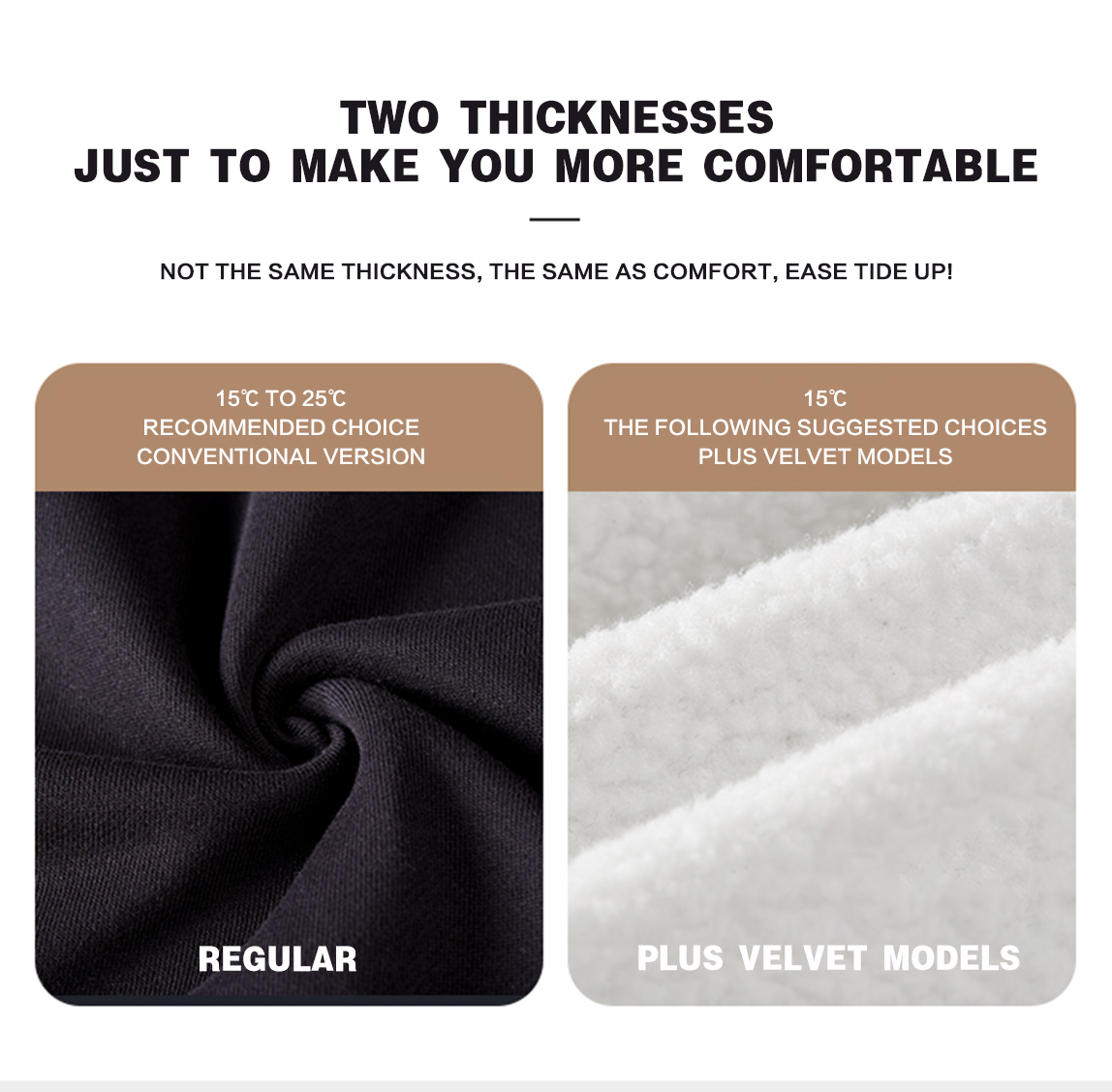
Weight and hand-feel are where buyers most often compare recycled against conventional fabric — both are confirmed on a lab-dip and sample.
Our fabric and garment supply chain has been audited and found to be in conformity with the Global Recycled Standard for recycled cotton, recycled polyester and recycled nylon, across processing steps that run from yarn and fabric through to the manufacture of men's, women's and children's apparel. Because a scope certificate is issued to one legal entity at one site and runs for a single certification year, the certificate that matters is the one held by the mill or garment unit producing your order — so we confirm which site will run the programme, and the scope certificate that covers it, as part of the quotation. In practice that supports the categories buyers ask for most often.
Recycled polyester knits and wovens for team kit, training wear, cycling and gym apparel, including moisture-wicking and quick-dry constructions.
Recycled cotton blends for polo shirts, tees and casual sportswear, where hand-feel matters more than performance.
Recycled nylon and polyamide for outer layers, softshells and abrasion-resistant panels.
Blended constructions that combine recycled fibre with elastane or with virgin fibre where the performance requirement demands it — in which case the recycled percentage is stated exactly rather than rounded up.
Recycled fibre can be applied to most of our standard ranges, including custom sports teamwear and fitness and activewear. The limit is rarely the fibre itself; it is usually the colour, the weight or the minimum order quantity of the yarn, which is why it is worth establishing early in the brief.
A certificate image on a supplier's website is not verification. Certificates are issued per legal entity, per site and per product category, and they expire. Five checks separate a valid document from a decoration.
| Check | What to confirm |
|---|---|
| 1. Scope Certificate number | Record the number and look the holder up in the Textile Exchange certificate database at TextileExchange.org/Certificates rather than relying on the scan. The holder name and address on the certificate must also match the legal entity you are contracting with. |
| 2. Certification body, licence and accreditation | The issuing body must be licensed by Textile Exchange and carry a licensing code — CB-TRC, for example, is TÜV Rheinland's — and must also be accredited, with the accreditation body and its number named on the certificate. An issuer that can show neither is a red flag. |
| 3. Product category and processing step | The certificate names what the site is certified for: yarn, greige or dyed fabric, dyeing and finishing, trading, or manufacturing of men's, women's and children's apparel. Your garment has to fall inside both the product category and the processing step. |
| 4. Validity dates | GRS scope certificates run for a defined period, generally one year, and are renewed. Check the expiry date, not the issue date. |
| 5. Transaction Certificate | Ask for the TC covering your specific shipment. This is the document that proves the goods delivered contain the recycled content claimed, and it is the one auditors ask for. |
The scope certificate tells you a site is capable of producing certified goods. The transaction certificate tells you that a particular consignment actually was. Buyers who need to defend a claim should hold both, and should check the expiry date on both.
If you are comparing recycled, organic and conventional fibre options, our notes on sustainable natural and organic fabrics and our longer guide to ethical and sustainable sportswear set out how the standards differ and where each one is appropriate.
Recycled and organic cotton blends suit polos, tees and casual sportswear where hand-feel matters more than performance.
Buyers who have to pass the file on to a retailer, an auditor or a tender panel usually ask for the same short list. This is what we provide or pass on, and when.
| Document | Issued by | What it covers | When you get it |
|---|---|---|---|
| Scope Certificate (SC) | The certification body, issued to the certified entity that runs your order | The site's certified product categories, materials and processing steps, for one certification year | With the quotation — we tell you which site will run the programme and send the scope certificate that covers it |
| Transaction Certificate (TC) | The certification body, applied for by the certified entity | Your shipment specifically: fibre type, composition and recycled content of the goods delivered | After shipment — a TC is issued against goods actually delivered, so we confirm the expected issue date before production starts |
| Approved recycled-content wording | Us, checked against the standard's claims rules | The exact wording allowed on the garment, the packaging and your marketing material | At artwork approval, before the order goes to print |
Scope certificates are renewed every year and transaction certificates are issued shipment by shipment, so a recycled order is never documented once and then forgotten. If a document has to be issued in a particular name — your brand rather than the mill, for example — raise it at the briefing stage, because the chain of custody has to be set up that way from the beginning rather than corrected afterwards.
Recycled fibre orders are quoted more accurately when the brief is complete, because the fibre decision drives the price, the lead time and the documentation. Send us the following and we can confirm feasibility in a single pass.
Garment type and quantity per size and colourway. Recycled yarns carry minimum order thresholds that vary by fibre and colour.
Fibre and target recycled content. For example 100% recycled polyester, or a 60/40 recycled cotton blend, with the percentage you intend to claim.
Weight, construction and stretch. GSM, knit or woven, and elastane content if relevant.
Decoration method. Sublimation, embroidery, screen print or transfer, and where the recycled claim will appear on the garment or pack.
Documentation requirement. Tell us whether you need the scope certificate, the transaction certificate, or both, and in whose name the documents must be issued.
Target delivery date, so the fibre can be reserved against a production slot rather than after it.
No. "Recycled polyester" describes the material; GRS certification describes the verified chain of custody behind it. A yarn can be made from recycled material without being certified, in which case there is no transaction certificate and the claim cannot be substantiated to a third party. If the claim matters, specify GRS certified material at the briefing stage.
It can, but the wording has to match what the certificate supports and follow the standard's labelling rules. We confirm the approved wording as part of the artwork review so that the label, the packaging and the certificate all say the same thing.
Usually yes, relative to a comparable conventional yarn, and the gap moves with yarn markets and with the specific fibre and colour you need. The right comparison is not recycled versus conventional in isolation but the delivered cost against the value of the claim to your customer — which is why we quote both options where a substitution is possible.
For most sportswear applications, yes. Modern recycled polyester knits can meet the same wicking, stretch and durability requirements as their conventional equivalents, and in our programme they are tested against the same specification we test conventional fabric against. Where a performance requirement genuinely cannot be met with recycled content, we will say so and propose a blend that states the recycled percentage honestly.
Tell us which fibre you are specifying and which entity the documents need to be issued to. We confirm at quotation which site will run the programme and send the scope certificate that covers it; the transaction certificate for your shipment is applied for once the goods are on their way, because a TC is issued against what was actually delivered. We confirm the expected issue date before production starts so it can be built into your launch schedule.
If you are specifying recycled fibre for an upcoming range, send us the garment, the quantity and the recycled content you intend to claim. We will confirm what the supply chain can deliver, quote the programme, and tell you exactly which certificates will be issued, in whose name and when.
Yinshan Sportswear has designed and manufactured custom sportswear from Ningbo, China since 1986, operating four design studios, five factories and twenty-five production lines across teamwear, uniform, promotional and activewear categories. For buyers weighing a recycled line, our article on fibre choice in sportswear is a useful companion read. Request a quote.
 English
 Español
 Português
 Français
 Pусский
 Deutsch
 العربية