A gilet is the layer people reach for when a jacket is too much and a shirt is not enough. That gap covers most of what happens outdoors between spring and autumn: warm-ups, course marshalling, coaching from the side line, early rides and late finishes. Because the arms are free, the wearer can move and work, and because the core is covered, the garment still does something.
This page covers our customized zipper sleeveless softshell vests with sports printing and embroidery: what a softshell gilet actually is, how the bonded face behaves under print and embroidery, where a gilet outperforms a jacket, and how club, event and corporate orders are structured.
Quick answer: A sleeveless softshell vest is a bonded fabric gilet — a woven face, a membrane and an inner layer — finished with a full zip and worn over a shirt or a base layer. It provides wind resistance and light weather protection across the core without restricting the arms, which is why it suits running, cycling, coaching and event crew work better than a full jacket. It is decorated with a printed logo or graphic and usually an embroidered chest logo. The bonded construction means print and embroidery both work, provided the correct backing is used for embroidery and the artwork suits a fabric with very little give.
If the brief needs sleeves, the closer match is our zipper sports jacket. For the same gilet shape built for a specific sport, compare the softshell sports vest for riding.
Softshell is a family of bonded fabrics rather than one material. A woven outer face is bonded to a membrane and an inner layer, which gives the fabric wind resistance and a limited amount of water repellency. It is not a waterproof shell. A gilet made from it will keep a wearer comfortable in a shower and will not keep them dry in sustained rain.
| Property | Softshell gilet | Padded or insulated gilet | Waterproof shell |
|---|---|---|---|
| Main purpose | Wind resistance over the core | Warmth | Staying dry in rain |
| Bulk | Low, packs down small | High | Depends on the membrane |
| Breathability | Good for active use | Limited | Varies widely |
| Movement | Follows the body without sleeves | Stiff when layered | Rustles and restricts a little |
| Print and embroidery | Both work with the right backing | Quilting limits placement | Printing can damage the coating |
| Best use | Running, cycling, coaching, crew | Standing still in cold weather | Wet weather work |
The practical distinction is activity. If the wearer is moving, a gilet beats a padded layer because the core stays protected and heat can leave through the arms. If the wearer is standing still, the opposite is true.
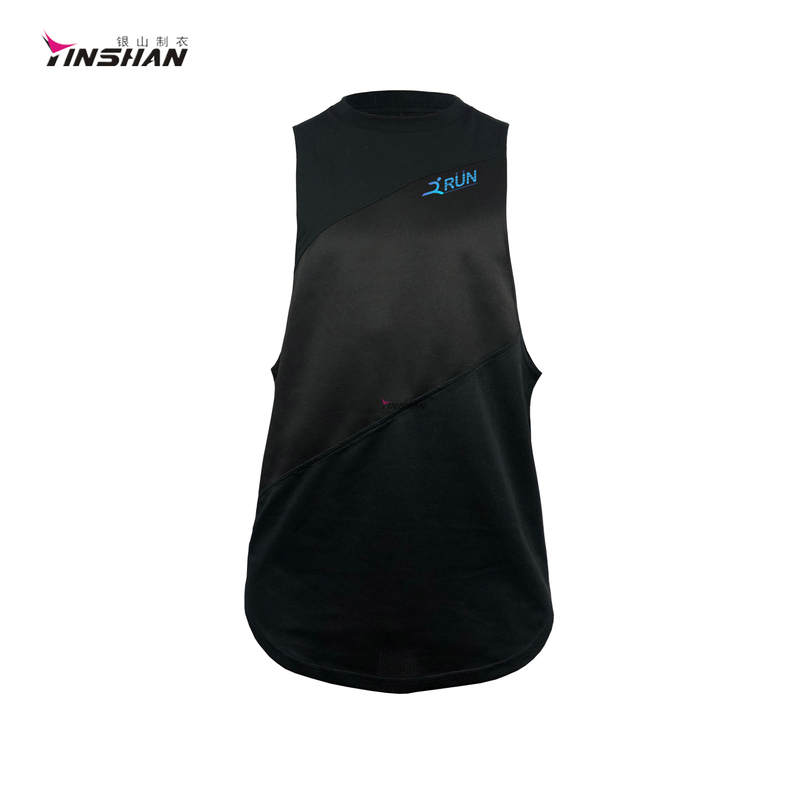
A softshell gilet solves the problem a jacket creates: the arms stay free while the core stays warm, which is what most outdoor team activity actually needs.
Three details decide whether a gilet is used or left in the bag.
The main zip. A full zip lets the gilet be opened from the top and the bottom, which is what makes it usable across a wider temperature range. Ask for the zip type and whether the slider is sized to the tape.
The hem. An elasticated hem stays in place while running; a drawcord hem adjusts and suits walking or cycling. The wrong one is noticeable within a few minutes of wear.
The pockets. A zip pocket at the chest is the minimum for anything carried on the move. Plain hand pockets are for standing wear.
Reflective detail. If the gilet will be worn near traffic, ask where reflective tape or print can be placed without breaking the graphic.
A bonded fabric has almost no give, so the decoration rules are closer to a woven shirt than to a knit tee. Fine detail survives printing, which is not the case on a stretch knit.
Print. Screen print, transfer and other methods all work on a woven face, provided the surface is tested. Ask for a trial on the actual face before a full run, particularly where the graphic has fine text.
Embroidery. The backing has to suit the bonded face. With the correct backing the panel stays flat; with the default backing a large logo will ripple the fabric around it.
Placement. A gilet has a narrow chest area because the front is split by the zip. Keep the logo inside the left front panel and standardise its width in millimetres.
Reflective elements. These should be placed before the graphic is finalised, not after, because they cannot simply be moved.
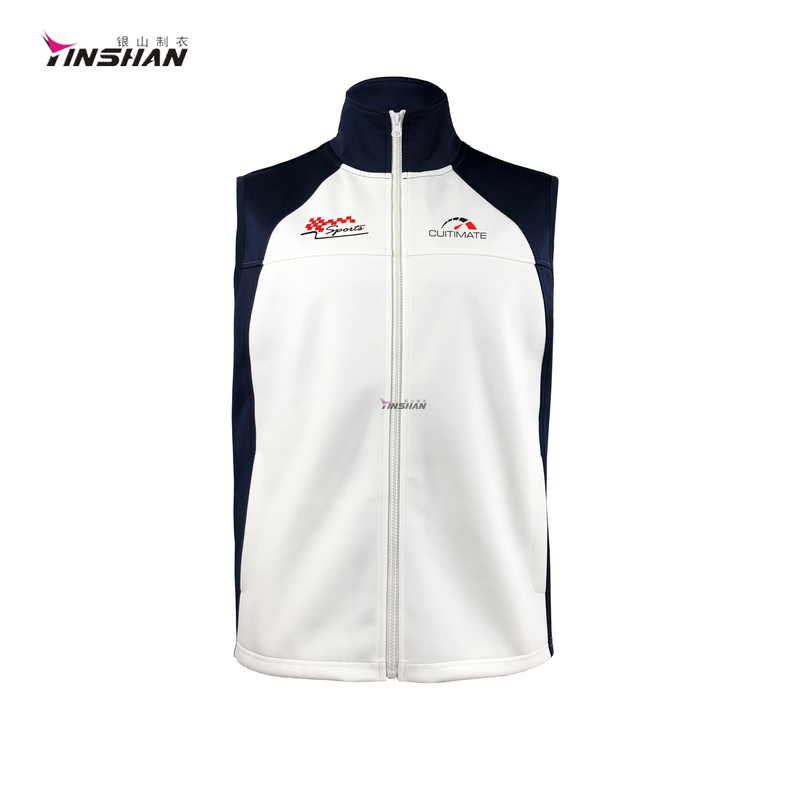
Softshell takes embroidery well when the backing suits the bonded face, so the logo stays flat instead of rippling the panel.
Running and cycling. The arms stay free and heat can escape, so the garment stays on for the whole session instead of being taken off halfway.
Coaching and officiating. A coach needs to demonstrate and throw; sleeves get in the way and wear out first.
Event crew and marshalling. Marshal jackets are often worn over other layers, and a gilet adds wind protection without adding bulk to the arms.
Corporate and site wear. A gilet makes a logo visible on the chest while leaving the arms free for work, which is why it is common as a site layer.
Travel and club wear. It packs small and works across two seasons, so it is an easy item to put into a club shop range.
Cycling and running clubs wanting a layer that bridges early-season and late-season conditions.
Event organisers equipping marshals, crew and volunteers with something visible and functional.
Sports clubs adding an off-pitch layer to a kit that already includes tops and shorts.
Companies using a branded gilet as site or outdoor event wear.
Schools and universities ordering staff or coaching gilets in mixed sizes from a single run.
Brands and distributors adding a technical layer to a range that already has garments in the same colours.
| Item | Why it matters | What to send |
|---|---|---|
| Quantity per size | Sizes are cut in groups, so an uneven count raises the piece cost | A table of size codes with a count against each |
| Colourway | Each colourway carries its own minimum | The reference, plus a physical swatch approval where colour is critical |
| Fabric face | Decides how the graphic prints and how reflective detail sits | The end use, so a suitable face can be recommended |
| Zip and hem | Determines whether the gilet is actually worn | Whether it is for moving wear or standing wear |
| Decoration | Print and embroidery carry separate setup and minimums | Vector artwork with printed and embroidered parts marked separately |
| Reflective detail | Cannot easily be added after the graphic is fixed | Whether the gilet will be worn near traffic |

Club runs are usually ordered in one colourway with a standard logo size, which keeps the group looking consistent on the start line.
Is a softshell gilet waterproof? It is water repellent, not waterproof. It handles a shower and wind well; sustained rain needs a shell as well.
Can the gilet be printed and embroidered? Yes, and both are common. Keep the embroidered logo clear of the printed area so the two do not interact.
Will embroidery pucker the panel? Not with the correct backing, which should be chosen for the bonded fabric rather than assumed.
Can we match the gilet to our existing club colours? Yes, subject to a swatch approval. Approve a physical swatch and record the fabric reference so a repeat order matches.
Are there men's and women's fits? Yes. Ask for both size charts by measurement rather than relying on a scaled version of one.
How should the gilet be washed? At a moderate temperature, inside out, with the zip closed, and without fabric softener, high-heat drying or ironing over the decorated areas.
Send the quantity by size, the colourways, the intended use and season, whether reflective detail is needed, the artwork with printed and embroidered elements marked separately, and the date the garments must be delivered. You can send a custom requirement directly, compare this gilet with our softshell vest with high-quality embroidery, or browse the wider teamwear range. Request a quote.
 English
 Español
 Português
 Français
 Pусский
 Deutsch
 العربية