Hospitality uniform is not office uniform with a different logo on it. The garments are washed harder, worn hotter and replaced more often, and the person wearing them is customer-facing for the whole shift. A hospitality uniform supplier is being asked for something specific: a garment that still looks presentable at hour ten and survives the laundry it goes into.
This page sets out how we build a hospitality programme — the four roles a property actually orders for, why the wash cycle decides the fabric before the design does, and what to put in a brief so the second order matches the first.
In short: in hospitality, the wash cycle sets the fabric, not the design. Kitchens need a construction that holds up to heat and repeated industrial washing; front of house needs a lighter garment that stays sharp through a long shift; housekeeping needs fabric that can be washed constantly without greying out or shrinking.
A hotel or restaurant group does not order "uniforms". It orders four groups of garments that behave differently in production and in the laundry, and pricing them as one programme is how the wrong fabric ends up on half the team.
| Role | Typical garments | What decides the specification |
|---|---|---|
| Kitchen | Chef jackets, chef trousers, kitchen polo, apron | Heat, steam, oil, and an industrial wash cycle |
| Front of house | Restaurant service shirt, tunic, waistcoat, dress, smart polo | Appearance across a long shift, movement, and light colours that show every failure |
| Housekeeping and back of house | Tunic, service polo, housekeeping top, trousers | Very high wash frequency, shrinkage and colour retention |
| Management and reception | Tailored shirt, blazer, knitwear, corporate polo | Presentation and brand consistency; overlaps with corporate uniform |
A property will usually order three of these four in one programme, and the right moment to separate them is before the quote — the fabric direction, the weight band and the decoration positions differ, and a single specification across all four will be wrong for at least two.
This is the same structure as any uniform and workwear programme, with the difference sitting in the washing. Where the corporate programme's driver is brand consistency, hospitality's driver is laundry.
Ask a hospitality buyer what the fabric needs to do and the answer is almost always about appearance. Ask how many times a week the garment is washed and the conversation changes.
Three wash-related facts drive the whole specification:
1. Hospitality garments are washed far more often than office wear. A restaurant shirt is worn for a shift and washed before the next one; the same shirt may go through a laundry cycle more times in a year than an office shirt does in its life. Every wash cycle is abrasion, heat and chemistry, and the fabric has to hold through all three.
2. Industrial laundry is harsher than a domestic machine. Higher temperatures, stronger chemistry and tumbling. Where a property launders on site or through a contracted laundry, say so — it changes the recommendation more than any design decision on the brief.
3. The colour has to survive the same cycle as the fabric. Light shades are the norm in hospitality, and a light shade shows greying, yellowing and shade drift that a dark garment would absorb. This is why the colour control covered in one dye lot colour consistency matters more here than on any other programme.
A practical consequence: a hospitality brief should name the wash regime, not just the colour. "Washed daily, on site, hot" and "washed twice a week, cold, domestic" are two different garments at the same nominal specification.
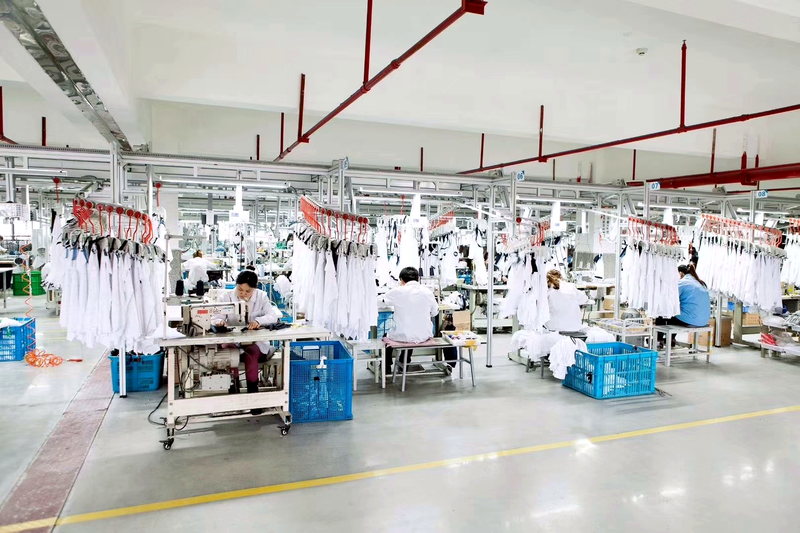
Hospitality garments are built around repeated washing: the seam, the trim and the fastening all have to survive the same cycle.
Kitchen wear is the hardest specification in the programme, because it is the only one where the garment meets heat, steam, oil and the laundry together.
What we work through on a chef jacket enquiry:
Fabric direction. A poly/cotton twill construction chosen for wash resistance rather than for the lowest price per metre, in the heavier part of the weight band. A lighter poplin feels better in the fold and looks tired far sooner.
Heat and airflow. A kitchen is hot and a chef jacket is a closed garment. Construction choices — a lighter twill for a hot line, ventilation where the garment allows it — matter more than the colour.
Fastenings and trim. Closures, pocketing and trims are specified against the wash cycle and the heat, not against how they look on a swatch. A trim that discolours after twenty washes is a uniform failure, not a trim failure.
White and light shades. Chef whites are the most unforgiving colour in the range. Every failure — greying, staining, shade drift — is visible from across the kitchen, which is why the fabric and the colour control carry the specification.
The same logic runs through the chef trouser: heavier, more abrasion-resistant, and specified to be washed as often as the jacket with no change in fit.
Front-of-house garments are the opposite problem. The wash cycle is less extreme, but the garment has to look right at hour one and at hour ten, in front of guests, in a light colour, in a room that is often warm.
Three specification points come up repeatedly:
Movement. A service shirt is worn while carrying, reaching and bending. A poly/cotton with a small amount of elastane behaves differently across a shift than a rigid poplin, and the difference is visible in the fit by the end of the day. This is the one role where a touch of stretch earns its place.
Wrinkle behaviour. Service wear gets no help from an iron during a shift. Easy-care finishes and blended constructions hold a press through a working day in a way that a pure cotton shirt does not.
Trim rather than print for the mark. A front-of-house garment is seen from a metre away. An embroidered mark reads as permanent and survives the wash cycle; large printed graphics read as promotional and are the wrong register for a restaurant floor.
Front of house also overlaps with corporate uniform, and the same shirt shapes appear in both. Our staff shirts and corporate workwear shirts are the shapes most often ordered for a reception or management team, with the workwear embroidered polo covering the more casual end of the same floor.
Housekeeping is the highest-wash-frequency role in the building, and it is the role where buyers most often find out the hard way that the garment was specified for appearance rather than for the laundry.
Two failure modes matter:
Shrinkage. A housekeeping tunic that shrinks after the first wash no longer fits the size chart it was ordered against, and the whole size curve moves with it. This is why we test shrinkage on every incoming roll, with a piece larger than 1% identified as a failure, before the fabric is cut.
Greying and shade drift. Light tunics are washed constantly, often with other garments, and they lose their brightness. The controls are the fabric route, the wash temperature and the colour fastness of the dye — all decided before production rather than corrected after it.
For back of house and industrial roles inside a property — maintenance, loading, grounds — the specification moves towards the industrial end: a heavier work shirt or an industrial overall rather than a service tunic, built for abrasion and movement rather than for presentation.
| Garment | Fabric direction | Weight band | Chosen because |
|---|---|---|---|
| Chef jacket | Poly/cotton twill | 180–240 gsm | Survives heat and repeated industrial washing without greying out |
| Chef trouser | Poly/cotton twill, heavier | 240–300 gsm | Abrasion resistance and shape retention under repeated washing |
| Front-of-house shirt | Poly/cotton or poly/cotton-elastane | 110–150 gsm | Movement plus appearance across a long shift |
| Service tunic | Poly/cotton twill or stretch twill | 160–220 gsm | Holds shape through constant wear and washing |
| Housekeeping top | Poly/cotton, easy care | 150–200 gsm | High wash frequency with minimal shrinkage and shade drift |
| Waistcoat | Poly/cotton or poly-wool blend | 200–260 gsm | Structure that survives dry cleaning and repeated pressing |
| Reception and management shirt | Easy-care poplin | 110–135 gsm | Holds a press through a working day |
| Knitwear and layers | Cotton or cotton-blend knit | 260–320 gsm | Presentation layer for cooler months |
Functional finishes are specified per role rather than as a default: moisture-wicking where a kitchen or back-of-house role is genuinely hot, anti-pilling on knitwear and fleece, and anti-static only where the environment needs it. Tell us the role and the laundry and we will tell you which of these is worth paying for.
Hospitality has the highest staff turnover of any uniform programme, and it is the single biggest reason a hospitality order gets reordered repeatedly.
What that means in practice:
The details of size splitting and how to plan a curve are covered on the MOQ and sampling page, which also sets out what the pre-production sample locks before bulk starts.
Placement drives how a hospitality garment is made, so it is worth deciding before the quote rather than after.
The positions we plan for: left chest, right chest, both, upper sleeve, back, collar and the internal neck tape. Chef jackets take the mark on the chest and often on the sleeve; front-of-house shirts take a chest mark and sometimes a collar detail; tunics take a chest mark and occasionally a back.
On method, embroidery is the default for hospitality — it reads as permanent, it survives the wash cycles these garments go through, and it is the register a guest expects on a restaurant floor. Printed panels are reserved for larger graphics and back prints, where the print area is doing the work rather than the mark.
One rule worth holding to: quote per decoration position. A programme that adds a sleeve mark and a collar detail is a different order from a chest-only programme, and a quote that does not name the positions is not a quote you can compare. The cost breakdown page works through why this line moves the number most.
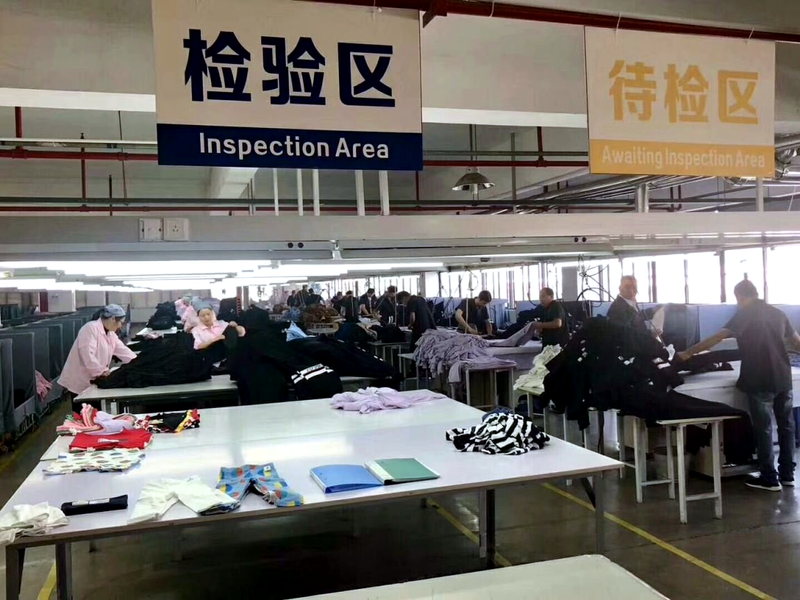
Every piece is checked before packing: appearance, stitching, decoration position and size mark.
Send these and the specification usually comes back the same day:
For programmes with unusual requirements — a mixed-fabric range, a garment we do not currently run, a decoration position that needs engineering — our custom requirements page sets out what we can take on.
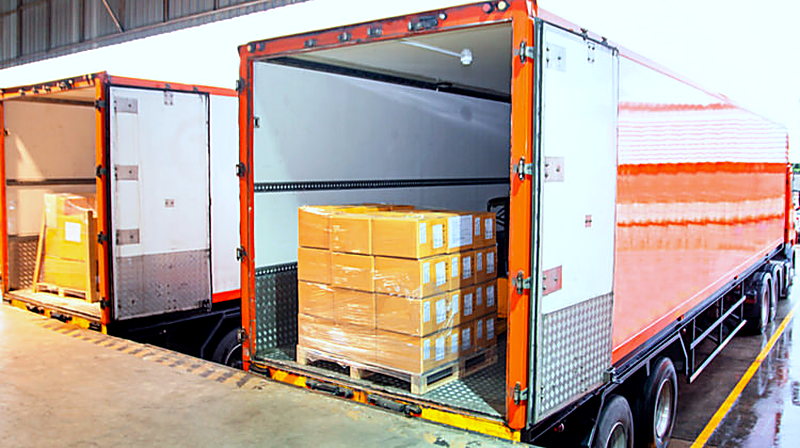
Packing and shipping marks are part of the programme: flat-packed cartons, marked by size and destination.
Yinshan Sportswear has been producing custom sportswear, teamwear and workwear since 1986. Uniform and workwear is one of our largest product families, and hospitality runs alongside corporate, hi-vis and industrial on the same lines.
MOQ is confirmed per style and decoration rather than against a flat number — most styles start from 5 pieces, and the figure moves with the fabric, the construction and the number of decoration positions. A trial run before a full rollout is a normal way to start a hospitality programme.
What garments does a hospitality uniform programme normally include?
Chef jackets and trousers, kitchen polos and aprons; front-of-house service shirts, tunics, waistcoats and dresses; housekeeping tunics and tops; and management shirts, knitwear and corporate polos. Most properties order three or four of those groups together.
What fabric is best for hospitality uniforms?
It follows the wash regime more than the design. Kitchens usually need a heavier poly/cotton twill that survives heat and industrial washing; front-of-house shirts use a lighter easy-care or stretch poly/cotton that holds its appearance across a long shift; housekeeping needs a fabric with low shrinkage and good shade retention under constant washing.
Can you supply chef jackets and aprons?
Yes. Hospitality wear, including chef jackets and service tunics, is produced as part of the workwear family alongside corporate, hi-vis and industrial garments. Send the roles and the wash regime and we will specify per group.
How do you stop hospitality uniforms shrinking after washing?
We test shrinkage on every incoming fabric roll before cutting, and a piece shrinking more than 1% is treated as a failure. That is a fabric-level control; it is the reason shrinkage is worth asking about when you compare suppliers.
Can staff order individual replacement items later?
Replenishment works because the specification is on file — fabric, colour reference, construction, logo file and logo position all fixed at approval. A top-up is then a re-run of a document, and we agree the mechanism at the first order rather than at the third.
How do you handle high staff turnover?
Order on a size curve rather than an average, keep the size split inside one order, and agree a replenishment route at the outset. Our range runs XXS–4XL with youth sizes and made-to-measurement, and most styles start from 5 pieces.
Do you embroider or print the branding?
Embroidery is the default for hospitality because it survives the wash cycles these garments go through and reads as permanent on a restaurant floor. Printed panels are used for larger graphics and back prints.
Send the roles, the wash regime, the quantities per size and the branding positions, and we will come back with a specification per role, a fabric and weight recommendation, and a quotation against your actual size split.
Buying custom rather than ready stock? Send your garment list, size curve and delivery date through our contact page. For the wider picture, the uniform and workwear pillar covers how hospitality sits alongside corporate, hi-vis and industrial programmes; the workwear range lists the garment types, and our FAQs page answers the questions buyers ask most often.
 English
 Español
 Português
 Français
 Pусский
 Deutsch
 العربية