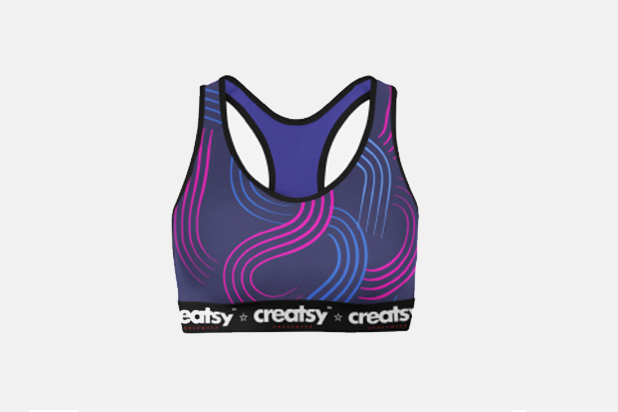
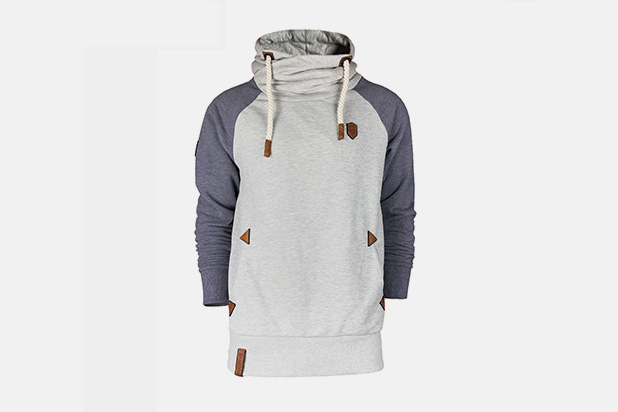
Two suppliers can quote the same custom sportswear brief and land in completely different places, and the difference is rarely the sewing. It is what each supplier counted as part of the order — the decoration positions, the trims, the packaging level, the artwork rounds and the freight.
This page breaks a custom sportswear cost into the seven lines that actually carry it, shows which of those lines the buyer controls, and explains why decoration is the single line most often quoted loosely.
In short: a custom sportswear cost is built from fabric, cut and sew, decoration, trims and labels, packaging, development, and freight. Decoration is the line that moves most between quotes, because it is priced per position — a chest-only order and a chest-plus-sleeve-plus-back order are not the same garment commercially.
A quote that does not name its lines is not a quote you can compare. These are the seven, in the order they accumulate.
| Line | What it covers | What moves it |
|---|---|---|
| 1. Fabric | Fibre, weight, finish, colour | Weight band and finish — a 280–380 gsm bonded softshell and a 140 gsm jersey are different animals |
| 2. Cut and sew | Cutting, sewing, finishing, in-line checking | Construction complexity: panel count, gussets, linings, pocketing, closures |
| 3. Decoration | Printing or embroidery, per position | Method, colour count, number of positions, artwork size and set-up |
| 4. Trims and labels | Woven labels, neck tape, swing tags, care labels, zips, badges | How much of the branding is customised and how many components per garment |
| 5. Packaging | Polybag and size sticker, retail bag, gift box, carton and shipping mark | Retail-readiness — a polybagged bulk order and a retail-ready packed order are different jobs |
| 6. Development | Pattern and fit work, grading, sampling rounds | OEM work from your design costs more development than adapting an existing block |
| 7. Freight and duties | Courier for samples, sea or air for bulk, export documentation | Destination, volume, and how urgently it has to move |
Read a quote that lists lines 1, 2 and 3 and stops, and you have found the gap. Lines 4 to 7 exist on every order whether or not they appear on the sheet; if they are missing, they will arrive later.
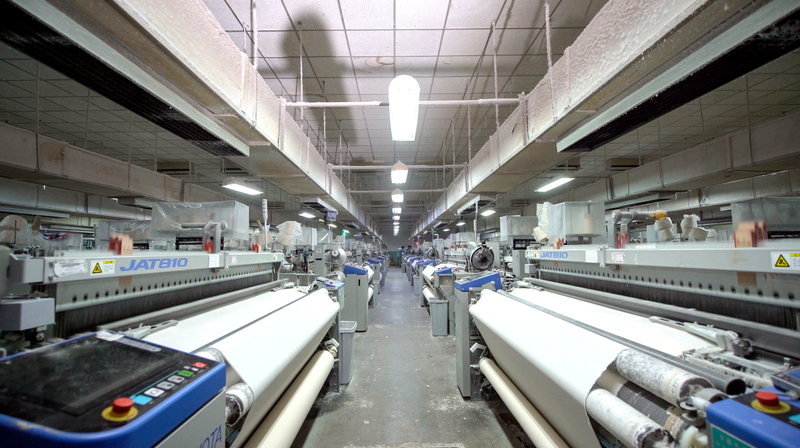
Fabric weight and finish are the first cost line - and the one buyers change most often between briefs.
Four things explain most of the gap between two quotes for an identical specification.
What got included. One supplier prices garment only and treats decoration, labels and freight as extras; the other prices the delivered programme. Both numbers are real — they just answer different questions.
Order size against development. Development cost is largely fixed, so it weighs more heavily on a small run. Two suppliers with different breaks either side of your quantity will price the same order differently, and neither is wrong.
Fabric commitment. If the specification needs a fabric the supplier has to buy in against a mill minimum, that commitment is priced in. A supplier who already runs that fabric does not carry it.
How many decoration positions were assumed. This is the one buyers miss, and it is the single largest legitimate source of variance. A quote built on a chest embroidery is not comparable with a quote built on a chest embroidery plus a sleeve print plus a back panel, even when both say "with branding".
Decoration is where quotes diverge, for a structural reason: it is quoted per position, not per garment.
Every position carries its own set-up: artwork preparation, a screen or a plate or a transfer, a colour match against your reference, a position check on the sample, and a place in the production sequence. Adding a sleeve mark to a chest-only programme is not a small increment — it is a second decorated operation on every piece.
Three things follow:
The methods behave differently as volume rises, and that behaviour — not a unit price — is what a buyer should compare.
| Method | Set-up behaviour | Per-piece behaviour | Cost-efficient when |
|---|---|---|---|
| Sublimation | Low set-up; artwork prepared once | Effectively flat — the full-colour print is part of the fabric | Full-colour, all-over designs on polyester; large numbers of colours |
| Screen printing | Set-up per colour, and a screen per colour | Low per piece at volume | Bold, few-colour designs on cotton and cotton blends |
| Heat transfer | Low set-up; a transfer per design | Higher per piece than screen at volume | Small runs, complex or photographic artwork, name-and-number work |
| Embroidery | Digitising once per design, plus a colour change | Slower per piece than printing | Logos and marks that must survive industrial washing — corporate, hospitality, workwear |
| 3D embroidery | Digitising plus a foam toolpath | Slowest per piece | Badge-style marks where depth is the point |
The practical rule: the more colours and the more positions, the more sublimation and screen printing pull ahead of transfer. The more the mark has to survive washing, the more embroidery earns its place despite the slower cycle. Our sublimation versus screen printing comparison works through the method choice in detail.
Most of a quote is not negotiable, because most of it is the garment. These are the levers that genuinely move the number, in the order they usually help.
| Lever | Effect on cost | What it costs you |
|---|---|---|
| Consolidate decoration positions | Largest single reduction available | Some design flexibility |
| Raise the order size | Spreads development and set-up | Inventory and cash |
| Reduce colour count in the artwork | Lowers screen and set-up cost | Print fidelity on gradients |
| Move from transfer to screen or sublimation at volume | Lowers per-piece decoration cost | Suits a narrower set of designs |
| Choose fabric weight against the job, not above it | Real saving on heavier garments | Needs an honest look at where the garment is worn |
| Standardise packaging | Removes retail-ready labour | Presentation at retail |
| Fix the specification before sampling | Removes rework and second samples | Requires the decision to be made early |
The lever that is not on the list is squeezing the fabric. Changing the base fabric changes the shade, the drape and the hand feel together, which on a uniform or teamwear programme is visible across a size run. It is the cheapest-looking saving and the most expensive one.
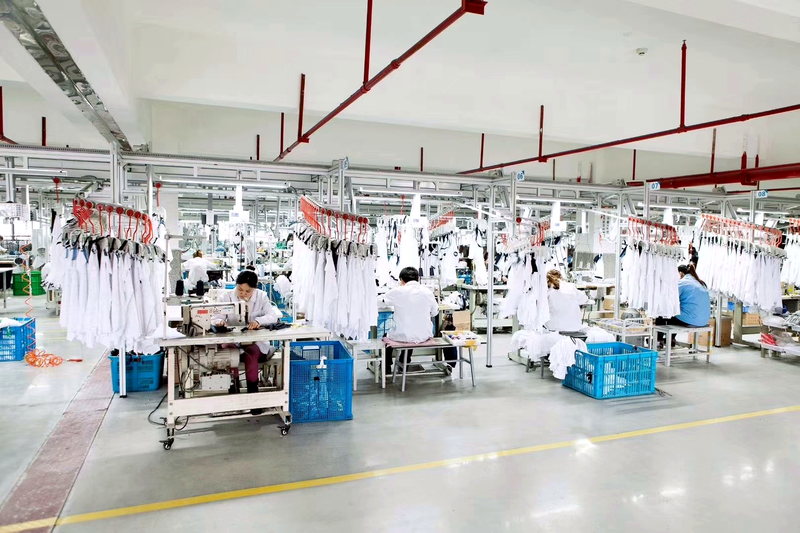
Cut and sew labour follows the construction, not the model - panel count and closures set most of it.
A quotation that is complete at the start is worth more than a lower number that grows. These are the items that most often arrive after the order is placed.
Ask for these as named lines in the first quote. A supplier who lists them is not expensive; a supplier who hides them is.
Use this as a checklist against whatever document you have been sent.
| Question to ask | Why it matters |
|---|---|
| Is the fabric specified by fibre and weight? | "Polyester" alone can be 105 gsm or 380 gsm |
| Is the construction described, or named only? | Panel count and closure types set the sewing labour |
| Are decoration positions listed individually? | Per-position pricing is the whole game |
| Are trims and labels itemised? | Woven label, neck tape, swing tag and care label are separate components |
| What packaging level was priced? | Polybagged bulk and retail-ready packing are different labour |
| Is sampling included, and how many rounds? | The second sample is the one that moves the date |
| Is freight included, and to where? | Destination changes the number more than the garment does |
| What is the payment split? | Standard terms are a deposit with the balance before shipment |
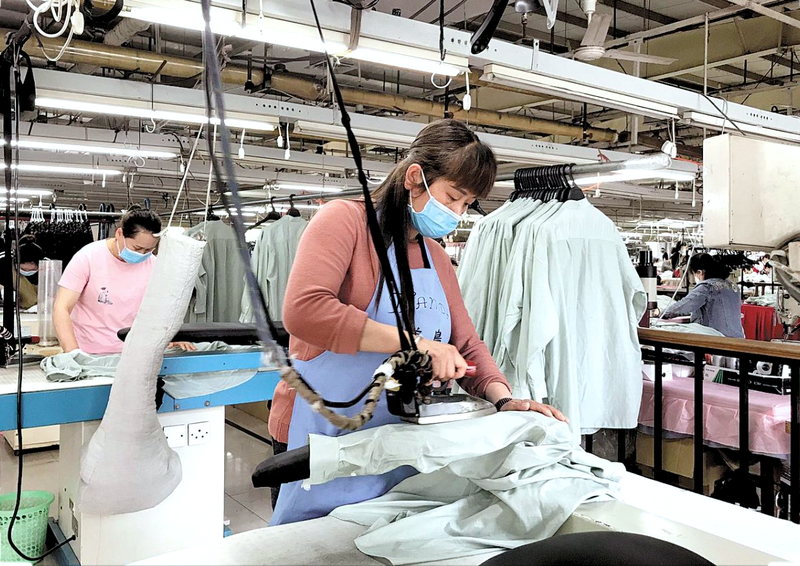
Finishing and packing are separate lines on an honest quote - and often invisible on a cheap one.
Cost is not the same as price, and the difference shows up after delivery.
Shade drift across the size run. If the sizes were not produced from one dye lot, the range arrives mismatched. Remedying it costs a second production run — see colour consistency for how the control works.
Unapproved artwork reaching the cutting table. This is the most common cause of a wasted run, and it is a process failure rather than a price one: an early version of the artwork gets cut, and the finished goods are unusable.
A mark that does not survive the wash. Corporate, hospitality and industrial garments are washed far more often than sportswear, and a transferred mark that looked crisp on the sample can lift within a few cycles. Embroidery is the more durable route where that applies.
Freight chosen after the fact. Bulk that has to fly because the sea slot was missed costs more than the decoration saved.
The garments those costs land hardest on are the ones built for heavy use — a work vest, an industrial overall, or anything a buyer has to reorder season after season.
If your programme falls outside a standard brief — a mixed-fabric range, an unusual decoration position, a garment we do not currently run — our custom requirements page sets out what we can take on.
The MOQ and sampling process and the factors that move a lead time are both worth reading before a quote is agreed — they are the two places where a cheaper number usually gets spent again.
Yinshan Sportswear has been producing custom sportswear and teamwear since 1986.
MOQ is confirmed per style and decoration rather than against a flat number — most styles start from 5 pieces, and the figure moves with the fabric, the construction and the number of decoration positions. Send the brief and we will quote it against what you actually need, with the decoration positions priced line by line.
How is custom sportswear priced?
It is built from fabric, cut and sew, decoration, trims and labels, packaging, development, and freight. Decoration is priced per position, so the number of decoration positions has more effect on the final figure than most buyers expect.
Why is my quote higher than the one I received from another supplier?
Usually because a different scope was priced. Ask both suppliers how many decoration positions are included, whether trims and labels are included, what packaging level is assumed, and whether freight and duty are in the number. Comparing on those four points usually explains the gap.
Can you give a unit price before I send the specification?
Not an honest one. A price needs the garment, the fabric weight, the decoration positions, the quantity and the destination. We would rather quote your actual brief once than send a number that changes afterwards.
Is there a set-up charge for decoration?
There is set-up work on every decoration position — artwork preparation, and a screen, plate or digitised file per design. We price it explicitly rather than folding it in, so you can see what each position costs.
Does order size change the price per piece?
Yes, because development and set-up are largely fixed costs that get spread across the run. That is why a small trial order and a full rollout are not priced at the same rate per piece.
How do I reduce the cost without changing the garment?
Consolidate decoration positions, reduce the number of colours in the artwork, standardise the packaging, and fix the specification before sampling so no second sample is needed. All four are decisions, not compromises on quality.
Do you quote in a currency other than USD?
Quotations are issued against the order and the destination. Tell us the currency you settle in and we will quote in it.
Send the garment type, the fabric direction, the decoration positions, the quantities per size and the delivery destination, and we will come back with a line-by-line breakdown rather than a single figure. If the decoration method is still open, say so — that is the decision with the widest effect on the number, and it is easier to settle before the quote than after.
Buying custom rather than ready stock? Send your garment list, size curve and delivery date through our contact page. For how the two sourcing models differ commercially, see OEM versus ODM; for the garment types the quote will cover, see the custom sportswear and fitness and activewear ranges, or our FAQs page.
 English
 Español
 Português
 Français
 Pусский
 Deutsch
 العربية