"Performance fabric" is a marketing phrase, not a specification. What a buyer actually orders is one or more measurable behaviours — how fast the fabric moves moisture, how well it resists pilling, how much ultraviolet it blocks, whether it holds a colour through fifty washes.
Moisture wicking fabric is the claim buyers ask about most, and it is also the one most often confused with quick dry. This page sets out what each of the six common performance claims actually means in a finished garment, how each one is engineered, and what to put in a brief so the fabric you get is the fabric you specified.
In short: performance claims are engineered into the fibre, the knit structure or the finish — not added at the end. Moisture wicking moves sweat away from the skin; quick dry evaporates it faster once it is in the fabric. Those are different tests, and a garment can pass one and fail the other.
| Claim | What it means | Typical use |
|---|---|---|
| Moisture wicking | Liquid is drawn along the fibre surface and spread, so it leaves the skin | Base layers, tees, jerseys, industrial workwear |
| Quick dry | Moisture already in the fabric evaporates faster | Travel, outdoor, tournament and event wear |
| Anti-pilling | The surface resists the fibre balls that form under abrasion | Fleece, hoodies, knitwear — anywhere a soft surface rubs |
| Anti-static | Static charge builds less, so the garment clings and sparks less | Dry environments, electronics, clean-room adjacent roles |
| Antibacterial / anti-odour | Microbial growth in the fabric is inhibited, so odour develops slower | Teamwear worn repeatedly between washes, gym and training wear |
| UV protection (UPF) | Ultraviolet transmission through the fabric is reduced | Long-sleeve outdoor, fishing, cycling and summer event wear |
Most enquiries name two or three of these. The question worth asking before the brief is which of them the wearer will actually notice — a claim that costs money and is not noticed is the easiest saving on the sheet. The garments where they come up most often are workout jerseys, long-sleeve outdoor shirts and quick-dry training tops.
Buyers use the two terms interchangeably. They describe different behaviours, and confusing them is how a garment ends up uncomfortable in exactly the conditions it was ordered for.
Moisture wicking is about movement. The fabric draws liquid away from the skin and spreads it across a wider area, so the wearer does not sit in a film of sweat. It is a transport property, and it is usually engineered with a fibre that is naturally hydrophobic — polyester moves water along its surface — or with a knit structure that sets up a differential, where the inner face passes moisture and the outer face holds it.
Quick dry is about evaporation. The fabric gives moisture up to the air faster than a comparable fabric would. It is a drying property, and it is driven by fibre choice, fabric weight and construction openness.
A cotton tee can be excellent at absorbing and poor at giving up moisture. A hydrophobic, open-knit polyester tee can be mediocre at absorption and excellent at drying. A garment built for a 10-hour shift in warm conditions usually needs both, which is why the specification reads "moisture-wicking quick-dry" rather than either alone. On a racket or court top, mesh side panels and a stretch knit usually do more for comfort than a heavier wicking fabric — the breathable mesh tennis top is built on that logic.
The practical test either way is the same: ask for the fabric after a wear-and-wash cycle, not a swatch. A swatch tells you the hand feel. It does not tell you how the fabric behaves once it is wet and moving.
This is the table worth keeping, because it converts a marketing claim into something you can specify and verify.
| Claim | How it is engineered | Fibre route | What to ask the supplier |
|---|---|---|---|
| Moisture wicking | Hydrophobic fibre plus a differential knit structure | Polyester, or poly/cotton with a wicking finish | Which face passes moisture, and what happens after 30 washes |
| Quick dry | Light weight, open structure, low moisture regain | Polyester, lightweight interlock or mesh | The fabric weight, and whether the finish is durable |
| Anti-pilling | Fibre length, twist and surface treatment; brushed fabrics pill more | Ring-spun cotton, anti-pill polyester fleece | Whether it is anti-pill yarn or an anti-pill finish |
| Anti-static | Conductive fibre or an antistatic finish | Polyester with carbon or a blend | Whether it survives the wash regime the garment will meet |
| Antibacterial | Silver-ion or an antimicrobial finish | Polyester, blends with an active silver yarn | Whether the effect is in the yarn or a topical finish |
| UV protection (UPF) | Tight construction, higher mass per area, dark or UV-absorbing colourants | Polyester and dense knits outperform open cottons | The UPF rating of the specific fabric, tested — not assumed |
Two of these are worth a note.
Antibacterial in the yarn lasts; a topical finish does not. A silver-ion yarn carries the effect through the life of the garment, because the silver is in the fibre. A topical finish sits on the surface and wears away — slowly if the garment is washed gently, quickly if it is washed hard. Ask which one you are being quoted. Our own route to this is a jersey built on an active silver yarn, which is a different product from a jersey sprayed with a finish.
UV protection follows construction before chemistry. A dense, dark polyester knit blocks more ultraviolet than a light, open cotton knit, before anything is added. Where the garment is going to spend a season outdoors, worth more than a claim on a label is the actual rating of the specific fabric — so ask for it per fabric, not per range.
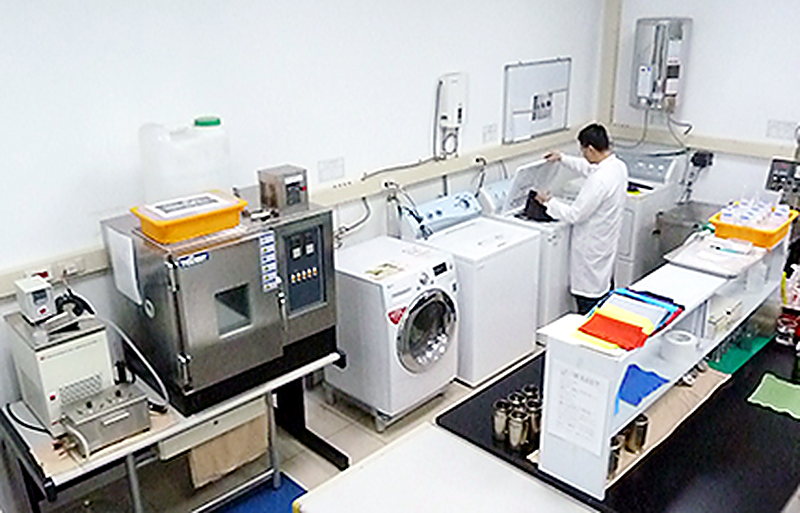
Claims are checked on the fabric, not on the garment's marketing copy - wash, shrinkage, colour fastness and weight.
Pilling is the small fibre balls that form where a fabric rubs against itself or against something else — under a bag strap, at the sleeve, at the seat. It is caused by short fibres working loose from the yarn, tangling, and rolling up on the surface.
Three factors decide how badly a fabric pills:
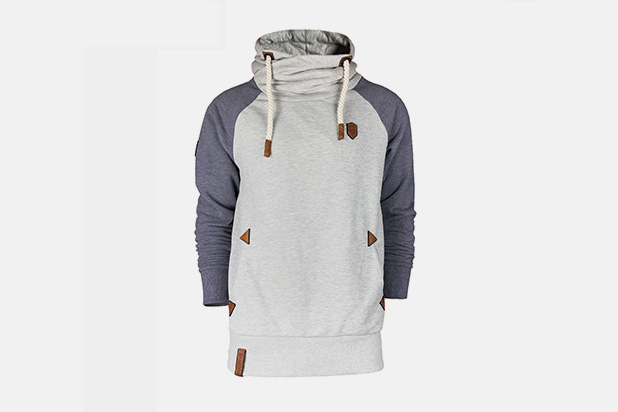
That last point is why anti-pilling matters most on fleece and hoodies, and why a brushed 300–360 gsm hoodie fabric and an unbrushed interlock behave differently over a season even when both are polyester. If the garment is going to be worn with a backpack or a shoulder bag, say so — it changes the recommendation. Where the garment is a fleece, start from an anti-pilling embroidered hoodie rather than from a brushed surface.
Worth settling early, because the trade uses the terms loosely.
UPF — Ultraviolet Protection Factor — is the fabric rating. It describes how much ultraviolet radiation the fabric transmits. A UPF 50 fabric transmits about one fiftieth of the UV that would otherwise reach the skin.
SPF — Sun Protection Factor — is a sunscreen rating. It describes how long skin can be exposed before burning with sunscreen applied. It is not a fabric property.
In garment catalogues the two get mixed, and you will see outdoor and fishing garments described with either. The useful move for a buyer is not to police the wording but to ask a plainer question: what is the tested ultraviolet protection of this specific fabric, and does it hold after washing? Stretch is the other variable worth knowing about — a fabric tested flat can protect less when it is stretched over a shoulder, because the construction opens.
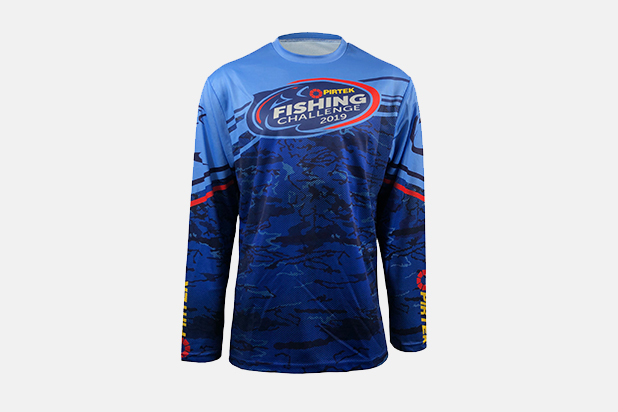
Where a garment's whole purpose is sun exposure — long-sleeve fishing and outdoor shirts are the classic case — we would rather specify the fabric with the rating in writing than leave the protection implied by the name. It is the same principle behind our UPF50 riding jacket: the rating belongs to the fabric and is specified with it.
Performance claims and fabric weight are usually decided together, because weight sets how much of the claim the garment can carry. These are the bands we work in most often.
| Garment | Fabric direction | Weight band |
|---|---|---|
| Performance tee / base layer | Polyester interlock or lightweight jersey | 140–180 gsm |
| Technical polo | Polyester interlock or piqué | 150–190 gsm |
| Team jersey | Polyester, sublimation-grade | 150–190 gsm |
| Cycle and event jersey | Lightweight polyester, cool-touch | 130–160 gsm |
| Lightweight training top | Polyester microfibre woven | 105–125 gsm |
| Fleece hoodie | Cotton/poly or recycled poly fleece | 300–360 gsm |
| Softshell jacket or vest | Bonded 100% polyester shell | 280–380 gsm |
| Workwear polo | Polyester or poly/cotton piqué | 160–220 gsm |
| Industrial tee | Cotton, poly/cotton or polyester | 140–180 gsm |
Where a claim is added without changing the weight — anti-pilling on a fleece, an antimicrobial yarn in a jersey — the fabric stays in the same band. Where the claim needs a different construction, the band moves, and so does the cost. This is the point at which a performance brief and a budget brief stop being the same brief.
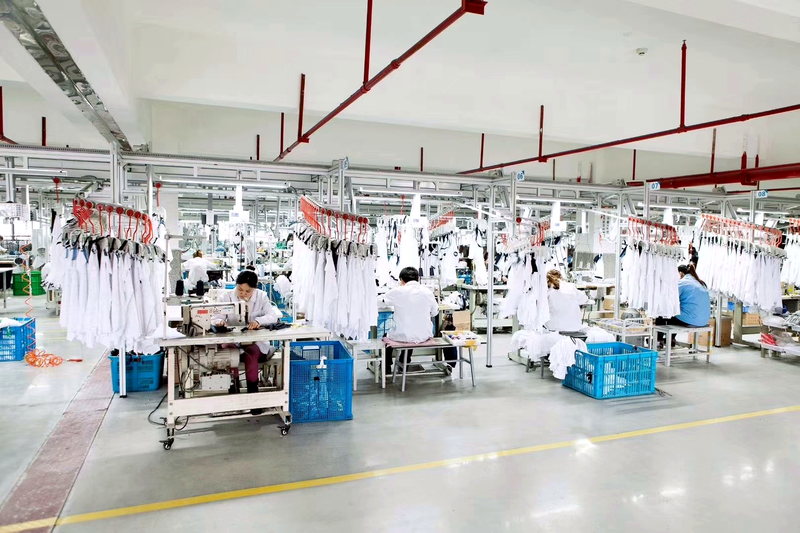
Weight and claim are decided before cutting: changing either afterwards means re-sampling.
Performance claims are worth nothing if the fabric underneath them failed inspection. Every roll we cut goes through the same checks first.
| Check | Method | Pass line |
|---|---|---|
| Appearance | Roll inspection | No snags, no holes under 0.5 cm, no staining, no shade variation, no blocked print |
| Weight | Roll weighed per unit area | ±5% tolerance |
| Width | Measured at head, middle and tail | A shortfall of half an inch or more means the roll is reworked |
| Skew | Skew measured against width | Above the specification, the roll fails |
| Shrinkage | 1 m × 1 m piece washed twice at a high temperature | Above 1% fails |
| Colour fastness | White cloth soaked against the fabric, then assessed for staining | Assessed against the national fastness method series for washing, rubbing, perspiration and water |
| Tearing strength | Tear tester | 600–1,000 N |
| Abrasion | Martindale | Tested against the garment's expected wear |
| Air permeability | Timed air passage under controlled conditions | Recorded against the intended end use |
| Water repellency | Distilled water applied through a funnel | Graded across repellent, water-repellent and Teflon-grade finishes |
Two of those numbers are worth carrying into a brief: shrinkage above 1% is a failure, and weight within ±5% is the tolerance. A fabric that moves more than that will move again after the wearer's first wash, and the garment will not fit the size chart it was sold against. Fabric inspection is also where a cheap quote usually hides its saving, which is why it belongs among the first things to check when quotes are compared — see the cost breakdown.
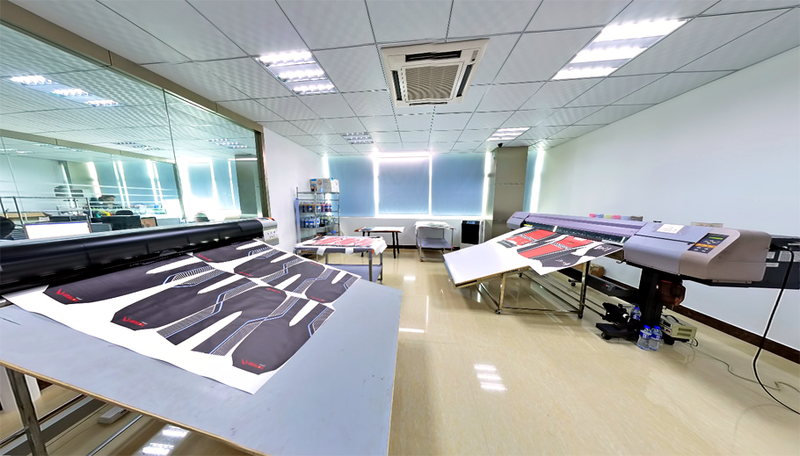
Decoration sits on top of the fabric decision - sublimation needs a polyester substrate, so the claim and the print method are related.
Adding a performance claim is rarely free, and the trade-offs are worth naming.
The reliable way through all four is to agree the wearer's conditions before the fabric. Indoor/outdoor, how many hours, how many washes between them, and whether the garment goes under a bag or a pack.
Yinshan Sportswear has been producing custom sportswear and teamwear since 1986, and functional fabrics run across the range rather than as a separate line.
MOQ is confirmed per style and decoration rather than against a flat number — most styles start from 5 pieces, and the figure moves with the fabric, the construction and the number of decoration positions. If the fabric is still open, say so in the brief: it is the first decision, and the one that constrains the rest.
What does moisture wicking fabric actually do?
It moves liquid away from the skin and spreads it across the fabric surface, so the wearer is not sitting in sweat. It is a transport behaviour, and it is separate from how quickly the fabric then dries.
Is moisture wicking the same as quick dry?
No. Wicking describes how moisture moves through the fabric; quick dry describes how fast the fabric gives that moisture up to the air. A garment can do one well and the other poorly, which is why a specification for warm conditions usually asks for both.
What is the difference between UPF and SPF?
UPF is the fabric rating — how much ultraviolet the fabric blocks. SPF is a sunscreen rating, describing how long skin can be exposed before burning. Garment catalogues sometimes use SPF for fabrics; the fabric question to ask is the tested ultraviolet protection of that specific fabric.
How do you stop fleece from pilling?
Longer-staple, higher-twist yarn and an anti-pill finish, with a less aggressive brush on the surface. Where a garment will rub against a bag or a pack, a smooth-face performance fleece pilling less than a heavily brushed one is the usual recommendation.
Does an antimicrobial finish survive washing?
A silver-ion yarn does, because the silver is inside the fibre. A topical finish does not — it wears away, faster under hard washing. Ask which one the quote covers.
Can one fabric carry several performance claims at once?
Sometimes, but they can conflict. A brushed fleece and moisture wicking pull against each other, and high UV protection usually means a denser, less airy construction. Usually the better answer is to prioritise the two claims the wearer will notice and specify the fabric against those.
Do you test the fabric before production?
Yes. Every roll is checked for appearance, weight, width, skew, shrinkage, colour fastness, tearing strength, abrasion, air permeability and water repellency before it reaches the cutting table. Shrinkage above 1% fails, and weight is held to a ±5% tolerance.
Send the garment, the wearer's conditions — indoor or outdoor, hours worn, how often washed, what it is worn under — and the two or three claims that matter most. We will come back with a fabric and weight recommendation, a note on which claims are worth paying for in your case, and a quotation against your quantities and size split.
Buying custom rather than ready stock? Send your garment list, size curve and delivery date through our contact page. For how the decoration method interacts with the fabric, see sublimation versus screen printing; for the fabric and trim options across the range, see custom sportswear and the workwear range, or our FAQs page.
 English
 Español
 Português
 Français
 Pусский
 Deutsch
 العربية