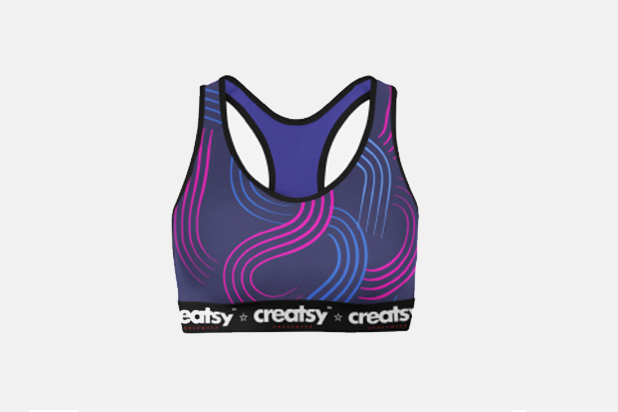
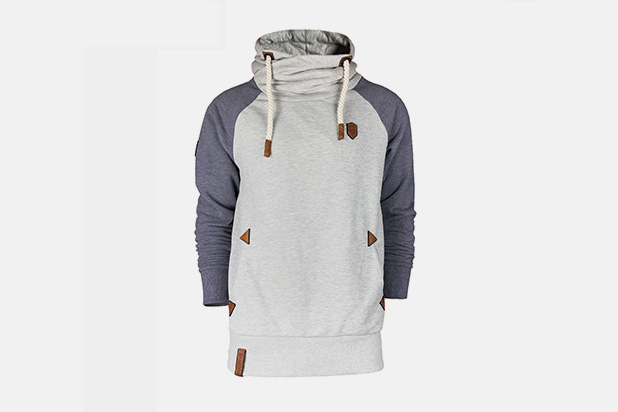
Printing is where most sportswear design ambition ends up, and where most of it disappoints. The reason is rarely the artwork. It is that print is a surface layer sitting on a fabric that stretches, washes and moves, and the method chosen has to suit the fabric and the placement rather than the drawing.
This page covers custom sportswear printing — the methods, how to choose between them, colour matching, placement and the design decisions that make printed sportswear stand out.
Quick answer: Three methods cover nearly every order. Sublimation prints the fabric before cutting, so it carries unlimited colour and never cracks, but it requires polyester. Screen printing applies ink through a stencil and suits cotton and cotton blends, with cost rising per colour and per position. Transfer print applies a prepared image with heat and suits complex artwork on mixed fabrics. Choose by fabric first, then by colour count and durability, then by design.
| Method | How it works | Best for |
|---|---|---|
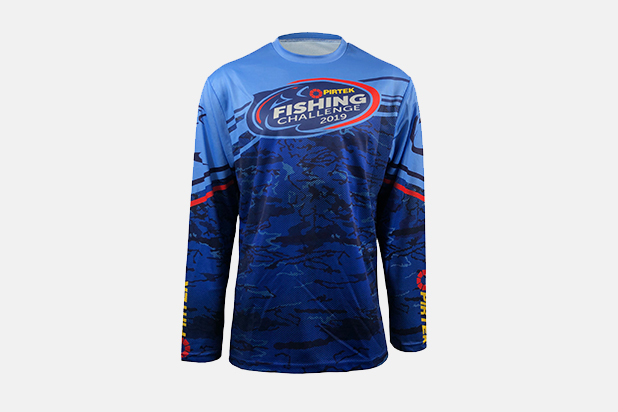
| Sublimation | Disperse dye printed onto paper, then pressed into the fabric | Polyester garments, allover designs, unlimited colour |
| Screen print | Ink pushed through a stencil screen, one pass per colour | Cotton and blends, bold artwork, bulk quantities |
| Transfer print | A prepared image applied with heat and pressure | Complex or photographic artwork on mixed fabrics |
| Direct-to-film / digital | Digital print transferred onto the garment | Small runs and detailed artwork without screen setup |
Method choice is constrained by the fabric before anything else. Sublimation requires polyester because the dye bonds with the fibre; asking for it on a cotton-rich garment is not a preference but an impossibility. That dependency is the reason fabric and decoration should be specified together, as described in custom design and manufacture.

Print placement decides whether a graphic reads at a distance or only when the wearer stands still.
Printed decoration degrades in a predictable order. The edge of the printed area lifts first, then the surface cracks, then the colour fades. How quickly that happens depends on the method, the fabric and the laundry.
Sublimation — the colour is inside the fibre, so it does not crack or peel; it fades gradually with light and aggressive washing.
Screen print — durable when properly cured, but a heavy ink deposit on a stretch knit is the first thing to crack.
Transfer print — depends on the adhesive; heat and repeated washing are the main risks.
Any method on a stretch panel — the print will not stretch with the fabric, so placement matters more than method.
The practical rule for a buyer is to avoid printing across areas the garment stretches, and to prepare the fabric surface properly. Most print failures are placement or preparation failures rather than method failures.
Colour is where printed orders most often fail an approval, and the cause is almost always the same: the design was approved on a screen.
Saturated greens, oranges and deep blues shift most when applied to a knit or bonded into polyester.
Light colours on a white or light fabric can appear a shade lighter once printed or pressed.
A colour that works on a website can look flat over a large area of garment.
Pantone references help, but a physical swatch on the actual fabric is the only reliable approval.
The rule is to approve on the fabric, in daylight, at the size it will be seen. This is the same discipline the design stage requires, discussed in designing sportswear that stands out.
Placement is the cheapest design lever available and the one most often wasted. A mark placed where the garment creases, folds or stretches is a mark that disappears in use.
Chest and upper back read best at distance and survive movement.
Sleeve placement suits secondary marks and sponsor detail.
Sides and lower body are rarely seen and should not carry the primary identity.
Large area graphics work when the whole garment is the design, not when they sit over a functional panel.
For a club or event, the useful test is to look at the design at thumbnail size. Detail that disappears at that size is decoration for the wearer rather than communication for the observer, which may be entirely appropriate — as long as it is a deliberate choice rather than an accident of scale.

Allover printing shifted the design problem from colour budget to legibility, because colour count is no longer the constraint.
State the fabric first, because it limits the method.
State the method, the number of positions and the colour count.
Supply artwork as vector or high-resolution files with colour references.
Ask for a printed sample on the actual fabric before the run.
Confirm the care instruction, since laundering determines how long the print lasts.
Record the method and the colours so a repeat order can match.
The care instruction is not incidental on printed garments: heat and detergent choice are the two variables that most affect print life, and both are within the wearer's control. The guidance we supply is summarised in caring for your sportswear.

A printed mark on a knit needs a stable fabric and a prepared surface, or the edge breaks down first.
Printing is the wrong answer when the mark must survive years of hard washing and look formal — embroidery holds those better. It is also the wrong answer on a stretch panel, where no printed layer will move with the fabric. And it is the wrong answer when the design depends on a colour the fabric cannot reproduce consistently. Recognising those three cases early saves a remake, and the embroidery comparison is set out in embroidery in sportswear manufacturing.
It depends on the fabric. Sublimation is best for polyester garments and allover designs because colour count carries no extra cost and the colour cannot crack. Screen printing suits cotton and blends in bulk. Transfer and digital methods suit small runs and complex artwork.
Usually because the print sits on a stretch area or because the ink was not properly cured. Reducing the ink deposit, choosing a method suited to the knit, and avoiding placement across stretch panels prevents most cracking.
Supply a Pantone reference and approve a physical sample printed on the actual fabric, in daylight. Screen proofs mislead, particularly for saturated greens, oranges and deep blues, which shift when applied to a knit.
No. Sublimation requires polyester. Screen printing works best on cotton and blends. On stretch panels no printed layer is ideal, because the print does not stretch with the fabric, so placement has to be chosen accordingly.
Send the garment, the artwork and the colours, and we will recommend the print method the fabric can carry, produce a sample on the actual fabric, and record the specification for repeat orders.
 English
 Español
 Português
 Français
 Pусский
 Deutsch
 العربية