Most university hoodie problems are decided before a single garment is cut. The fabric weight that felt right in a sample, the embroidery backing that stopped the crest from puckering, the size curve that fitted first-years as well as alumni — each of those is a sourcing decision, and each is difficult and expensive to correct after the order ships.
This guide is written for the people who actually place the order: student unions and campus merchandise teams, university marketing and alumni offices, sports departments ordering club kit, and the promotional distributors who supply them. It sets out what to check in a supplier, what to send before asking for a price, and where the money is genuinely lost in a campus hoodie programme.
Quick answer: Choose a university hoodie supplier on five tests — whether they can hold a colour reference across repeat runs, whether they will supply a physical swatch and a pre-production sample, how they quote minimum order quantity per colour and per size, what embroidery backing and stitch density they use, and how they handle a repeat order twelve months later. Price matters, but on campus merchandise the cost of a failed repeat is usually larger than the difference between two quotes.
If you are specifying the garment itself rather than vetting vendors, the garment-level detail sits in our guide to ordering campus hoodies, alongside the wider custom sports teamwear range.
Every one of these can be checked before you commit to an order. They are listed in the order in which they usually cause trouble.
| Test | What to ask for | Why it decides the outcome |
|---|---|---|
| Colour consistency | A fabric reference code and a physical swatch, plus confirmation that the same reference is held for repeats | Campus hoodies are almost always reordered. If the second run is a visibly different shade of the university colour, the whole batch is unusable next to the first one. |
| MOQ structure | Minimum quantity stated separately for garment style, for each colour, and for each decoration method | A single "low MOQ" figure hides the real constraint. A supplier may accept a small total order but require a much larger quantity per colour. |
| Embroidery capability | Stitch count, backing type and a photograph of a crest stitched on the actual fabric | Crests and lettering are where campus garments fail visibly. Stitch-out on the real fabric is the only proof that matters. |
| Sampling route | A pre-production sample of the actual garment, in the actual colourway | Screen colour, swatch colour and finished garment colour are three different things. The sample is the only binding one. |
| Repeat discipline | Named contact, stored artwork and a written record of the specification | Universities order in cycles, often with a different committee each year. A supplier who keeps the record removes the annual re-specification project. |
A supplier can only quote accurately against a defined brief. Four items shorten the process more than any negotiation.
Garment and quantity. Style, total quantity, and the size breakdown. Even an approximate size curve is better than "mixed sizes", because it changes how the fabric is cut.
Colourways. How many colours, and which is the primary. Colour count drives minimums more often than quantity does.
Decoration. Crests, faculty names, names and numbers, sponsor marks, sleeve prints. State which are embroidered and which are printed, and supply vector artwork with fonts converted to outlines.
Deadline and delivery point. Campus deadlines are fixed — orientation week, a varsity season, a graduation ceremony. Say the date in hand and the delivery address, then let the supplier work back from it.
One practical note on personalisation: if individual names or numbers are involved, send them as a spreadsheet with one row per person, containing exact spelling, number and size. Ask the factory to confirm the sheet back before production. This single step removes most of the errors that otherwise appear in a personalised campus run.

A university hoodie is worn for years after graduation, so the fabric weight and the embroidery are judged long after the invoice is paid.
"Low MOQ" is the most elastic phrase in apparel sourcing. What matters is where the minimum applies.
Per style. One hoodie design, any colour, any size — the most flexible structure and the one most suppliers will quote first.
Per colour. Often two to three times higher than the per-style figure. This is the constraint that catches campus orders, because university merchandise usually needs at least two colourways.
Per decoration method. Embroidered names and printed panels may be quoted separately, so a mixed order can carry two minimums.
Per fabric. Mixing a brushed fleece and a lighter sweatshirt in one order can split the minimum again.
When comparing quotes, line up these four numbers rather than the headline figure. Two suppliers quoting the same total can have very different flexibility underneath it.
A campus hoodie is judged in the hand long before anyone reads a care label. Three specification points do most of that work.
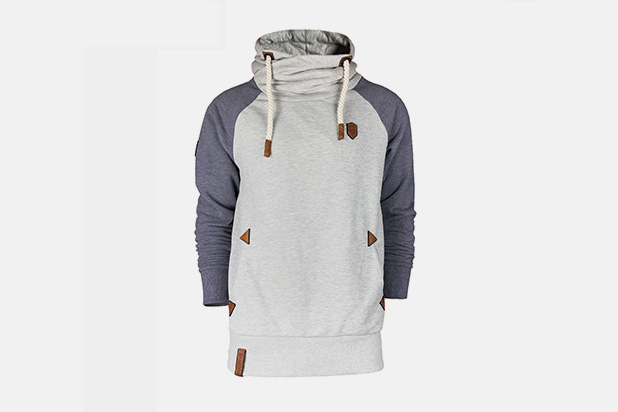
Weight. Heavier fleece feels substantial and holds shape through repeated washing; lighter fleece drapes better and costs less to ship. Ask for the weight in grams per square metre, not a vague "heavy" or "mid-weight".
Inner face. Brushed or loopback. Brushed feels softer immediately and is what most universities picture; loopback is more durable and less prone to pilling over years of wear.
Trim and finish. Ribbed cuffs and hem, a lined or double-layer hood, a flat drawcord, and reinforced pocket corners. These are the points that fail first and are visible from across a lecture hall.
For campus merchandise that must also read as a retail product — for example when the same design is sold as campus merchandise rather than issued to a club — add a care label with clear instructions and check that the packaging protects the embroidery in transit.

Embroidery is where most campus garments are won or lost: stitch density, backing and the way a crest holds its shape after washing.
Embroidery is the decoration method most campus programmes choose, and the one with the widest quality range. On a sample, inspect four things.
Stitch density. Too low and the crest looks thin and loses fine detail; too high and the fabric puckers and the garment stiffens. Ask what density is being used and whether the digitised file was produced for this fabric or reused from another job.
Backing. Cut-away or tear-away stabiliser, and whether it has been trimmed cleanly. Untrimmed backing is uncomfortable against skin and looks unfinished.
Registration. Multi-colour crests must line up exactly. Check the smallest element of the crest — the fine detail is where misregistration shows first.
Colour and coverage. Thread colour should be matched to the university palette, not to the nearest stock thread. Ask to see the thread reference as well as the finished stitch-out.
Always ask for a stitch-out on the actual garment fabric in the actual colourway. A crest stitched on a white sample swatch tells you nothing about how it behaves on a dark brushed fleece.
The sampling stage is where a campus programme either becomes routine or becomes a crisis. Treat it as an approval gate rather than a formality.
Approve in writing. Sign off the sample against a written specification: fabric reference, colour reference, weight, trim, decoration method, placement and lettering height in millimetres.
Photograph the approved sample. Front, back, crest close-up and label. When the next committee asks what was ordered last time, you have the answer.
Keep the artwork with the supplier. A digitised crest held on file removes both the setup cost and the risk of a redrawn version in a later season.
Plan the repeat before the first run ends. Confirm how long the colour reference and the artwork will be held, and how a smaller top-up order would be handled.
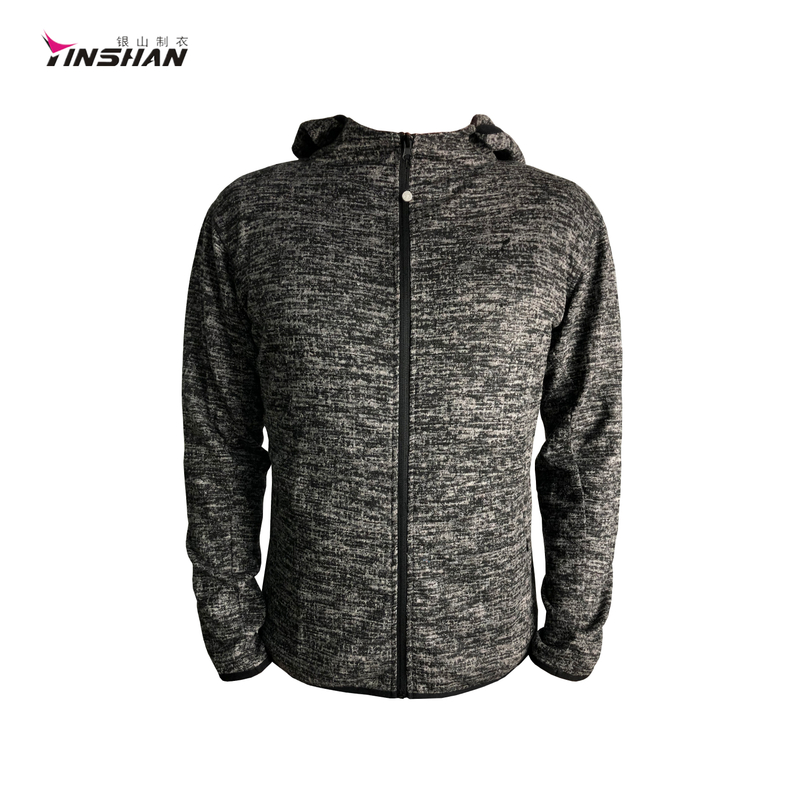
Most campus programmes order more than one garment style, so a supplier who can hold colour across a hoodie and a sweatshirt is worth more than the cheapest quote.
How many samples should we expect? One pre-production sample in the final colourway is the minimum for a campus hoodie, particularly where a crest is embroidered. If a fabric is being developed for the programme, expect a swatch stage before that.
Can we mix garment styles in one order? Usually yes, but check how the minimum applies. Mixing a hoodie and a lighter sweatshirt may split the quantity minimum even though the colour is the same.
What lead time is realistic? The reliable way to compress a schedule is to approve the artwork and the specification once, then reuse them. Custom orders depend on artwork approval and sample approval being completed on time, so the calendar should be planned backwards from the campus date rather than from the purchase order.
Is print or embroidery better for a crest? Use both. Embroidery gives a crest weight and a premium finish that suits a hoodie; print handles fine gradients and large graphics without adding weight. Many programmes embroider the crest and print the sleeve detail.
How do we avoid a colour mismatch on a repeat? Insist on a fabric reference code recorded in the specification, and keep the approved sample. Colour matched by eye from a photograph will drift between runs.
If you are planning a campus hoodie programme, send four things: the garment and size breakdown, the colourways, the artwork with a note on which elements are embroidered, and the date you need the goods in hand. With those in place a supplier can quote accurately and produce a sample that is genuinely close to the finished article — and a repeat order that matches it.
You can send a custom requirement directly, or look at the wider teamwear and campus range if the programme includes more than one garment. Request a quote.
 English
 Español
 Português
 Français
 Pусский
 Deutsch
 العربية