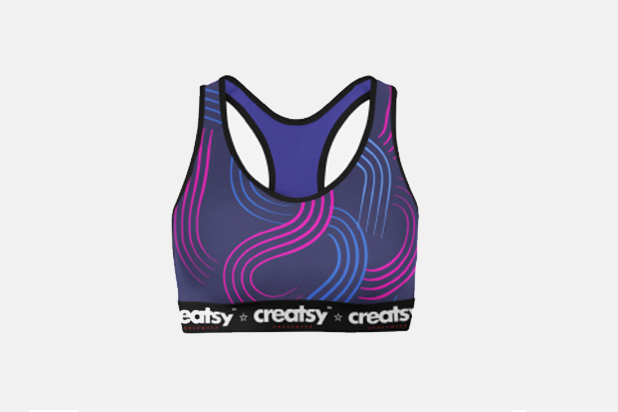
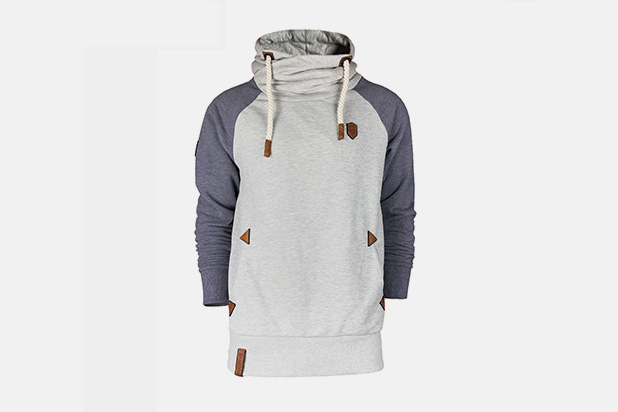
OEM and ODM are the two ways a brand gets a garment made, and the difference between them is not the factory — it is who brings the design. In OEM sportswear manufacturing the buyer supplies the design and the manufacturer builds it to that specification. In ODM manufacturing the manufacturer supplies a garment it has already developed, and the buyer adapts it.
That single difference decides cost, ownership, how long development takes, and how much of your margin belongs to someone else. This page sets out both models as they actually run on a sportswear order, so you can pick one deliberately rather than by default.
In short: choose OEM when the design is the product — your fit, your pattern, your brand equity. Choose ODM when speed to shelf matters more than owning the pattern. Private label is a third, narrower arrangement: our garment with your label, without changes to the design.
The three terms get used interchangeably in sourcing conversations, which is why briefs go wrong. In garment manufacturing they mean three different scopes of work.
OEM — Original Equipment Manufacturer. You own the design. You supply the tech pack or the reference garment, and the manufacturer's job is to engineer, sample and produce it. The pattern and the fit are yours. If you leave, you take the design with you.
ODM — Original Design Manufacturer. The manufacturer owns the design. You choose from a developed range, then apply your colourway, your branding and your own trim and packaging. The garment already exists; you are buying production capacity and a shorter development path.
Private label. A subset of ODM. The garment is ours, unmodified, with your woven label, your neck tape and your packaging. It is the fastest route to a branded product and the one with the least differentiation.
One more term worth separating: white label is private label with no branding at all, which is what a distributor buys before deciding what to put on it.
| OEM | ODM | Private label | |
|---|---|---|---|
| Who brings the design | You | The manufacturer | The manufacturer |
| Who owns the pattern | You | The manufacturer | The manufacturer |
| What the buyer controls | Pattern, fit, fabric, trims, decoration, packaging | Colourway, branding, trim, packaging | Branding and packaging only |
| Development path | Tech pack → pattern → sample → revisions | Existing block → adapt → sample | Existing garment → branding → sample |
| Sampling load | Higher — the fit is being created | Lower — the fit is known | Lowest |
| Order volume where it makes sense | Any, but the development cost is easier to absorb on larger runs | Trial runs and mid-size programmes | Fast, small, repeat-driven |
| Differentiation | High — the design is yours alone | Medium — shared block, own colour and brand | Low — identical garment to other buyers |
| Risk if you switch supplier | You keep the design; the new supplier re-engineers it | You keep the colour and the brand, not the pattern | You keep nothing but the label |
| Best fit for | Brands, teams with a fixed kit identity, licensors | Distributors, event organisers, fast launches | Retailers needing stock quickly |
The OEM-versus-ODM cost gap is not a margin trick. It comes from three real inputs.
Development labour. An OEM order starts with a pattern that does not exist yet. That means block development, grading across the size run, a fit sample, likely a revision, and a second sample. ODM starts from a block that has already been graded and sewn hundreds of times, so most of that labour is already paid for.
Sampling rounds. OEM orders routinely take two samples — a fit sample and a pre-production sample — because the fit is being created. ODM usually goes straight to a pre-production sample in your colour and your branding.
Material risk. On an OEM order the manufacturer is asked to source a fabric it has not run before, and sometimes to commit to a minimum from a mill. That commitment has to be priced in. On ODM the fabric is already in the line.
What does not change is the cut-and-sew labour, the decoration and the trim: those follow the garment, not the model. This is the same way custom sportswear costing behaves in general — the structure of the garment sets most of the cost, and the model decides how much development sits on top.
Ownership is the question buyers ask last and should ask first.
On an OEM order you own the design, and you should also hold the pattern file and the graded size set. Ask for them in the terms of the first order rather than the third; it is a routine request, and a supplier who refuses it is telling you something about your switching costs.
On an ODM order the pattern stays with the manufacturer. What you own is the colourway, the artwork and the branding. That is a reasonable trade for a fast launch — as long as you know that the garment you launched is available to another buyer with a different label on it.
On private label you own the label and nothing else. That is fine for a replenishment line and a poor foundation for a brand.
Buyers often say OEM when they mean "made for us". In practice a full OEM sportswear programme covers seven pieces of work, and it is worth knowing which of them you are asking for.
An ODM order keeps items 5 and 6 in full, takes 3 and 4 as options on an existing garment, and drops 1 and 2 to a colourway adaptation.
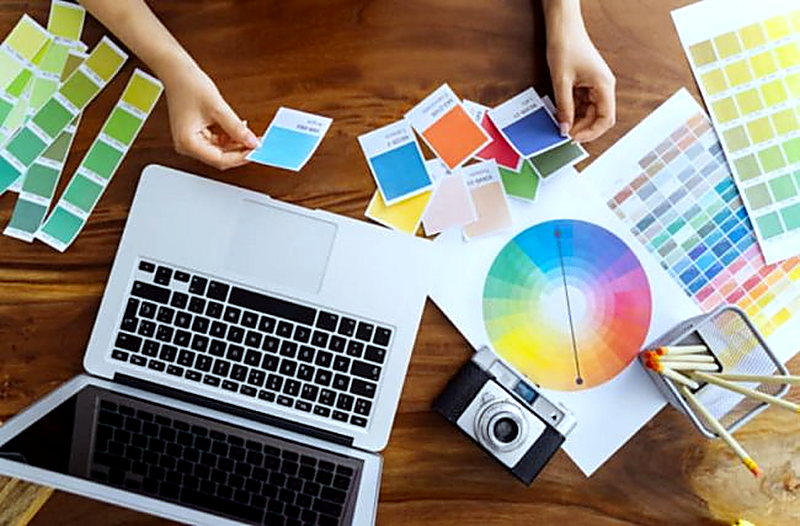
OEM starts here: the design and the pattern are developed against your brief before anything is cut.
Whichever model you choose, the pre-production sample is where the order actually becomes fixed. Bulk does not start until the sample is approved, because the sample is what locks the fabric, the colour, the decoration position and the fit at the same time.
Two things follow from that.
Approve the physical sample, not a digital render. A screen cannot show you fabric texture, the hand feel of a 180 gsm interlock against a 140 gsm jersey, or how a Pantone reference lands on the actual substrate. Approving a digital mock-up moves the risk to the cutting table.
Wash the sample if the garment will be washed. Shrinkage, colour bleed and tape lift all appear after the first wash cycle. A washed sample costs a few days; a rejected bulk order costs a season.
On an OEM order the sample stage is also where the fit is confirmed, which is why OEM programmes need the extra round. On ODM the sample is mostly a colour and branding check.
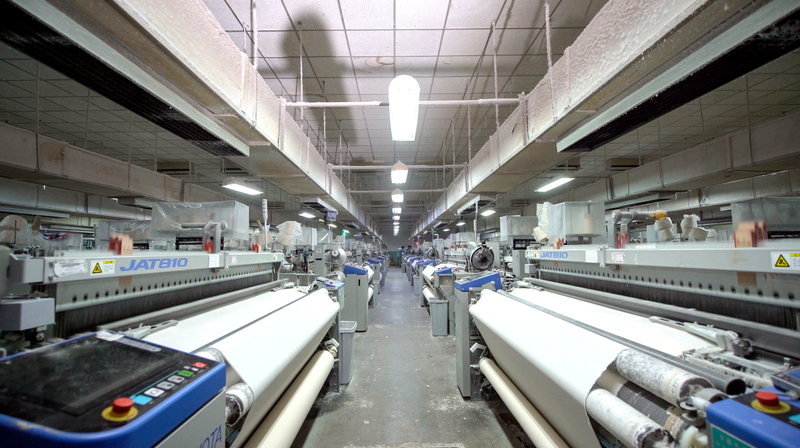
Fabric is inspected on the roll before cutting - GSM tolerance, width, skew and appearance.
Most sourcing decisions come down to four situations.
| Situation | Model that usually fits | Why |
|---|---|---|
| Brand with a signature fit or a licensed design | OEM | The fit and the design are the asset; they have to be owned |
| Distributor or retailer needing a branded range quickly | ODM or private label | Development time is the constraint, not differentiation |
| Sports club or team with a fixed kit identity | OEM for the kit, ODM for the leisure range | The playing kit needs a fixed fit; the fan range does not |
| Event organiser with a date that cannot move | ODM | Starting from a developed block removes the fit rounds |
| Company uniform programme with a brand book | Either, but OEM if the shirt is a defined garment | Uniforms are reordered for years; ownership protects the reorder |
A programme can run both at once. It is common for a club to have its playing kit developed as an OEM garment and its supporter hoodies taken from an existing ODM block.
In practice we keep both routes on the same floor. A developed customisable uniform polo is the fast ODM-style launch; a custom work shirt, an industrial overall or a garment from the custom work clothes range is the OEM route, where the brief comes first and the garment is engineered to it.
The failures on OEM and ODM orders look different.
On OEM the classic failure is an unapproved artwork version reaching the cutting table. On a programme with several colourways and several sponsor positions, artwork versions multiply quickly, and the version on the cutting table is not always the version that was signed off. The fix is process, not goodwill: one named approver, one indexed artwork file per position, and a written confirmation before each cut.
On ODM the classic failure is assumption — assuming the stock block can be shortened, that the fabric can be swapped for a lighter one, or that an extra size is a formality. A developed block has a developed grading; changing one end of the size range changes the fit at the other.
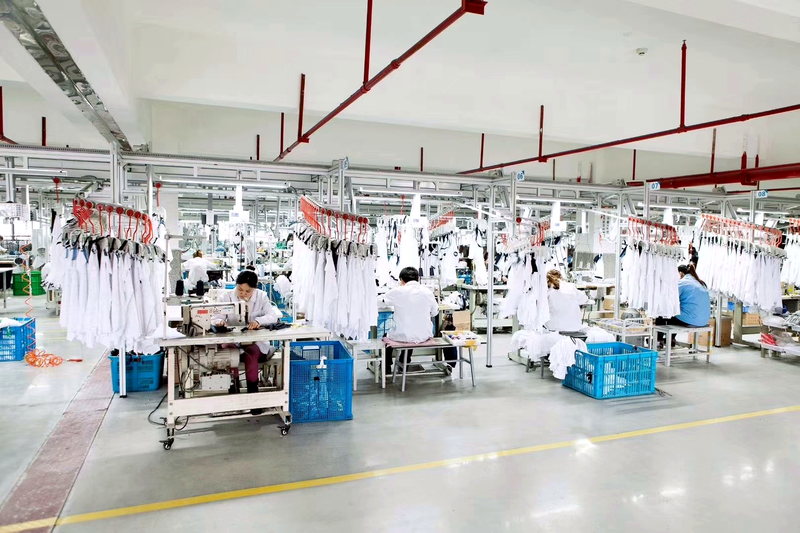
Once the sample is approved, the line runs to that specification - and the reorder runs to the same document.
The one thing that protects both models is the same: a written specification sheet, with the fabric, the weight, the colour reference, the construction, the trims, the logo file, the logo size and the logo position all fixed at approval. On OEM that sheet is your design; on ODM it is the adaptation. Either way, a reorder becomes a re-run of a document instead of a new conversation.
Yinshan Sportswear has been producing custom sportswear and teamwear since 1986, and we run both OEM and ODM programmes on the same lines.
MOQ is confirmed per style and decoration rather than against a flat number — most styles start from 5 pieces, and the figure moves with the fabric, the construction and the number of decoration positions. If you are still weighing the model, our custom requirements page sets out what we can take on outside a standard brief, and the uniform and workwear pillar shows how the same decision plays out on a corporate programme. Two companion pages go deeper on the commercial detail: MOQ and sampling covers what happens before bulk, and lead time covers what moves the schedule once the sample is approved.
What is the difference between OEM and ODM in sportswear?
In OEM the buyer brings the design and owns the pattern; the manufacturer engineers and produces it. In ODM the manufacturer has already developed the garment and the buyer adapts it with their own colourway, branding, trims and packaging.
Which is cheaper, OEM or ODM?
ODM is usually cheaper to start, because the pattern development and the fitting rounds are already paid for. On a like-for-like garment the cut-and-sew, decoration and trim costs are similar; what differs is how much development sits on top of the unit cost.
Can I use an ODM garment and make it exclusive to my brand?
That depends on the terms you agree. Exclusivity on a developed block has to be negotiated before launch, and it is normally tied to volume or to a development contribution. If exclusivity is essential to your brand, OEM is the cleaner route.
Do I own the pattern on an OEM order?
Yes, and you should hold the pattern file and the graded size set. Ask for them in the terms of the first order. It is a routine request and it removes the risk of being locked to one supplier.
Do I need a tech pack to place an OEM order?
A full tech pack shortens development, but it is not always required. A reference garment, a clear specification and a size set can be enough to start. What we cannot work without is a clear statement of what is fixed and what is open.
Can you handle both OEM and ODM in one programme?
Yes. Clubs and brands often run a developed OEM playing kit alongside an ODM leisure range, and producing them together means the pieces come off the same dye lot, which keeps the colour consistent across the range.
How does private label differ from ODM?
Private label is ODM with the design left untouched — the garment is ours, unmodified, carrying your woven label, neck tape and packaging. ODM lets you change the colourway, the trim and the branding.
If you already have a design, send the tech pack, the reference garment or even a sketch, plus the sizes, the quantities and the date. If you are starting from an existing garment, tell us which one and what you want to change. Either way we will come back with a model recommendation, a fabric and weight direction, and a quotation against your actual quantities and size split.
Buying custom rather than ready stock? Send your garment list, size curve and delivery date through our contact page. For the garment types behind both models, see the custom sportswear range and the teamwear range; the questions buyers ask most often are covered on our FAQs page.
 English
 Español
 Português
 Français
 Pусский
 Deutsch
 العربية