Every sport has one garment that is judged entirely by whether it survives the working day, and in motorsport that garment is the pit crew shirt. It is worn by people who are crouching, leaning over hot machinery, handling wheels and fuel rigs, and being photographed from every angle while they do it. A shirt that looks correct on a hanger but restricts the shoulders is worse than useless in a pit lane.
This guide explains what a pit crew shirt has to do, why the cut differs from a standard team polo, how sponsor branding is specified so it reads clearly on camera, and how to build a team kit that can be reordered season after season without drifting.
Quick answer: A pit crew shirt is a hard-wearing, breathable team shirt cut with extra room through the shoulders and torso so crew can work and layer over it. The specification that matters is fabric weight and wicking, seam and hem strength, a collar that survives a pit stop, decoration that reads at distance, and a size curve that fits an entire crew. If flame resistance is required for a role, it must be specified explicitly and certified — it is not a property of ordinary teamwear.
It is written for the people who actually place the order: race teams and their commercial managers, motorsport merchandising businesses, teamwear distributors servicing motorsport clients, and brands building a motorsport-apparel line. If the order includes outerwear and fan merchandise as well, start from our custom sports teamwear range or browse specialist product categories, and send the brief as a custom requirement.
The job dictates the garment. Four requirements come up in almost every motorsport brief, and each one translates into a specification point rather than an opinion.
Movement without restriction. Crew reach forward, overhead and across the car. A shirt that binds at the shoulder seam will split under load, so shoulder construction and armhole depth are functional choices.
Heat management. A pit lane is hot, often combined with fireproof outer layers. A shirt that traps moisture makes the layers over it worse, so breathability and wicking matter more than warmth.
Durability against abrasion. The garment rubs against the car, against equipment and against itself. Hems, side seams, and anything that carries a logo need to be built for repeated contact.
Brand clarity. The shirt is a billboard. Sponsor marks need to be positioned and sized so they are legible in a live broadcast and in a still photograph, not only in a showroom.
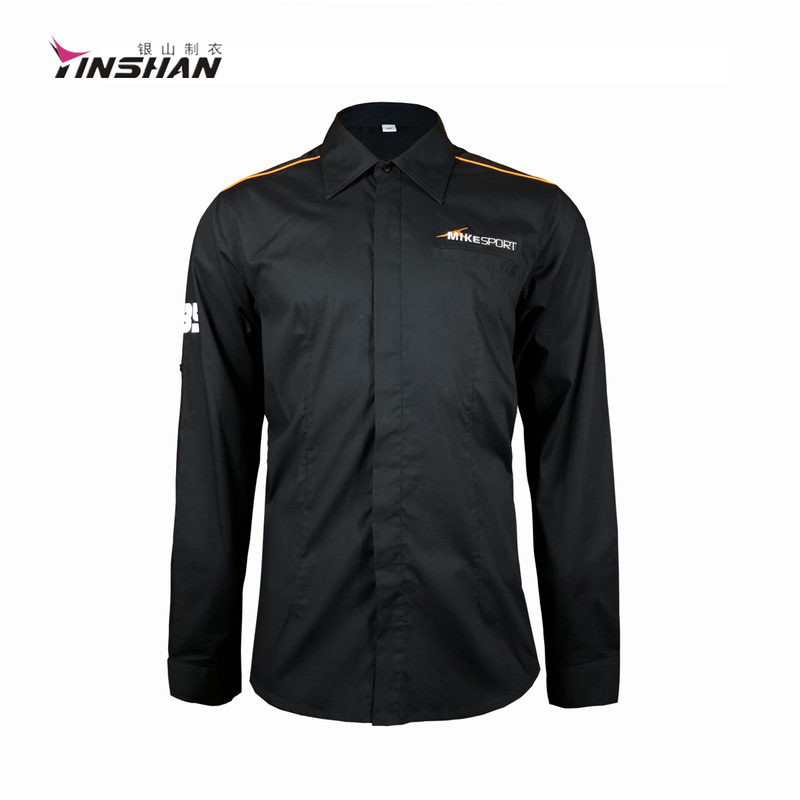
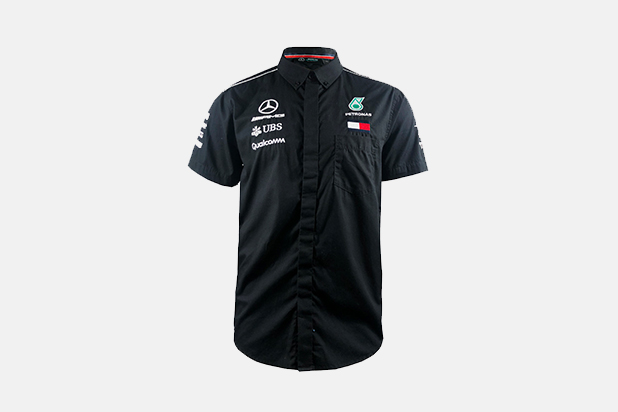
A pit crew shirt is worn by people who are working, which is why the cut, the fabric and the decoration are all decided by function first.
The most common mistake in a first motorsport order is specifying a standard team polo and expecting it to work. The garment has to accommodate movement and layers, and that changes the silhouette.
| Design point | How a pit crew shirt is specified | Reason |
|---|---|---|
| Shoulder and armhole | Deeper armhole with a raglan or set-in sleeve chosen deliberately | Raglan construction moves the seam away from the top of the shoulder, which reduces binding and hides strain in the seam. |
| Body fit | Slightly relaxed through the chest and waist rather than fitted | Allows a base layer underneath and allows the garment to sit over a harness or belt without riding up. |
| Body length | Extended by a defined amount so it stays tucked or stays down when reaching | A short body length is the reason crew shirts look untidy within an hour of use. |
| Collar | A structured collar that holds its shape, or a ribbed knit collar | A collar that collapses looks careless on camera; a collar that stands up also offers a little protection from sun and wind. |
| Sleeve length | Decided per role: short sleeve as standard, long sleeve for early and late sessions | Teams usually order both, and the two garments should share the same artwork so they can be mixed within a crew. |
| Ventilation | Mesh or eyelet panels under the arms and across the upper back | Directs heat away from the areas that build it fastest without adding weight. |
The practical test is a sample worn by someone who does the job. Ask a crew member to reach overhead, crouch, and pull a wheel-weight tool out of a pocket. If the shirt binds, the sample has already failed.
Motorsport branding is a different discipline from ordinary team decoration. Marks are read at distance, on moving subjects, and often partially obscured by equipment.
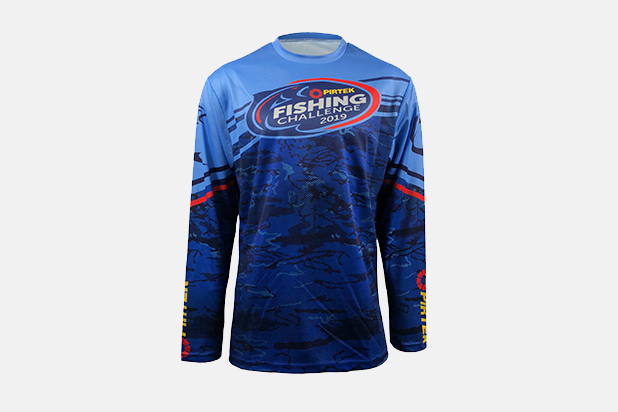
Sublimation for full-colour graphics. The ink becomes part of the fabric, so a complex sponsor layout adds no weight, does not crack, and does not restrict stretch. This is the standard method for motorsport shirts with multiple sponsor marks.
Embroidery for crests and names. A team crest, a name over the pocket, or a small mark on the chest gains presence from stitching. Keep stitch counts sensible so the fabric does not pucker.
Panel-by-panel artwork. Because the design wraps around the body, artwork is supplied as a technical drawing or per-panel file rather than a flat front view. Agreeing this early prevents a redesign at sampling stage.
Contrast is a specification. Sponsor text on a busy background disappears on camera. Specify the ground colour and the minimum type height for any mark that must remain legible in a still photograph.
Consistency across the kit. Once the artwork template is approved, the same sponsor layout should be applied to the shirt, the outer layer and any fan merchandise so the team reads as one unit.
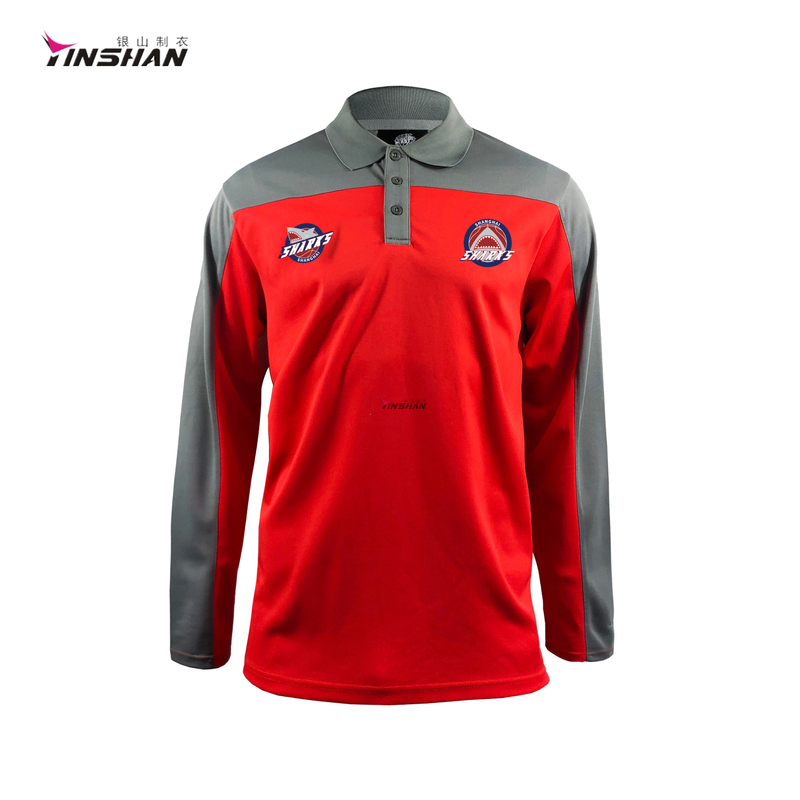
Long-sleeve polo shirts suit pit lane and paddock roles where a collar and a structured shape are expected, and they take embroidery well.
The fabric choice is usually settled by climate, the number of layers the crew wears, and the price point the team's merchandise programme can support.
| Fabric approach | Where it fits | What to watch for |
|---|---|---|
| Polyester pique | The default for a shirt that must look structured and take embroidery well | Choose the weight deliberately: a light pique is cooler, a heavier pique holds its shape longer. |
| Polyester-elastane blend | Crew roles with a lot of reaching and twisting | Better recovery and stretch, at a higher material cost. Confirm the blend percentage in writing. |
| Mesh-panelled performance knit | Hot circuits and long events | The coolest option; requires the artwork to be planned so vent panels do not cut through a sponsor mark. |
| Cotton or cotton-rich blends | Merchandise and spectator-facing garments rather than working kit | Comfortable but slower to dry and less abrasion-resistant, so it is usually a retail product rather than a crew shirt. |
On flame resistance: ordinary teamwear is not flame resistant, and no amount of fabric weight changes that. If a role requires protective clothing, specify the required standard and ask for documentation for the actual components used in your run. Treat it as a separate, certified product line — not as an upgrade to a team shirt.
Motorsport teams are rarely uniform in body type, and a kit that only fits the mechanics is not a kit.
Collect a size sheet, not a set of guesses. Ask each crew member for chest, waist and preferred fit (close or relaxed). Two people who wear the same letter size often need different garments.
Plan the size curve for the roles. Include a spread of larger sizes and enough long-sleeve garments for early and late sessions; running out of one size mid-season is the most common complaint.
Fix the artwork template. Store the approved technical drawing, the fabric reference and the size chart. A reorder from an approved template is faster, cheaper and consistent.
Plan for arrivals. Crew change during a season. Keep a small stock of blank garments in the common sizes, or agree with the factory that personalisation can be applied to single pieces later.
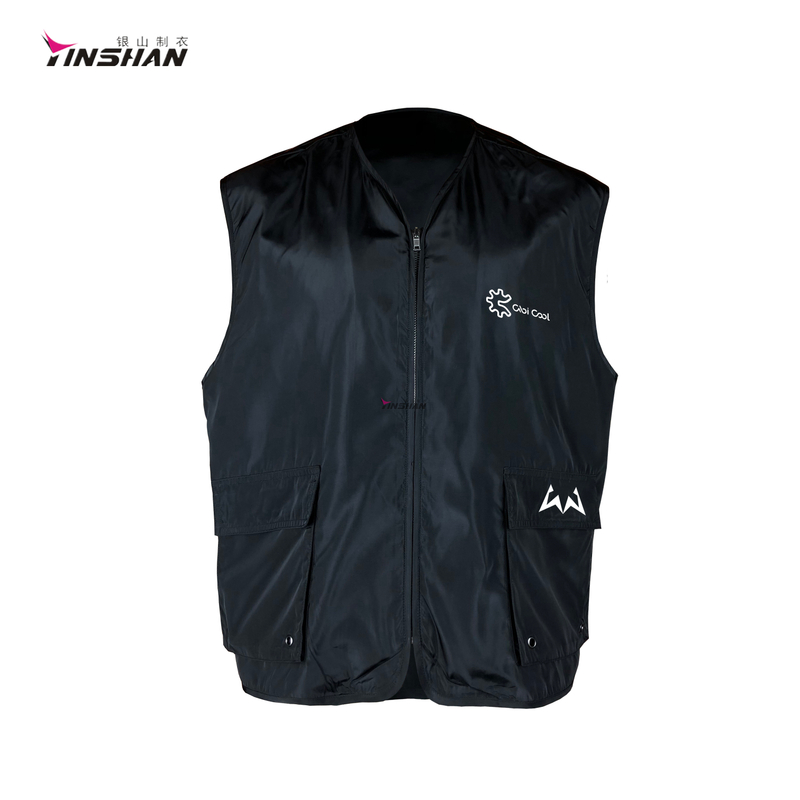
Most teams build a layered kit: a short-sleeve shirt as the base and a vest or outer layer over it for early morning and evening sessions.
Can pit crew shirts be flame resistant? Not as ordinary teamwear. Protective garments must be specified against a standard and supported by documentation for the components used. If the role requires protection, treat it as a separate product line with its own certification.
Short sleeve, long sleeve, or both? Most teams order both and share the artwork across them so crew can mix garments within a session. Ordering both at once usually improves the unit price and guarantees the colours match.
How many sponsor marks can be printed? Sublimation has no practical limit, but legibility does. Group marks by size and importance, and set a minimum type height for each tier so the shirt still reads when photographed from twenty metres.
What decoration survives fuel and solvent contact? Sublimated graphics are the most robust in this environment because they are part of the fabric. Surface prints and heat-applied transfers are more sensitive, and their care instructions must be followed.
How quickly can a team kit be produced? Schedule depends on artwork approval and whether a sample is required. Approving the template once and reusing it removes the longest step from subsequent orders.
Send the brief with the garment types, the roles to be covered, the fabric preference, the artwork or sponsor layout, and the size breakdown. With those in hand a factory can confirm the fabric, produce a sample on a real body, and quote accurately — which is a far better position than approving a design from a flat drawing.
You can send a custom requirement to start, review the wider teamwear range if the order also includes outerwear or merchandise, and read our guide to caring for technical sportswear so the kit keeps its appearance across a season. Request a quote.
 English
 Español
 Português
 Français
 Pусский
 Deutsch
 العربية